Ingredients and steps on one page. Print it, or choose “Save as PDF” in the print dialog.
Sekai Gohan
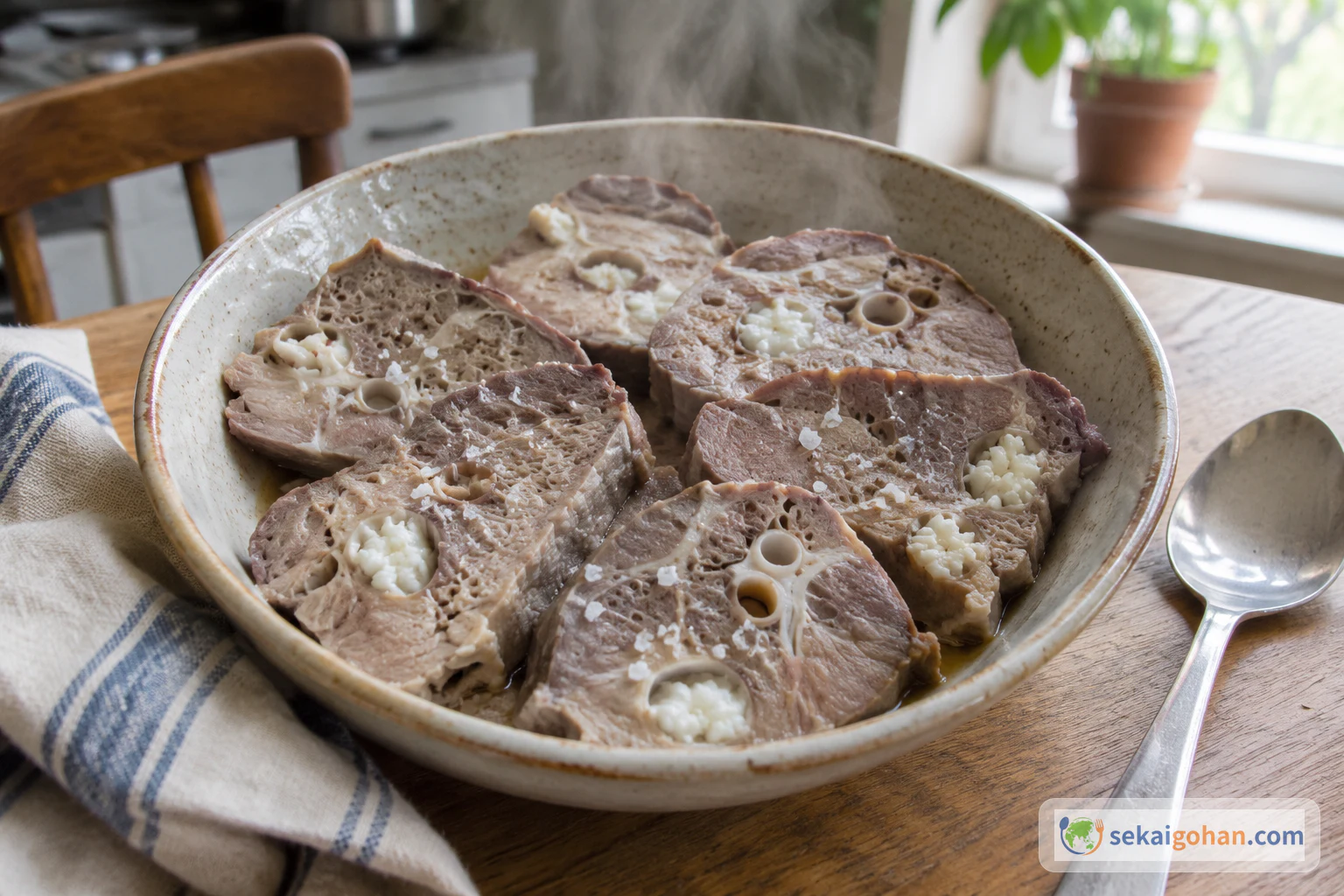
Upka (Shishbashir): Tajik Lung Filled with Milk and Boiled Whole
Ingredients
| Ingredient | Amount | Role |
|---|---|---|
| Lung, beef (or sheep or goat) (shush, upka), with windpipe attached | 1 whole, about 1¾–2⅔ lb (800 g–1.2 kg) before cleaning | The body of the dish and the container for the milk |
| Whole milk (shir) | 2½–3⅓ cups (600–800 ml), until the lung is full | Fills the airways and sets into soft curd as it cooks |
| Milk for soaking | as needed, to come partway up the lung in the tray | The overnight soak |
| Water | as needed, enough to cover the lung | The boiling water. Nothing else goes in |
| Salt (namak) | ½ tsp | Sprinkled on at serving |
Steps
1Rinse the outside and trim
Lay the lung in a clean sink and rinse the outside under cold running water, turning it so every lobe gets washed. Pull or cut away any loose whitish membrane and any blood clots you can see on the surface. Pat it gently and check the windpipe opening is clear and wide enough to take a funnel. Move on when no clots are left on the surface.
2Flush the inside through the windpipe
Hold the windpipe opening under a thin stream of cold water so the water runs into the lung and it swells a little. Press the lobes gently with your palms to push the water, blood and foam back out, then refill and press again. Keep going round after round. Stop when the water coming out runs clear instead of red and pressing brings up no more foam.
Flushing decides the flavourBlood left inside is the main source of an off, livery smell after cooking. Give this step the time it needs. Cooking cannot fix a lung that went into the pot half-flushed.
3Fill the lung with milk
Set the lung in a wide basin and seat a funnel, or the spout of a kettle, firmly in the windpipe. Pour the milk in slowly, giving it time to run down into the lobes. The lung plumps up and turns noticeably heavier. It is full when it feels heavy all over and will take no more milk.
4Cover and refrigerate overnight
Move the filled lung to a shallow tray and pour in a little more milk so it comes partway up the sides. Cover tightly with cling film and put it straight into the refrigerator at 32–39°F (0–4°C). Leave it there overnight and never leave it out on the counter. Wash your hands, the sink, the funnel and the basin now. In the morning the lung should be cold right through and still heavy with milk.
5Lower the lung into boiling water
Bring a large pot of water to a full boil. Lift the lung from the tray, let the soaking milk drain off and lower it in whole, windpipe and all. Lay a drop-lid or a plate on top to keep it under the surface. Let the water come back to the boil, then turn the heat down. The water should move with small, steady bubbles, not roll.
Hot pot, heavy loadA big pot of boiling water with a lung in it is heavy. Lower the lung in slowly with both hands or a large spoon so the water does not splash, and set the pot on a burner where you will not have to move it again until the boil is finished.
6Simmer for 6 to 7 hours
Keep the pot at that quiet simmer for about 6–7 hours. Skim off the grey foam that gathers at the edges. Check now and then that the drop-lid is still holding the lung under. Near the end, push a bamboo skewer into the thickest part. It is done when the skewer slides through to the centre with no resistance, and the centre has reached 167°F (75°C) for at least 1 minute.
Low heat, full timeDo not turn the heat up to finish sooner. A hard boil breaks up the lung, and the skewer test is what tells you it is ready, not the clock. A bigger or thicker lung needs the long end of the range.
7Drain and let it rest
Lift the lung out with a skimmer and a large spoon and set it in a colander to drain. Let it sit until it is cool enough to handle, then move it to a cutting board.
8Cut into pieces
Cut the lung into 1¼–1½-inch (3–4 cm) pieces with a sharp knife, cutting straight down instead of sawing. Work across the lobes so each piece shows its cut face. Look at the first slice. You should see pockets of white, set milk in the spongy tissue.
9Plate and salt
Pile the pieces into a dish, overlapping so the white faces show. Pinch the salt over the top, or set it in a small bowl at the table so everyone salts their own. Serve while it is still warm and the cut faces look moist.