Ingredients and steps on one page. Print it, or choose “Save as PDF” in the print dialog.
Sekai Gohan
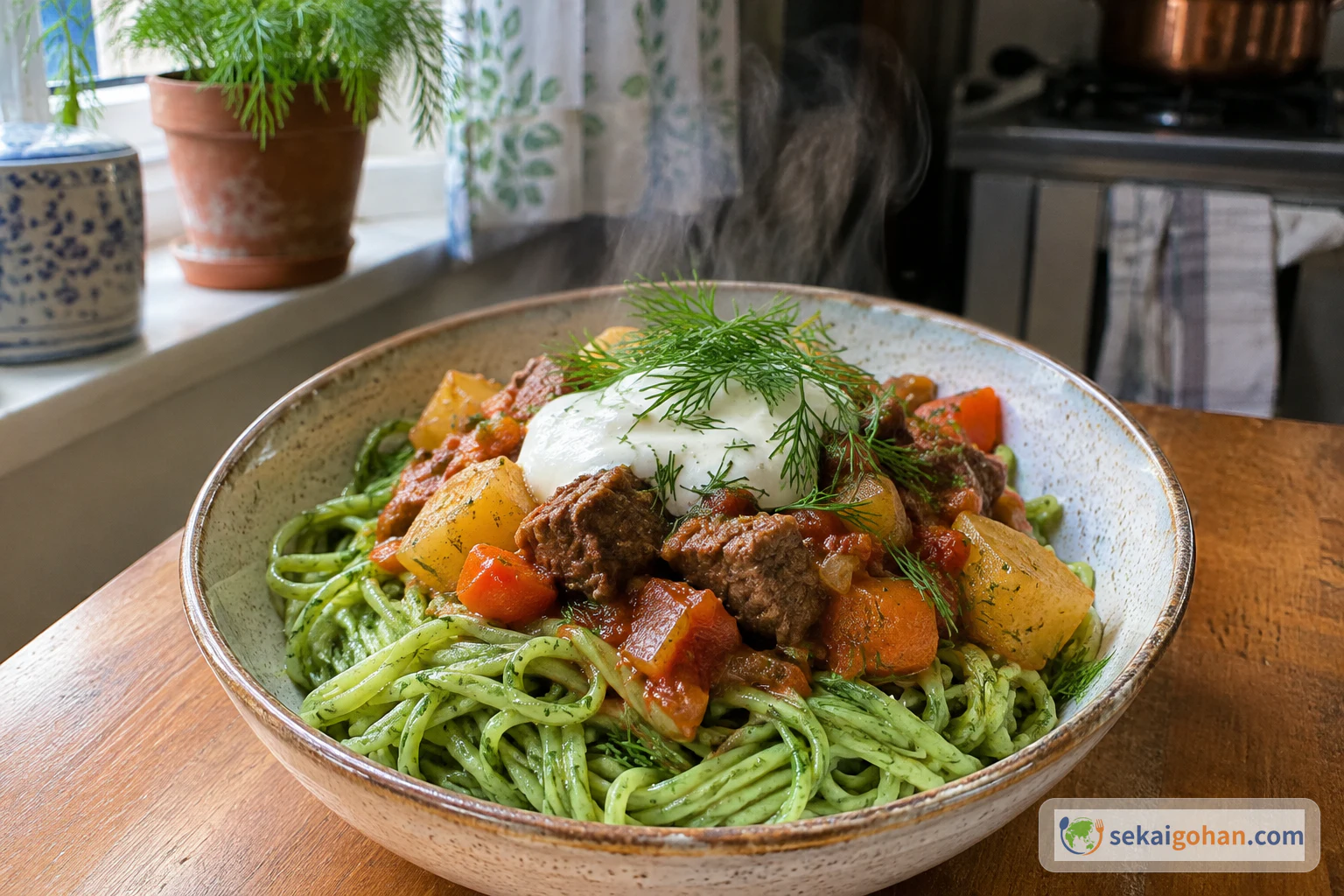
Shivit Oshi: Khivan Green Dill Noodles with Beef Stew
Ingredients
| Ingredient | Amount | Role |
|---|---|---|
| Fresh dill (укроп) | 1 cup (75 g), plus more to garnish | Steeped into water to colour and scent the noodles |
| Water, for the dill | scant 1 cup (200 ml) | Blended with the dill; a scant ½ cup (100 ml) of the strained liquid goes into the dough |
| Egg | 1 | Binds the dough |
| Plain flour (00 if you have it) | 2¼ cups (300 g), plus more for dusting | The noodle dough |
| Fine salt, for the dough | ½ tsp | Seasons the noodles |
| Salt, for the noodle water | as needed | Seasons the noodles as they boil |
| Beef shank, cut in cubes | 1 lb 2 oz (500 g) | Simmers until it falls apart |
| Fine salt, for the stew | 1 tsp for the beef, ½ tsp with the vegetables | Seasons the meat and the base separately |
| Black pepper | 1 tsp | Seasons the beef before searing |
| Ghee or olive oil | 4 tbsp (1 tbsp to sear, 3 tbsp for the vegetables) | Browns the meat and softens the onion |
| Onion, thinly sliced into half-moons | 1 | Sweet base of the stew |
| Garlic, minced | 2 cloves | Aroma |
| Bell peppers, cut in ¾-inch (2 cm) pieces | 7 oz (200 g) | Sweetness and colour |
| Hot chilies, seeded and minced (optional) | 1–2 | Heat |
| Smoked paprika, hot or sweet | ½ tsp | Smoke and red colour |
| Ground cumin | ½ tsp | Earthy warmth |
| Tomato paste | 2 tbsp | Depth and colour |
| Milk | 1 cup (250 ml) | Deglazes the pan and cooks down into the stew's colour and richness |
| Tomatoes, roughly chopped | 7 oz (200 g) | Body and acidity in the long simmer |
| Waxy potatoes, cut in ¾-inch (2 cm) cubes | 10½ oz (300 g) | Hold their shape in the stew |
| Carrots, cut in ¾-inch (2 cm) cubes | 7 oz (200 g) | Sweetness |
| Water, for the stew | 3 cups (750 ml), then 1 cup (250 ml) | Simmering liquid |
| Plain yogurt | to serve | Cool, sour topping |
Steps
1Make the dill water
Put the dill and the scant cup (200 ml) of water in a blender and blend until the liquid is smooth and brightly green. Let it steep for at least 1 hour; on a warm day, steep it in the refrigerator. Pour it through a fine strainer and discard the solids. Measure out a scant ½ cup (100 ml) for the dough and keep the rest. The strained liquid should be a clear, vivid green with no bits of leaf.
2Season and sear the beef
Pat the beef cubes dry and season them with 1 tsp salt and the black pepper. Heat 1 tbsp ghee or oil in the large sauté pan over high heat. Sear the beef in several batches, leaving space between pieces, about 1 minute per side. Lift each batch out once every side is well browned.
Hot fatThe fat is on high heat for searing. Dry the beef well so it does not spit, and lay each piece in moving away from you.
3Soften the onion and add the spices
Lower the heat to medium and add the remaining 3 tbsp ghee or oil with the onion. Cook for 5 to 7 minutes, until the onion is soft and starting to colour. Add the garlic, bell peppers, chilies if using and ½ tsp salt. Stir in the smoked paprika, cumin and tomato paste.
4Deglaze with milk and start the simmer
Return the beef to the pan along with any juices on the plate and stir it through. Pour in the milk and scrape up the browned bits on the bottom. Cook over medium heat for 13 to 15 minutes, until the milk has almost completely cooked off and the stew turns a deep sienna, reddish-brown. Add 3 cups (750 ml) water, lower the heat, set the lid slightly ajar and simmer for 1 hour 30 minutes. The surface should barely tremble the whole time.
Wait for the colourWait for the milk to almost disappear before the water goes in. Cooked down this far, it gives the stew its deep colour and rich body. Added water too early leaves a pale stew that tastes of boiled milk.
5Mix and rest the dough
Beat the egg into the scant ½ cup (100 ml) of dill water. Sift the flour and ½ tsp salt into the bowl of a stand mixer fitted with a dough hook. With the mixer on low, pour in the egg mixture a little at a time, then mix on medium for 5 to 7 minutes. Shape it into a ball, cover it and let it rest for 1 hour. Before resting, the dough is fairly firm but workable.
Firm dough, full restA firm dough rolls thin without tearing, and the full hour's rest is what lets it relax enough to reach 1/16 inch. If you have no stand mixer, knead by hand until it reaches the same fairly firm, workable feel.
6Roll and cut the noodles
Dust a baking sheet with flour. Cut the dough into four pieces and keep three covered. Roll one out by hand or with a pasta machine into a rectangle about 1/16 inch (1.5 mm) thick, dust it with flour, and roll it up tightly along its length into a log. Slice it into 1-inch (2.5 cm) ribbons for wide noodles or ¼-inch (6 mm) strips for thin ones, unroll them onto the sheet and dust with flour, then repeat with the other pieces. The cut noodles should lie separate, each one lightly floured.
Roll it snugRoll the sheet into a snug log with flour between the layers. A loose roll squashes under the knife, and unfloured layers glue together.
7Add the tomatoes and simmer again
When the stew has simmered for 1 hour 30 minutes, stir in the tomatoes and 1 cup (250 ml) water. Cover the pan and simmer for 1 hour. Keep the heat low enough that the liquid only murmurs.
8Finish with potatoes and carrots
Add the potatoes and carrots and leave the lid off. Simmer for about 30 minutes, so some of the liquid cooks away while the vegetables cook. Taste the sauce and adjust the salt if needed. It is ready when the beef falls apart and a skewer slides into a potato and a carrot cube with no resistance.
9Boil the noodles and serve at once
Bring a large pot of salted water to a boil. Shake the excess flour off the noodles and boil them in several batches for 2 to 3 minutes. Lift them out with a slotted spoon and let the water drain off. Put them straight into bowls and spoon the stew over them, then add yogurt and fresh dill. The noodles are done when they are tender all the way through.