Ingredients and steps on one page. Print it, or choose “Save as PDF” in the print dialog.
Sekai Gohan
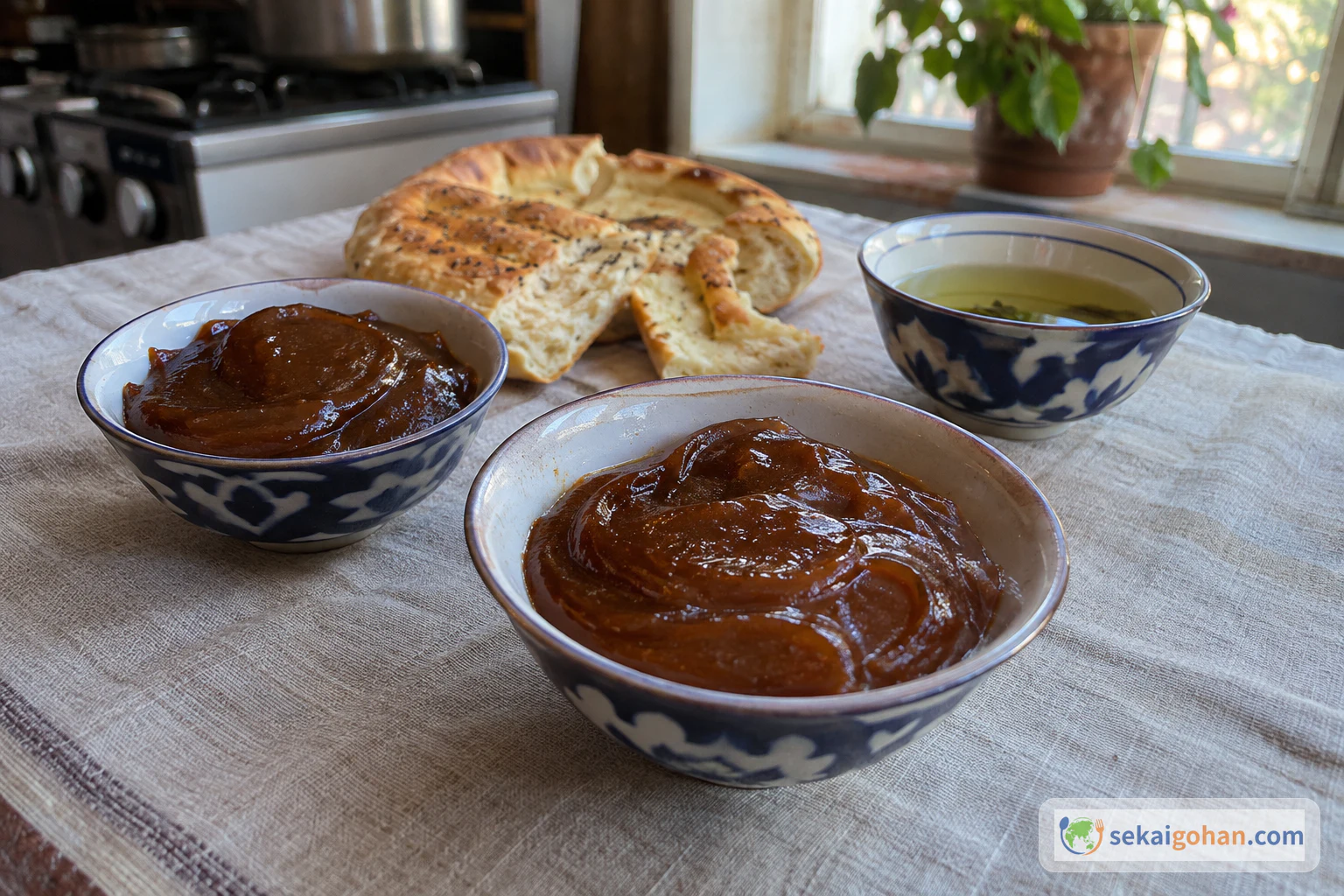
Sumalak: Uzbek Sprouted Wheat Pudding for Navruz
Ingredients
| Ingredient | Amount | Role |
|---|---|---|
| Whole wheat berries, untreated | 1 lb 2 oz (500 g) | The heart of the dish and the source of all its sweetness once sprouted |
| Cold water | about 3¾ quarts (3.5 L) | For soaking, then three extractions of 1 quart (1 L) each |
| Plain wheat flour | 12½ oz (350 g) | Body of the paste, whisked into the second and third extractions |
| Neutral oil (rapeseed or sunflower) | ½ cup plus 2 tbsp (150 ml) | Coats the pot base and smooths the texture |
| Walnuts in their shells | 10 | Roll along the bottom to keep the paste from catching |
| Fine salt | a pinch | Sharpens the sweetness |
| Plain wheat flour, for the top (optional) | 1 tbsp | A dusted pattern on the served bowls |
Steps
1Rinse and soak the wheat
Put the wheat berries in a large bowl and rinse them. Change the water several times until it runs clear. Cover the grains with cold water by 2 inches (5 cm) and leave them overnight, about 12 hours. They are ready when they look plump and some ends have split slightly.
2Sprout the wheat on a tray
Drain the wheat and spread it ¾ inch (2 cm) thick on a flat tray. Lay a damp cloth over it and keep it at room temperature, out of direct sun. Rinse and drain the grains twice every day for 3 to 5 days. They are done when each white shoot is as long as the grain, about ½ to ¾ inch (1–2 cm), and a crushed sprout tastes distinctly sweet.
Keep the sprouts cleanBacteria grow easily in the warm, damp conditions sprouts need. Use only whole grain that can sprout. Rinse and drain twice a day without skipping a day. Throw the whole batch away if it smells sour, feels slimy, changes colour or smells off. Sprouts grown at home are no safer than shop-bought ones, so keep everything clean at this stage and cook the paste all the way to the finish. Tasting a raw sprout carries a small risk: if anyone cooking is pregnant, elderly, very young or has a weakened immune system, skip the taste and judge by shoot length alone.
Catch the sprouts at the right momentTaste a crushed sprout every day from day 3. Shoot as long as the grain, clearly sweet: that is your moment. If you leave it longer, the sprouts turn grassy and slightly bitter, and the finished sumalak carries that bitterness.
3Grind the sprouted wheat
Clamp the meat grinder to the table and feed the sprouted wheat through it, collecting the mash in a bowl. With a blender, work in batches so the motor can turn the grains over. Grind every grain, including the shoots. The mash is ready when it comes out damp, coarse and beige.
4Press out the juice three times
Add 1 quart (1 L) of cold water to the ground wheat and knead it with your hands for 2 minutes. Pour it into muslin and squeeze hard over the first container until the cloth stops dripping. Put the solids back in the bowl and repeat twice more with 1 quart (1 L) of fresh water each time, squeezing into the second and then the third container. You now have three milky liquids, each lighter than the one before.
Save the first juiceThe first extraction is the sweetest and darkest. Label it and set it aside. The second and third take the flour at the start, and the first goes in late to deepen the colour and sweetness.
5Start the pot with oil and walnuts
Warm the oil gently in the heavy pot over medium heat until its surface shimmers. Lower in the walnuts so they rest on the bottom. Whisk the flour into the second and third extractions until no lumps remain. Pour this into the pot in a thin stream while stirring with the long wooden spoon. The mixture should be smooth and pale, with no dry pockets of flour.
6Boil, salt, and turn the heat right down
Bring the pot to a boil and stir constantly for about 20 minutes, until it thickens into a pale, slightly sticky porridge. Add the pinch of salt. Turn the heat down to the lowest flame you have, so the surface only blips lazily.
7Stir on the lowest heat for about 6 hours
Stir every 2 to 3 minutes, and scrape the bottom corners of the pot every time. If you are stirring well, you can hear the walnuts rolling along the base. Swap with your partner when your arm tires, and never leave the pot for more than 3 to 4 minutes. Over these hours the colour moves from pale grey to milky to caramel.
Heat, splatter and scorchingThick hot paste spits. Use a long-handled wooden spoon and wear gloves while you stir. A scorched base cannot be rescued, because the burnt taste goes through the whole pot. That is why the heat stays at its lowest and someone stays beside the pot the whole time.
8Add the first juice and cook to chestnut brown
Stir in the reserved first extraction. Keep cooking on the lowest heat for 2 to 4 hours more, with the same stirring and corner scraping. Taste and smell it as it darkens. It is done when it is deep chestnut brown and glossy, the track of a spoon drawn through it closes slowly, the raw-flour smell has gone and it tastes clearly sweet.
9Rest, count out the walnuts and share
Turn off the heat, put the lid on and leave the pot to settle for 3 to 4 hours or overnight. Keep the lid closed during this time. Lift out the walnuts (or pebbles) and count them, making sure all 10 (or all 12) are out, before anyone eats. Spoon the cold sumalak into small bowls and, if you like, dust a simple pattern on top with the extra tablespoon of flour. Serve with bread, and send most of it next door.