Ingredients and steps on one page. Print it, or choose “Save as PDF” in the print dialog.
Sekai Gohan
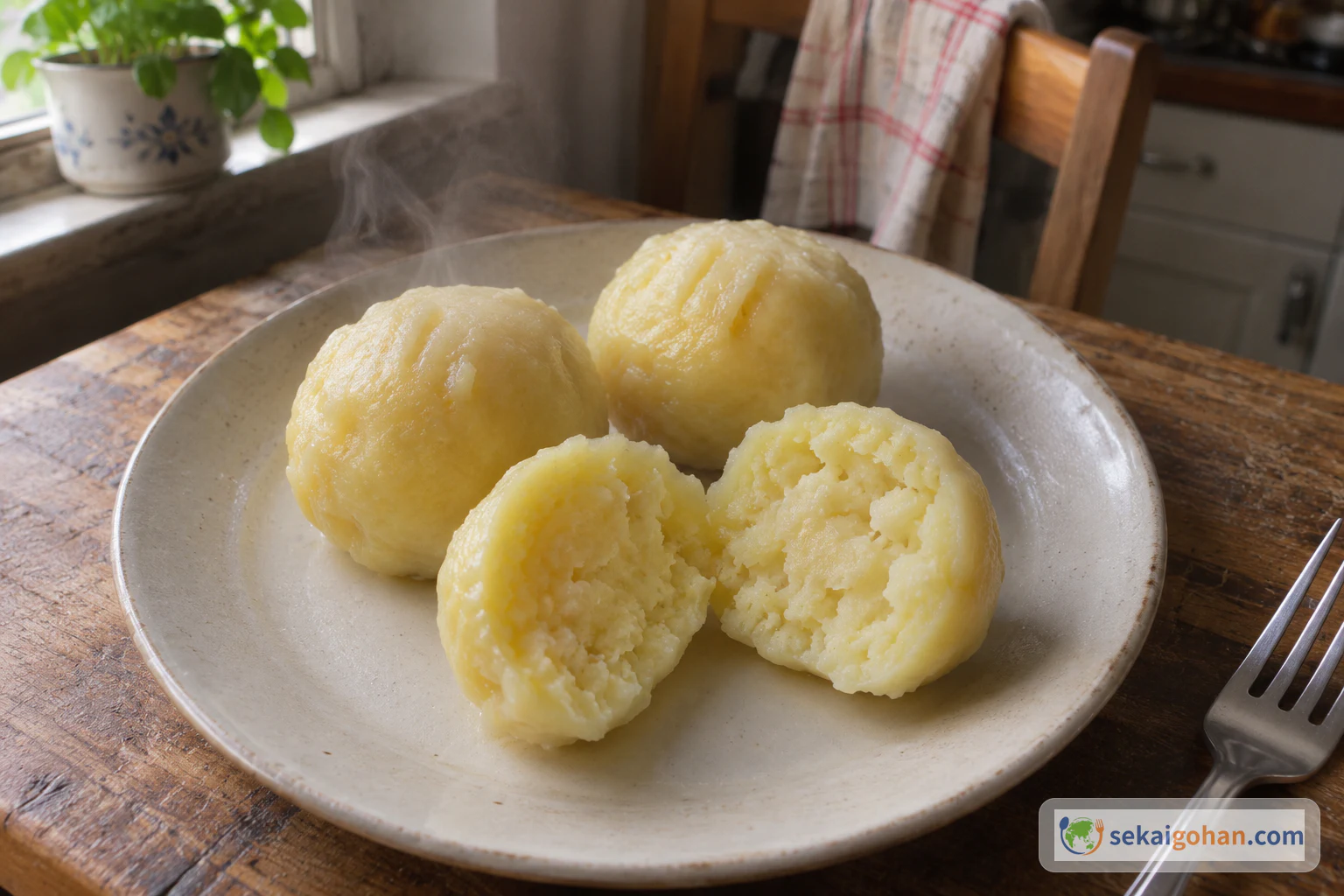
Erdäpfelknödel: Austrian Potato Dumplings with Semolina
Ingredients
| Ingredient | Amount | Role |
|---|---|---|
| Floury potatoes (mehlige Erdäpfel) | 18 oz (500 g) | The body of the dough; their dry starch keeps it light |
| Medium-protein flour (griffiges Mehl) | 4½ oz (125 g) | Absorbs moisture and binds the potato |
| Durum semolina (Hartweizengrieß) | 1½ oz (40 g) | Lightness and spring; keeps the dough from turning sticky |
| Unsalted butter, at room temperature | scant 1 oz (25 g) | Flavor, richness and a smooth dough |
| Egg | 1 | Binds and adds richness |
| Salt | a pinch | Seasons the dough |
| Nutmeg, freshly grated (Muskatnuss) | a pinch | Lifts the sweetness of the potato |
Steps
1Soften the butter and boil the potatoes in their skins
Take the butter out of the fridge so it softens while the potatoes cook; cold butter does not blend evenly, and the streaks crack open in the pot. Pare away any green patches, sprouts and eyes, leaving the rest of the skin on. Boil the whole potatoes in lightly salted water until a skewer slides into the center with no resistance. Boiling them the day before and letting them cool in their skins is best: they dry out, and the dough holds its shape without extra flour. The butter is ready when a fingertip leaves a dent.
2Peel and rice the potatoes
Drain the potatoes and pour the cooking water away. Peel them, while still hot if you boiled them today, and press them through the ricer into a wide bowl. Never use a blender or food processor: it breaks the starch, and the dough turns gluey, heavy and prone to falling apart. Spread the riced potato out so the steam escapes. Move on when no lumps remain and the potato is light and fluffy.
3Bring the dough together by hand
Sprinkle the salt and nutmeg over the potato, then add the flour, semolina, butter and egg. Press everything together with your hands instead of kneading. Stop as soon as it holds as one mass; worked dough turns sticky, hard to shape and dense after cooking. The dough is right when it barely sticks to your hands and cracks slightly when pressed. If it stays sticky, add a little more flour, a bit at a time.
4Roll a log and cut 6 to 8 pieces
Turn the dough onto a clean board and roll it into an even log. Cut it into 6 to 8 equal pieces. Equal pieces cook together; a small one rises first and overcooks while the larger ones finish. Line them up and compare them before shaping. The pieces are ready when they all look the same size.
5Shape the dumplings with wet hands
Wet your hands from the small bowl of water. Roll each piece between your palms into a smooth ball, closing every crack. A crack opens in the water, lets it in, and the dumpling breaks apart. Set the finished balls side by side on a cloth-lined tray. They are ready when the surface is smooth all round with no seams.
6Poach at a quiet simmer
Bring the large pot of water to a boil and salt it lightly. Lower the dumplings in one at a time on the skimmer, then turn the heat down. Hold the water where small bubbles rise steadily without a break: a rolling boil tears the dumplings apart, and water that stops bubbling leaves the centers raw. Cook for about 10 minutes, until the dumplings float to the surface.
7Lift out, drain and serve
Lift each dumpling out with the skimmer and let the water drain off for a moment. Set them on a warmed plate and serve right away. Never keep them warm in the cooking water: the surface soaks it up, softens and starts to dissolve. Each dumpling should come out whole and glistening, with steam rising from it.