Ingredients and steps on one page. Print it, or choose “Save as PDF” in the print dialog.
Sekai Gohan
Ischler Törtchen: Austrian Almond Cookies with Jam and Chocolate
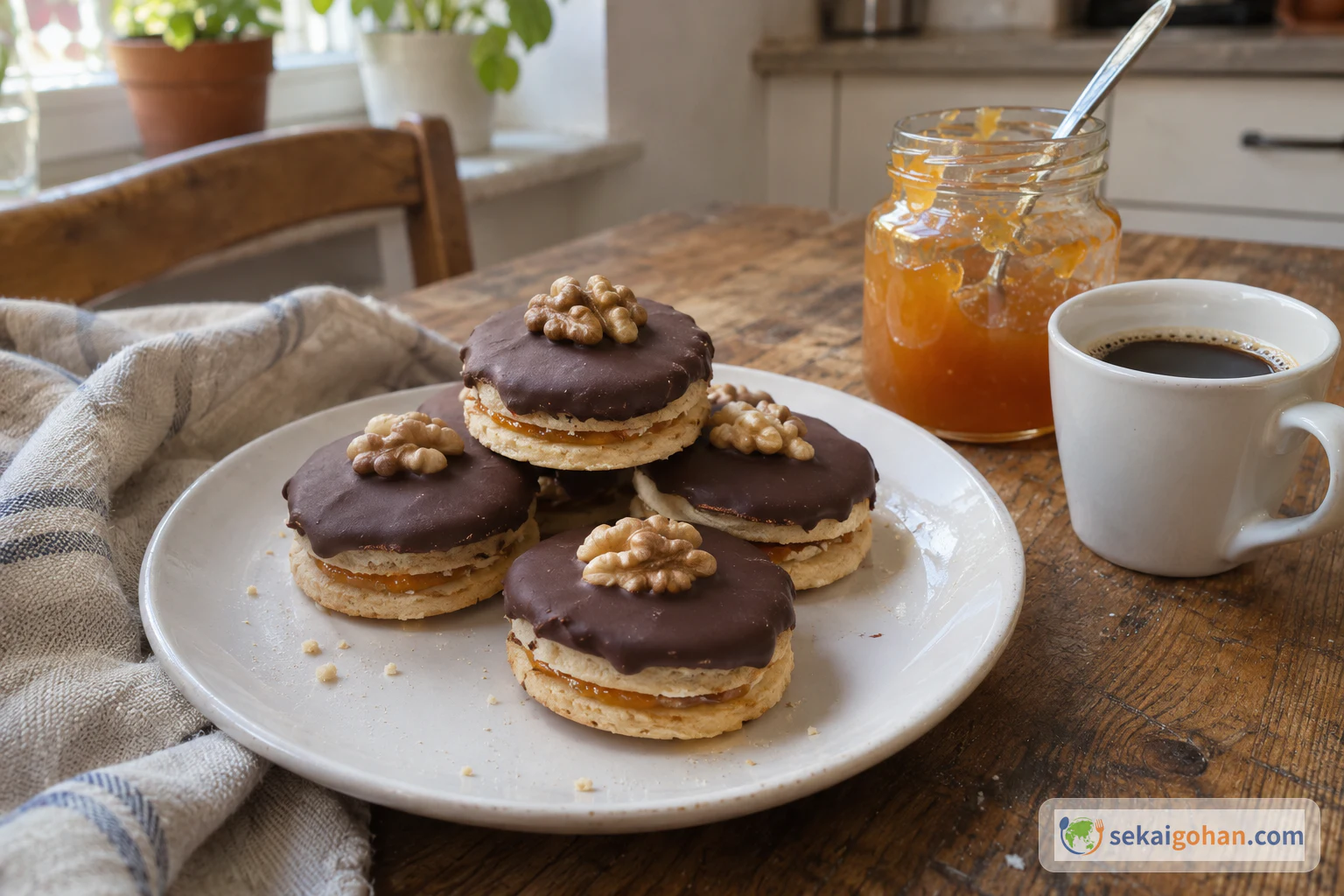
Ingredients
| Ingredient | Amount | Role |
|---|---|---|
| Whole cane sugar (Vollrohrzucker) | 3½ oz (100 g) | Sweetness, colour and a slightly coarse crunch |
| Unsalted butter, cold, cut into ½-inch (1 cm) cubes | 6 oz (170 g) | The fat that makes the baked rounds crumble |
| Spelt flour (Dinkelmehl), light or wholegrain | 9 oz (250 g) | The structure of the dough |
| Ground almonds (gemahlene Mandeln) | 3½ oz (100 g) | Nutty aroma, richness and a melting bite |
| Cream of tartar baking powder (Weinsteinbackpulver) | 2 level tsp | A very slight lift |
| Vanilla powder (Vanillepulver), or 1 sachet vanilla sugar | ¼ tsp | Scent |
| Tart apricot jam (Marillenmarmelade) or red currant jam (Ribiselmarmelade) | 7 oz (200 g) | The filling; its acidity cuts the chocolate and nuts |
| Dark chocolate, 70% cocoa | 7 oz (200 g) | The glaze on top |
| Unsalted butter, for the glaze | 1 oz (30 g) | Keeps the glaze soft and easy to work |
| Walnut halves (Walnusshälften) | 35 to 40 | One on top of each cookie |
Steps
1Rub the butter into the dry ingredients
In a large bowl, mix the flour, baking powder, ground almonds, cane sugar and vanilla. Add the cold butter cubes and rub them into the dry mixture with your fingertips, working fast so the butter never softens. Press the crumbs together into one mass and stop as soon as it holds; long kneading makes the cookies hard. The dough is ready when no loose flour is left in the bottom of the bowl and it holds in one piece, even if it cracks when you press it.
Cold butter decides the textureButter that stays cold and in small pieces is what makes the baked rounds crumble softly instead of snapping hard. If your hands are warm, rub quickly and stop early.
2Wrap and chill the dough
Flatten the dough into a disc, wrap it tightly in plastic wrap and refrigerate for 30 to 60 minutes. Toward the end of the chill, heat the oven to 345°F (175°C) with conventional top-and-bottom heat and set a rack in the middle. Chilling firms the butter so the dough can be rolled very thin without tearing. It is ready when the disc feels firm and cold all the way through.
3Roll the dough to ⅛ inch
Dust the board and rolling pin with only a little flour; too much flour dulls the colour of the baked rounds. Roll the dough to an even ⅛ inch (3 mm), turning it as you go so it does not stick. Thicker dough bakes unevenly, and thinner dough cracks. The sheet is right when it is even all over and firm enough that a cutter laid on top does not dent it.
4Cut the rounds and set them on the tray
Cut 2-inch (5 cm) rounds and lay them on a parchment-lined baking sheet with small gaps between them. Push the scraps together side by side rather than stacking and kneading them, which toughens the dough, then roll them out again and cut more. If the dough turns soft and sticky, put it back in the refrigerator for 15 minutes. The rounds are cut cleanly when their edges stand straight up.
5Bake about 8 minutes, pulling them out while still pale
Bake one tray at a time on the middle rack for about 8 minutes. Take the tray out before the rounds start to colour. They are done when the edges carry only a faint tinge, the tops look dry, and a round springs back when touched lightly. Move them to a wire rack and bake the rest of the dough the same way.
Pale is right, brown is too farThese rounds are so thin that once they turn brown, the almond and the chocolate taste scorched. Open the oven a little before 8 minutes on the first tray and look.
6Cool completely and sandwich with jam
Leave the rounds on the rack until completely cold; warm cookies melt the jam and it seeps out. Spread a scant teaspoon of jam on one round, stopping about 1/16 inch (1–2 mm) short of the edge. Press a second round on top. A pair is right when it holds together and the jam stops just inside the rim.
7Melt the chocolate and butter
Chop the chocolate and make sure the bowl and spatula are completely dry. Melt the chocolate with the glaze butter over a water bath at about 160°F (70°C), or in an oven set to 160°F (70°C). If lumps remain, lift the bowl off the water and let the remaining heat finish melting them. The glaze is ready when it is glossy and falls from the spatula in a ribbon that leaves a trail on the surface.
Water and steamA single drop of water makes melted chocolate grainy, so keep the bowl, spatula and your hands dry, and wipe condensation from the rim of the bowl. Steam from the water bath burns; lift the bowl with a dry cloth.
8Dip the tops and add the walnuts
Hold a sandwich by its sides and dip only the top into the chocolate. Let the excess drip back into the bowl and set the cookie on parchment. Press a walnut half lightly into the chocolate while it is still wet. Dipping only the top keeps the pale sides and the jam line in view. Each cookie is done when it carries a thin, even layer of chocolate on top and a walnut that stays put.
9Let the chocolate set and pack the tin
Leave the cookies on the parchment until the chocolate has set. Lay them in an airtight biscuit tin, with a sheet of parchment between layers so the tops do not scuff. The chocolate is set when a fingertip pressed lightly on top leaves no mark.