Ingredients and steps on one page. Print it, or choose “Save as PDF” in the print dialog.
Sekai Gohan
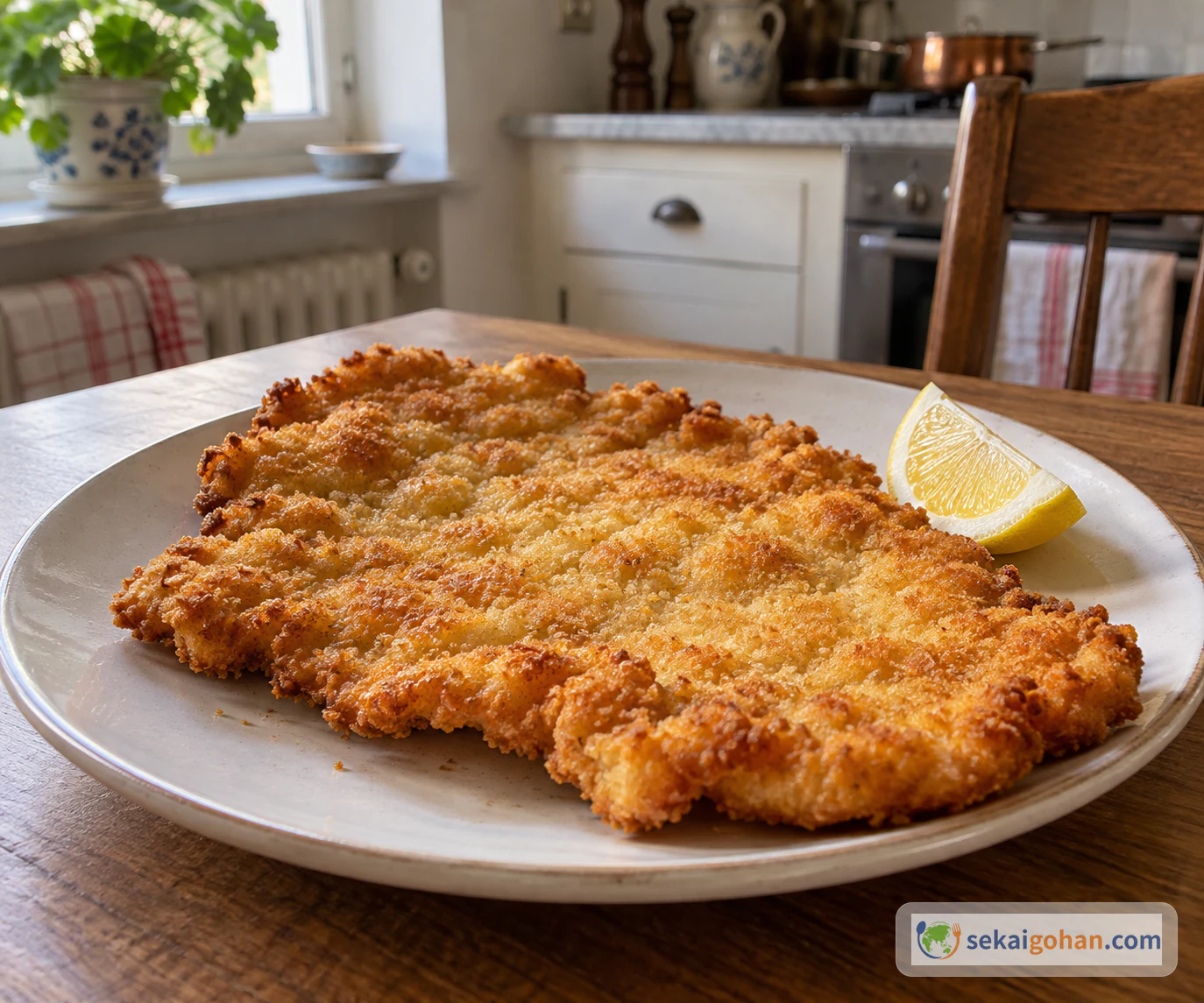
Wiener Schnitzel: Vienna's Thin, Golden Veal Cutlet
Ingredients
| Ingredient | Amount | Role |
|---|---|---|
| Veal, from the leg (Frikandeau or Schale/Kaiserteil) | 1.25 lb (600 g), weighed after trimming off sinew and excess fat | The defining meat of the dish. Cut into 4 pieces |
| Eggs (Eier) | 2 | Beaten with a fork; they glue the breadcrumbs to the floured meat |
| Salt (Salz) | To taste | Sprinkled evenly on both sides of the meat |
| Soft wheat flour (glattes Mehl) | As needed | The first, thin layer. Spread on a plate and shake off the excess |
| Fine dry breadcrumbs (Semmelbrösel) | As needed | The outer crust. Spread on a separate plate |
| Neutral vegetable oil (Öl) | Enough for a depth of about 1 inch (2–3 cm) in your pan | The frying fat. The total depends on the width of the pan |
| Lemon (Zitronenspalten/-hälften) | Wedges or halves | Squeezed over the crust at the table |
Steps
1Cut and pound the veal to about 0.25 inch (6 mm)
Cut the 1.25 lb (600 g) of trimmed veal into 4 pieces. Make a few shallow cuts into the sinew at the edges; this helps keep the cutlet from curling. Don't cut so deep that you split the meat.
Cover each piece with plastic wrap and pound it gently and evenly with a meat mallet until it is about 0.25 inch (6 mm) thick. Work across the whole surface rather than hammering one spot, and stop before the meat tears. There is no need to go thinner than that.
2Salt the meat and set out the coating plates
Sprinkle salt evenly over both sides of each cutlet. Beat the 2 eggs with a fork, not a mixer, on a shallow plate. Spread the flour on one plate and the fine breadcrumbs on another, and line them up in order: flour, egg, breadcrumbs.
3Coat in flour, then in egg
Lay a cutlet in the flour, turn it so both sides are covered, and shake off the excess so only a thin layer remains. Then draw it through the beaten egg until it is wet all over, with no dry patches. Keep to this order until the cutlet reaches the breadcrumbs.
4Coat in fine breadcrumbs and press lightly
Lay the egg-coated cutlet in the breadcrumbs, cover both sides, and press lightly. Shake off any loose crumbs. Repeat with the remaining cutlets.
5Shallow-fry in hot oil, swirling the pan
Pour oil into a wide, deep enough pan to a depth of about 1 inch (2–3 cm) and heat it. Lay in a cutlet. Decide how many to fry at once by the size of your pan; the cutlets should lie in the oil without crowding.
As it fries, swirl the pan gently from time to time so the hot oil washes over the top of the crust. Keep the movement calm rather than tossing the pan. Fry until the underside is golden.
6Turn, cook through and drain
Turn the cutlet carefully with a meat fork and fry the second side until golden and cooked through. Lift it out with a spatula, let the excess oil drip off, and blot it lightly on kitchen paper.
A golden crust tells you how the coating looks, not whether the meat is safely cooked. Heat the cutlet until the center reaches 167°F (75°C), and keep it there for at least 1 minute. For a thin cutlet, insert the thermometer from the side so the whole sensing area sits in the center, following your thermometer's instructions on insertion depth, and check more than one piece. Measure the meat, not the oil or the pan.
7Serve with lemon
Place each schnitzel on a warmed plate with a lemon wedge or half, and squeeze the lemon over the crust at the table.