Ingredients and steps on one page. Print it, or choose “Save as PDF” in the print dialog.
Sekai Gohan
Pašticada: Croatian Dalmatian Celebration Beef with Prunes and Gnocchi
Ingredients
Main ingredients
| Ingredient | Amount | Substitutes & notes |
|---|---|---|
| Beef round (in a block) | 2.75 lb (1.2 kg) | Shank or rump also work. Ideally a lean cut with some connective tissue |
| Bacon (sliced) | 3.5 oz (100 g) | Pancetta can substitute. The umami of the fat is important |
| Prunes (pitted) | 5.5 oz (150 g) | Dried prunes. Semi-dried is fine too |
| Dry red wine | 1¾ cups (400 ml) | Cabernet Sauvignon or Merlot. An inexpensive bottle is enough |
| Red wine vinegar | ¾ cup (200 ml) | Apple cider vinegar can substitute (the acidity is a little gentler) |
| Tomato paste | 3 tbsp | — |
Aromatics and seasonings
| Ingredient | Amount | Substitutes & notes |
|---|---|---|
| Onions | 3 (sliced) | — |
| Carrots | 2 (sliced) | — |
| Celery | 2 stalks (sliced) | — |
| Garlic | 6 cloves (crushed) | — |
| Bay leaves | 3 leaves | — |
| Rosemary | 2 sprigs | 2 tsp if dried |
| Cloves | 6 | 1/2 tsp five-spice powder can substitute |
| Nutmeg | 1/2 tsp | — |
| Black peppercorns | 1 tsp | — |
| Sugar | 1 tbsp | — |
| Salt | 2 tsp | Adjust as you taste |
| Olive oil | 3 tbsp | — |
Side dish (handmade gnocchi)
| Ingredient | Amount | Notes |
|---|---|---|
| Potatoes | 1 lb (500 g) | A waxy-to-all-purpose type recommended |
| All-purpose flour | 5.5 oz (150 g) | — |
| Egg | 1 | — |
| Salt | 1/2 tsp | — |
Steps
1Marinate the beef
10 min + overnight
Pašticada begins with preparation the day before. This is the most important step.
Prick the surface of the beef with a fork in several dozen places. This lets the vinegar and wine penetrate into the meat. Put the beef in a large bowl and add ¾ cup (200 ml) wine vinegar, ¾ cup (200 ml) red wine (the rest is used the next day), 3 crushed garlic cloves, 2 bay leaves, 3 cloves and 1/2 tsp black peppercorns.
Add the slices of 1 onion and 1 carrot as well, cover with plastic wrap and marinate in the refrigerator for at least 12 hours, ideally 24. Turning the meat once partway through helps it soak evenly.
The science of the marinadeThe acid of the wine vinegar begins to break down collagen, and the tannins of the red wine build a layer of savoriness on the surface of the meat. An acidic marinade penetrates only about 0.25 inch (5 mm) into the surface of meat, so pricking it with a fork is essential. Marinate no more than 24 hours; past that, the surface of the meat turns mealy.
2Sear the surface of the beef
15 min
Take the beef out of the marinade and pat it thoroughly dry with paper towels (any moisture left prevents browning). Keep the marinade and vegetables.
In a large pot (an enameled cast-iron pot is best), put 3 tbsp olive oil and heat over high heat until it smokes. Add the beef and sear 2–3 minutes per side until every side is deeply browned. This browning (the Maillard reaction) is the foundation of the sauce's deep color and flavor.
Once seared, take it out and set it on a plate.
3Fry the bacon and aromatics
15 min
Using the pan juices in the same pot, fry the bacon over medium heat for 5 minutes until the fat renders and the edges crisp and shrink. Do not discard the bacon fat; leave it in. This fat is the flavor base for frying the aromatics. Add the remaining 2 onions, 1 carrot and 2 celery stalks and cook over medium heat for 10 minutes until the onions turn amber and the whole volume of vegetables has softened to about half. Don't rush; stir occasionally with a wooden spoon to cook off the moisture.
Add 3 garlic cloves and fry for 2 minutes until fragrant. Garlic turns bitter if it burns, so stir constantly. Add 3 tbsp tomato paste and fry well for 1 minute to cook off the sourness. When the tomato paste forms a thin film on the bottom of the pot and turns dark brown, move on to the next step. This "frying the paste" step connects directly to the depth of the sauce.
4Start the braise
6 hours
Return the beef to the pot and add the marinade (with its vegetables), the remaining ¾ cup (200 ml) red wine, 5.5 oz (150 g) prunes, 1 bay leaf, 2 sprigs rosemary, 3 cloves, 1/2 tsp nutmeg and 1 tbsp sugar.
Add water until the meat is just covered (about 1¾ cups (400 ml)). Bring to a boil once over high heat, skim carefully, then cover and braise over low heat (just small bubbles trembling) for at least 4 hours, ideally 6.
Every hour, open the lid, check that the liquid hasn't reduced too much, and add ½ cup (100 ml) water if needed. Don't forget to turn the meat over gently.
The oven braise optionIf keeping the stovetop low for 6 hours is hard, there is also the method of braising in the oven at 300°F (150°C) for 5–6 hours. The temperature is more stable and the risk of scorching is lower. Just put the enameled cast-iron pot into the oven.
5Finish the sauce
20 min
When the beef is tender enough to shred with a fork, take it out and move it to a plate. Purée the sauce and vegetables left in the pot smooth with an immersion blender or a blender, prunes included. The sweetness and acidity of the prunes melt into the sauce and give it a distinctive richness.
Return the sauce to the pot and reduce over medium heat for 10–15 minutes to a velvety thickness. Taste and make the final adjustment with salt and pepper. If it lacks sweetness, add a little sugar; if it lacks acidity, add 1 tsp wine vinegar.
6Make the handmade gnocchi
30 min
Boil 1 lb (500 g) potatoes in their skins (or cook them in the microwave) and peel them while hot. Mash smooth with a masher or fork (do not use a food processor; it turns them gluey and ruins the texture).
Add 5.5 oz (150 g) flour, 1 beaten egg and 1/2 tsp salt to the mashed potato and bring it together lightly by hand. Kneading too much makes them tough, so stop as soon as the floury look is gone.
Divide the dough into 4, roll each into a rope 1 inch (2 cm) across and cut into 1 inch (2 cm) pieces. Pressing lightly with the back of a fork to make ridges helps the sauce cling.
Bring plenty of water to a boil in a large pot and add 1 tbsp salt. Add the gnocchi and lift them out 1 minute after they float. They are done when the surface is glossy, a light springiness remains in the center when pressed, and there is no floury core when you bite.
7Serve
5 min
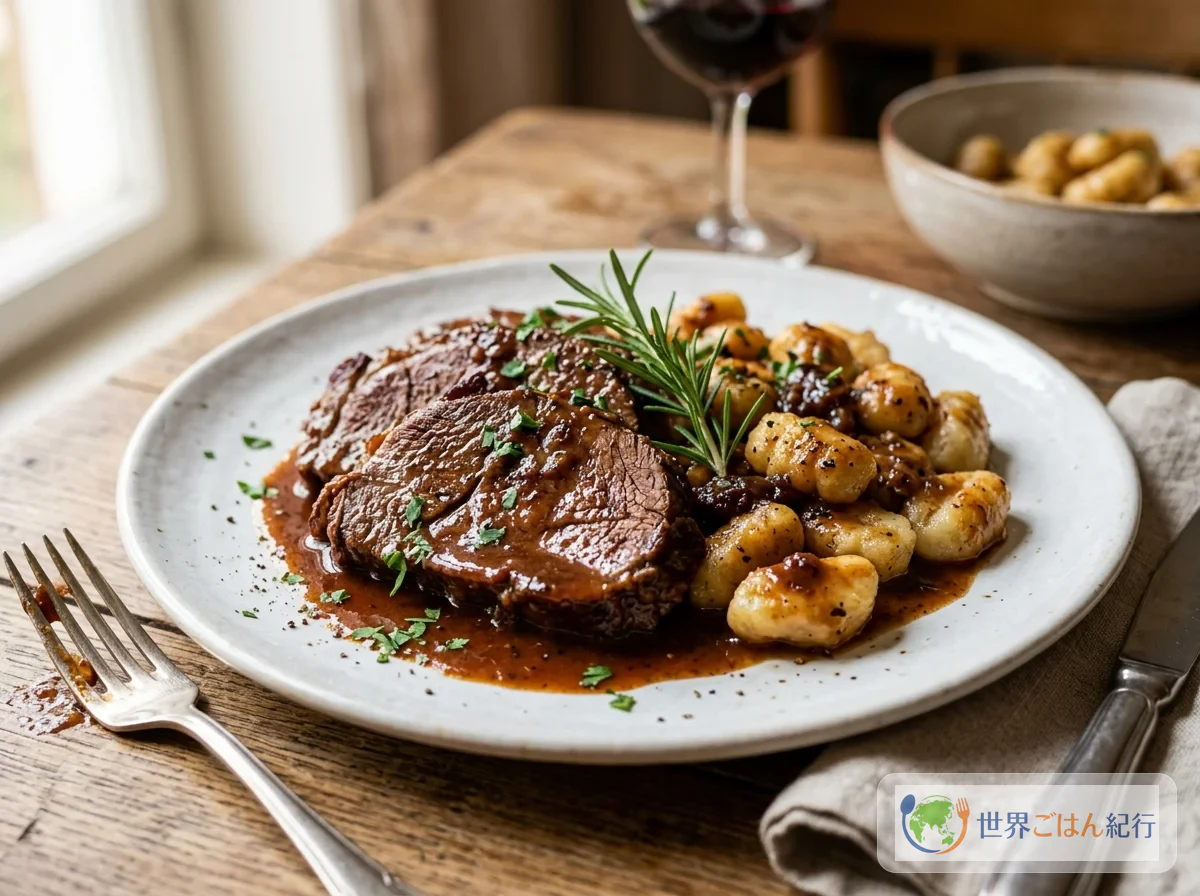
Slice the beef about 0.5 inches (1 cm) thick (it is tender enough to fall apart with a fork, so cut gently with a sharp knife). Cutting across the grain of the meat gives a more beautiful cross-section. Spread the gnocchi on a plate, fan the meat slices over them and spoon plenty of sauce over. Pour the sauce directly over the meat first, then spoon it around so that it reaches the gnocchi too. Finish with rosemary leaves, and a little grated Parmigiano-Reggiano if you like.
In restaurants in Dalmatia, pašticada is commonly served on a large ceramic platter in the center of the table for the family to share. Each person puts gnocchi on their plate and tops them with as much pašticada as they like.