Ingredients and steps on one page. Print it, or choose “Save as PDF” in the print dialog.
Sekai Gohan
Baguette: Classic French Bread with an Overnight Poolish (3 Loaves)
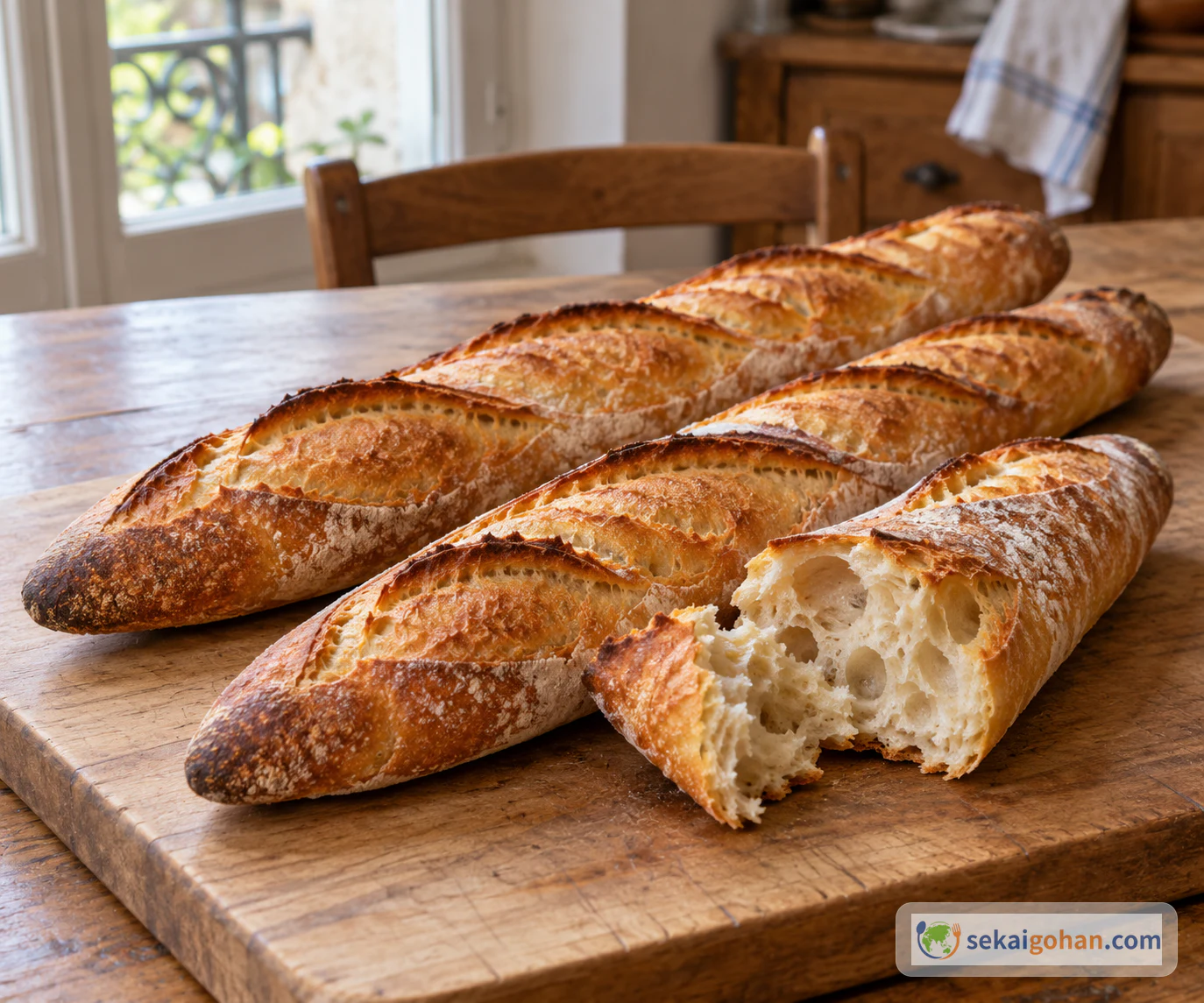
Ingredients
Poolish (mix the night before)
| Ingredient | Amount | Role and notes |
|---|---|---|
| Water | 4 oz (113g) | Hydrates the starter |
| Active dry yeast or instant yeast | 1/16 tsp (a pinch) | Just enough to start a slow overnight ferment |
| All-purpose flour | 4 oz (120g) | Unbleached all-purpose flour |
Final dough
| Ingredient | Amount | Role and notes |
|---|---|---|
| Water, lukewarm | 9 oz (255g) | Lukewarm |
| Poolish | All of it | Bubbly, fermented starter from the night before |
| Active dry yeast or instant yeast | 1½ tsp | Measured by volume |
| All-purpose flour | 15 oz (420g) | All-purpose is recommended. Bread flour works, but makes a stiffer dough |
| Table salt | 12g | Weigh it rather than measuring by spoon |
Steps
1Mix the poolish
In a bowl, combine 4 oz (113g) water, 4 oz (120g) all-purpose flour and 1/16 teaspoon (a pinch) of yeast. Stir until no dry flour remains. It will be a soft, sticky, uneven paste at this point, and that is right.
2Let the poolish ferment for about 14 hours
Cover the bowl and leave it at room temperature for about 14 hours. When it is ready, the surface is dotted with bubbles and the starter has visibly risen. If you see only a few bubbles, check your room temperature and your yeast rather than cutting the time short.
3Mix the final dough
Add all of the poolish, 9 oz (255g) lukewarm water, 1½ teaspoons yeast, 15 oz (420g) all-purpose flour and 12g table salt. Knead by hand, or mix with a stand mixer on medium-low speed for about 4 minutes. The dough is ready when it comes together, looks fairly smooth, and is soft enough to still stick a little to the bottom of the bowl.
4Rise for 45 minutes, fold, then rise 45 minutes more
Cover the dough and let it rise for 45 minutes. Then fold the edges of the dough into the center and turn it over. Let it rise for another 45 minutes, until it looks puffy. Judge by how much it has swelled, not only by the timer.
5Divide and rest
Gently deflate the dough and divide it into three equal pieces. Shape each into a rough round, cover, and rest for 15 minutes. If your schedule needs it, rest for up to 1 hour. This pause relaxes the dough so it lengthens easily in the next step.
6Shape into long loaves
Working with one piece at a time, fold the dough, seal the seam, and roll it out to about 15 inches (38 cm) long. If it springs back, let it rest a few minutes rather than forcing it. Place the loaves seam-side down on a floured couche or on a baking sheet.
Let them proof for 45 to 60 minutes. At a room temperature of about 20°C (68°F), they are ready when they look slightly puffy and feel soft and springy, like a marshmallow. Don't let them double in size.
7Preheat and score
While the loaves proof, preheat the oven to 450°F (about 232°C; set it to 230°C on a Celsius oven), with a baking stone or baking sheet inside and a cast-iron pan on a lower rack.
When the loaves are ready, use a sharp blade held at about a 45° angle to make three to five long diagonal cuts along each loaf.
8Load the loaves and add steam
Transfer the loaves into the oven, then pour 1½ US cups (about 355 ml) of boiling water into the hot cast-iron pan to create steam.
Boiling water and steamWear oven mitts, and keep your face and bare hands away from the boiling water and the burst of steam. Pour steadily and close the oven door.
9Bake until deep golden, then cool
Bake for 24 to 28 minutes, or until the loaves are a deep golden brown. Home ovens differ, so trust the color more than the timer. Move the baguettes to a rack to cool.