Ingredients and steps on one page. Print it, or choose “Save as PDF” in the print dialog.
Sekai Gohan
Crème Brûlée: Silky Vanilla Custard Under a Thin Burnt-Sugar Crust
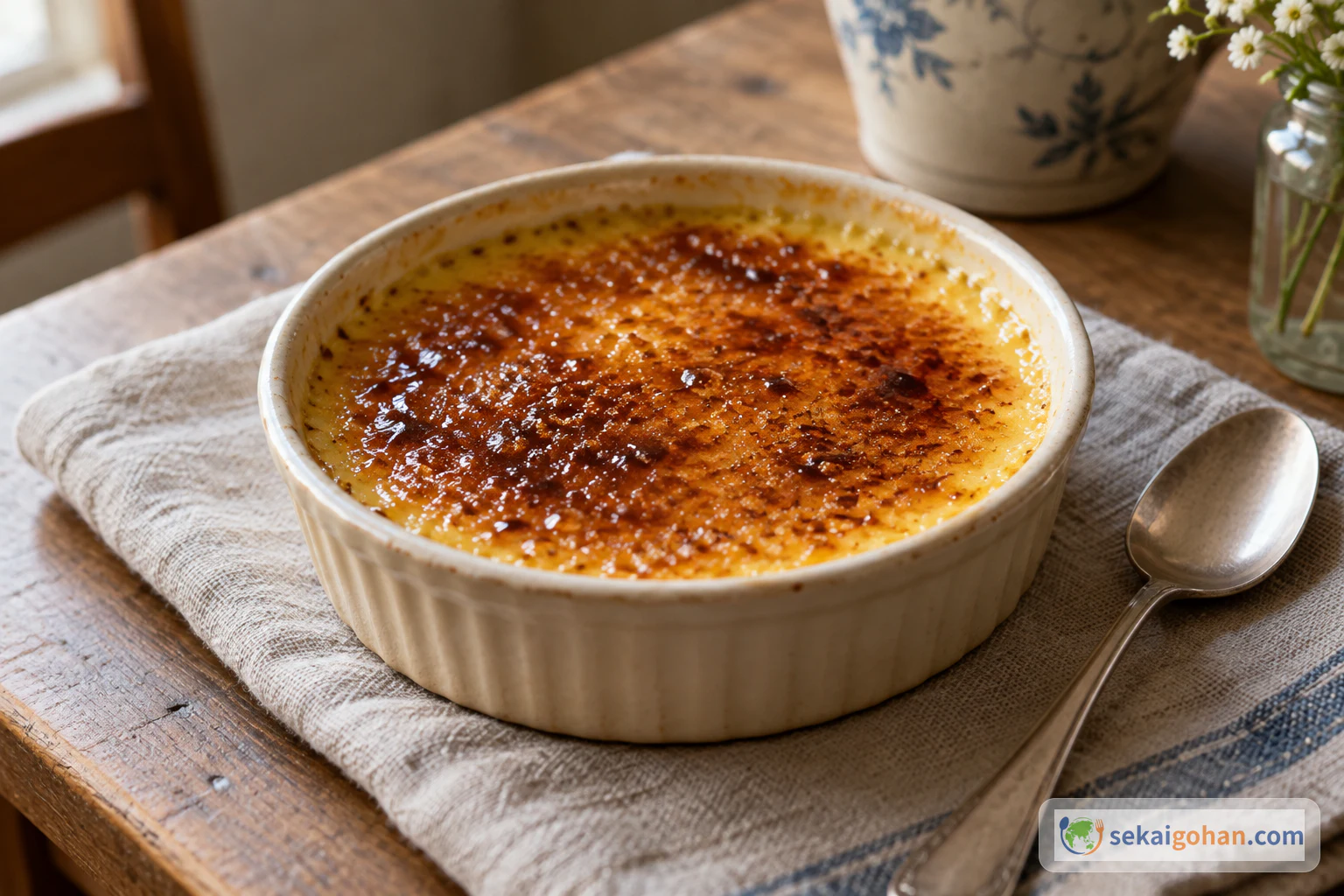
Ingredients
| Ingredient | Amount | Role |
|---|---|---|
| 35% whipping cream | 1½ cups (375 ml) | The body of the custard. Only the cream is warmed |
| Egg yolks | 4 | Set the custard and give it richness |
| Granulated sugar (for the custard) | ¼ cup (60 ml) | Sweetens the custard; whisked with the yolks |
| Vanilla extract | 1 tsp (5 ml) | Added after the cream and yolks are combined |
| Granulated sugar (for the topping) | 20–30 ml in total | Spread thinly over the four chilled custards and caramelized just before serving |
Steps
1Preheat the oven and set out the ramekins
Preheat the oven to 325°F (160°C). Arrange the four ½-cup (125 ml) ramekins in a deep baking tray so there is space around each for the water bath later.
2Warm the cream
Pour the 1½ cups (375 ml) of cream into a small saucepan and warm it until small bubbles appear around the edge of the pan. Warm only the cream; nothing else goes into the pan. Keep the vanilla extract aside for later.
3Whisk the egg yolks and sugar
In a bowl, whisk the 4 egg yolks with the ¼ cup (60 ml) of custard sugar for 1–2 minutes, until the mixture thickens slightly and turns a paler yellow. You are combining them smoothly, not whipping them into a stiff foam.
4Add the warm cream gradually, then the vanilla, and fill the ramekins
Pour the warm cream into the yolk mixture a little at a time, whisking as you go. Adding it gradually warms the yolks gently instead of shocking them, which helps keep them from setting in bits. Once all the cream is in, stir in the 1 tsp (5 ml) of vanilla extract.
Strain the custard through a fine sieve and divide it evenly among the four ramekins.
5Bake in a water bath until the center barely moves
Set the tray on the oven rack and pour hot water into the tray until it comes halfway up the sides of the ramekins. Bake at 325°F (160°C):
Ramekin depth Baking time Shallow ramekins 25–30 minutes About 2 inches (5 cm) deep 30–35 minutes The custards are ready when they are almost set: the edges are firm and the center still moves slightly when you nudge the dish. If the whole surface is liquid, give it more time and check again. Baking until there is no movement at all risks overcooking, which can make the custard grainy.
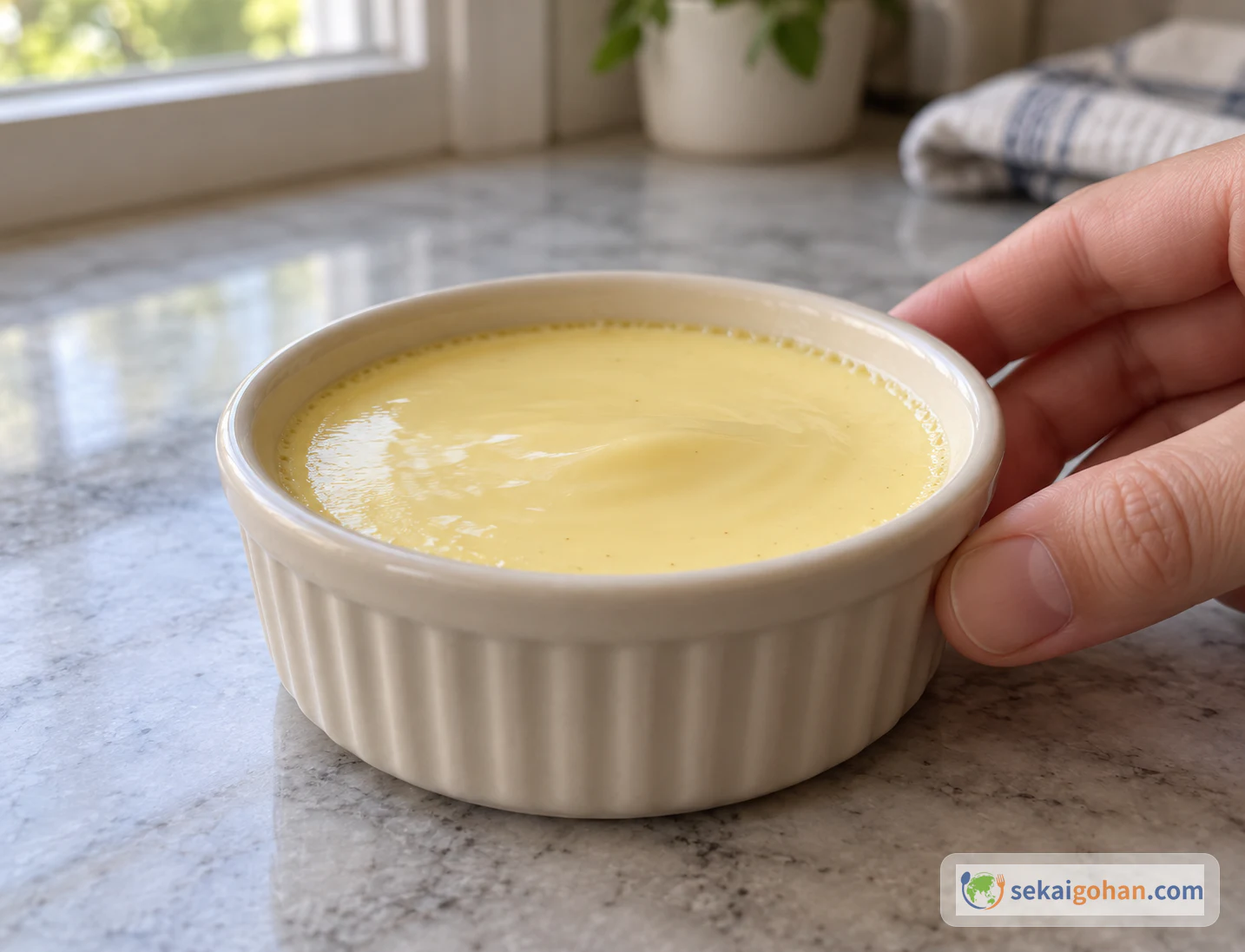
Set edges and a small, even wobble in the middle mean it is time to take them out 6Cool, cover and chill for at least 2 hours
Carefully lift the ramekins out of the hot water and let them cool on a wire rack. Once cool, cover them and refrigerate for at least 2 hours. Do not add the topping sugar yet; the custard needs to be cold before it is finished.
7Caramelize the sugar just before serving
When you are ready to serve, spread the 20–30 ml of topping sugar in a thin, even layer over the four chilled custards. Caramelize it with a mini kitchen torch, keeping the flame moving across the surface and stopping when the sugar has turned a thin amber. Make sure your ramekins and torch are suited to this use.
Without a torch, use the oven grill: place the ramekins together on a tray so you can move them in and out at once, and watch the sugar the whole time, taking them out as soon as it colors.
8Crack the crust and serve
Serve right away, while the custard is still cold and the crust has just set. Breaking the shell with the spoon and scooping up the smooth custard beneath it is the whole point, so there is no need to warm the dessert; heating it would lose the contrast between cold custard and crisp sugar.