Ingredients and steps on one page. Print it, or choose “Save as PDF” in the print dialog.
Sekai Gohan
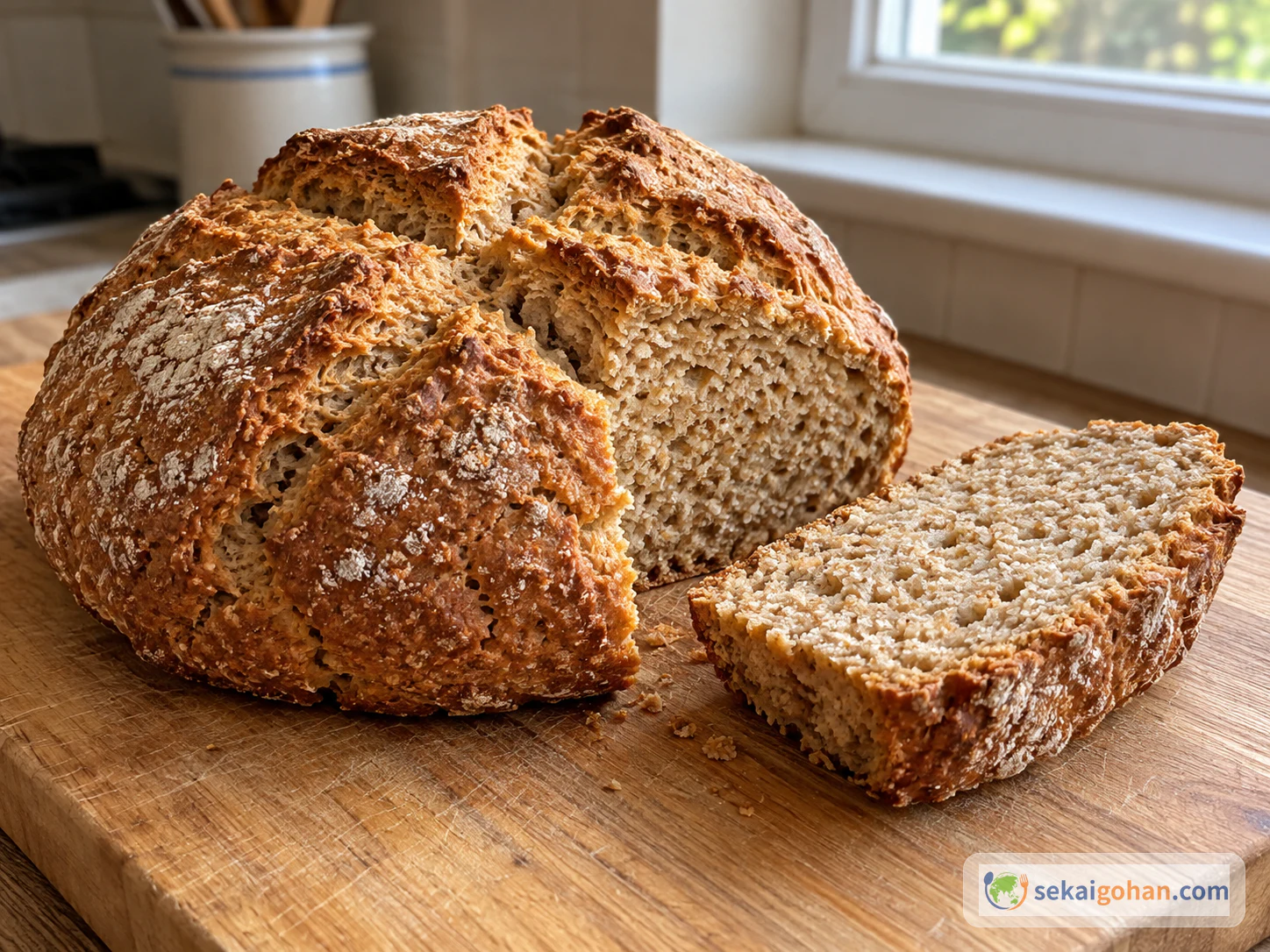
Irish Soda Bread: Brown Soda Bread with Wholemeal Flour and Buttermilk
Ingredients
| Ingredient | Amount | Role |
|---|---|---|
| Plain white flour | 9 oz (250g) | Lightens the loaf alongside the wholemeal flour |
| Plain wholemeal flour | 9 oz (250g) | The nutty flavour and coarse crumb of brown soda bread |
| Salt | 1 tsp | Seasoning |
| Bicarbonate of soda (bread soda) | 1 tsp | The raising agent, reacting with the buttermilk's acid. Not the same as baking powder |
| Buttermilk | Up to 1¾ cups (400 ml) | Acid and moisture. Add only until a sticky dough forms; some may be left over |
| Flour for dusting | A little | For the work surface |
Steps
1Preheat the oven and prepare the tray
Preheat the oven to 400°F (200°C). Line a flat baking tray with baking paper. Home ovens can run hotter or cooler than their dial, so check the colour and sound in step 6 as well as the time.
2Mix the dry ingredients evenly
Put the plain white flour, wholemeal flour, salt and bicarbonate of soda into a large bowl and mix them well. Aim for the soda to be spread evenly through the flour. Pockets of unmixed soda can lead to bitter spots or an uneven rise, so don't leave streaks.
3Add the buttermilk a little at a time
Make a well in the centre of the flour. Pour in about half of the buttermilk first. With your fingers or a round-bladed knife, draw the flour from the sides into the liquid. Then add the remaining buttermilk a little at a time. Stop when no dry flour is left and the mixture has become a soft, sticky dough. Depending on your flour, you may not use all 1¾ cups (400 ml).
4Shape quickly, without kneading
Turn the dough out onto a lightly floured surface. Bring it together into a round ball and flatten it slightly with your palm. Do not knead it. The reaction between the buttermilk and the soda is already under way, so keep handling brief. You are not aiming for the springy, stretchy feel of a yeasted dough.
5Cut a deep cross
Move the round onto the lined tray. With a large sharp knife, cut a deep cross into the top, marking the loaf into quarters. Do not cut all the way through the base. The four sections should stay joined as a single loaf.
6Bake and check the base
Bake at 400°F (200°C) for about 30 minutes. The loaf is done when it has browned and sounds hollow when you tap the base lightly. Lift it carefully with a cloth, because it will be very hot. Use the colour and the hollow sound to decide, not the time alone.
7Cool on a wire rack
Place the loaf on a wire rack to cool. Eat it on the day it is baked, or toast it the next day.