Ingredients and steps on one page. Print it, or choose “Save as PDF” in the print dialog.
Sekai Gohan
Bagna Cauda: Piedmont's Warm Anchovy-Garlic Dip for Winter Vegetables
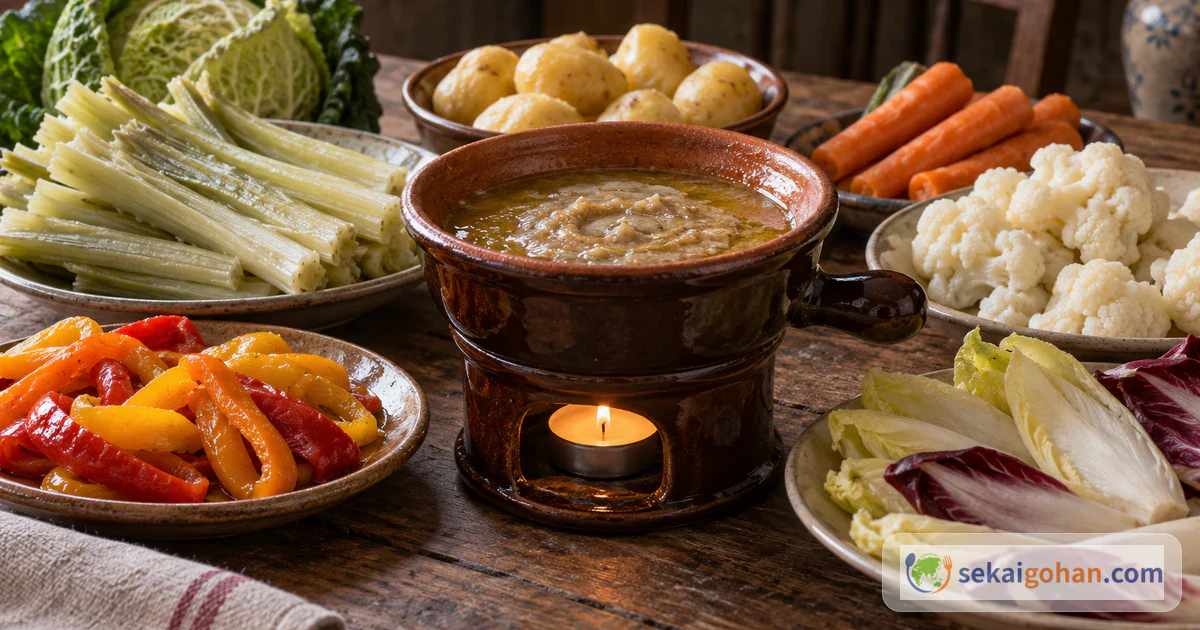
Ingredients
Sauce
| Ingredient | Amount | Substitutes & notes |
|---|---|---|
| Salt-cured anchovy (fillets) | 5.5 oz (150 g) | Remove the bones and rinse off the surface salt. If using oil-packed, drain the oil and add no extra salt |
| Garlic | 6 cloves | Remove the center if it is green. To soften the aroma, soak in milk for 2 hours and wipe dry |
| Extra virgin olive oil | 1 cup (240 ml) | ¼ cup (60 ml) first, then ¾ cup (180 ml) after adding the anchovy. Choose one with a mild aroma |
| Unsalted butter | 1 oz (30 g) | Rounds out the finish. Replace with olive oil if avoiding dairy |
| Walnut oil | 1 tbsp (15 ml) | Optional. Adds fragrance |
Vegetables for dipping
| Ingredient | Amount | Substitutes & notes |
|---|---|---|
| Cardoon | 10.5 oz (300 g) | If unavailable, combine thick celery stalks and cabbage cores |
| Jerusalem artichoke (topinambur) | 9 oz (250 g) | Can be replaced with burdock or lotus root, but the earthy scent and texture change |
| Potatoes | 10.5 oz (300 g) | Peeled, in bite-size pieces. Boil before use |
| Red beets | 5.5 oz (150 g) | Precooked is easier to handle. If you have none, red turnip can make up the color |
| Red bell pepper | 1 (about 5.5 oz/150 g) | Raw, or roasted and peeled |
| Celery | 2 stalks (about 4 oz/120 g) | Remove the strings and cut to an easy length |
| Carrots | 2 (about 6.5 oz/180 g) | Served raw. If hard, cut into thin sticks |
| Cabbage | 9 oz (250 g) | Raw leaves or briefly boiled |
| Endive or escarole | 5.5 oz (150 g) | Chicory or outer lettuce leaves can substitute |
| Cauliflower | 9 oz (250 g) | Divide into small florets and boil |
| Lemon | 1/2 | For the acidulated water to soak the cardoon and Jerusalem artichoke |
For the table
| Ingredient | Amount | Substitutes & notes |
|---|---|---|
| Eggs | 2 | Cooked in the last of the sauce. Even if of raw-eating quality, avoid undercooking |
| Red wine | ¼ cup (60 ml) | Optional if you use it to rinse the anchovy. Water also works |
| Polenta or bread | not prepared | In the traditional way of eating, bread is not the main dipper; if needed, put out a little on a separate plate |
Steps
1Prepare the garlic and anchovy
15 min
Slice 6 cloves of garlic and remove the green center. Rinse the surface salt from 5.5 oz (150 g) salt-cured anchovy with water or red wine, take out the bones, and wipe dry with paper towel. Only when you want a milder garlic aroma, soak it in milk for 2 hours, take it out, and wipe it completely dry. Do not put the used milk into the sauce. Water from the anchovy entering the oil will splatter, so dry it well after rinsing.
2Soften the garlic without coloring it
10–15 min
In a heavy small pot or earthenware pot, put 1 oz (30 g) butter, ¼ cup (60 ml) olive oil, and the garlic, and set over very low heat. Move it slowly with a wooden spoon and wait until the edges of the garlic are still white and it is soft enough to crush with a finger. Do not let the garlic turn brown. If brown color, strong bubbles, or a fried smell appear, the heat is too high. Take the pot off the heat to lower the temperature, and then resume.
3Melt the anchovy into the oil
20–30 min
Add the anchovy, then the remaining ¾ cup (180 ml) olive oil and 1 tbsp (15 ml) walnut oil. Keep stirring slowly with a wooden spoon over very low heat, and continue over very low heat until the anchovy pieces disappear. The sauce should flow, be brown-tan, and not boil hard. Do not color the garlic or fry the sauce. If smoke comes up, a burnt smell appears, or large bubbles rise in the oil, take the pot off the heat at once. Once garlic burns, its bitterness cannot be fully removed.
TipEven without a thermometer, if small bubbles rise from the bottom of the pot one at a time, you can keep heating as it is. Move on when the garlic crushes under the wooden spoon and the anchovy is no longer in strands. If you raise the heat to hurry, the fish and garlic fry and bitterness comes out.
4Separate the vegetables for serving raw from those to boil
20–25 min
Cut the cardoon and Jerusalem artichoke to an easy size. Soak them in water with lemon juice as you cut, to prevent discoloration. Boil each in water over medium heat: about 20 minutes for the cardoon and about 7 minutes for the Jerusalem artichoke. Take them out when a bamboo skewer goes through the center but they do not fall apart. Take the boiled vegetables out before they collapse. Heat the potatoes and cauliflower in separate pots until soft, drain, and let the surface dry. Wash and cut the celery, carrot, cabbage, and endive, and serve them raw. Use the bell pepper raw, or roast it in the next step. Thicker pieces take longer, so test with a skewer.
5Cook the onion and bell pepper
20 min
Cut the onion in half lengthwise and roast it cut side down in a 400°F (200°C) oven for about 20 minutes. If you roast the bell pepper, take it out when the skin has color and the flesh has softened. Peel it after it has cooled a little. Slice the precooked beet, and drain the cauliflower and potatoes. Do not add the juices from the roasted vegetables to the sauce, so each vegetable keeps its own sweetness and moisture.
6Keep the sauce warm and arrange the vegetables
5 min
Taste the sauce for saltiness. If the anchovy is too salty, add more vegetables or thin it with a little warmed olive oil. Move the sauce to a small pot or a dedicated fujot. Keep it over low heat, just below the point where the surface bubbles. Do not boil the oil. At the table, set the pot where it cannot tip. Arrange raw and warm vegetables on separate plates, and let each person dip one clean piece at a time. In the traditional way of eating, a bitten vegetable is not returned to the pot, and bread is not used to soak up the sauce.
CautionDo not set an ordinary small dish or a non-heatproof vessel over a candle. If you use a fujot, follow the instructions for the dedicated item, and do not leave your seat while the flame is lit. Do not leave the sauce and vegetables at room temperature for long; bring to the table only what you will eat.
7Set an egg in the leftover sauce
5 min
Add 2 beaten eggs to the sauce left at the end of the meal. Stir with a wooden spoon over medium-low heat until the egg is set throughout and no liquid remains. In Piedmont, the sauce left at the bottom of the pot, called "spesso della bagna," is finished this way. Eat every last spoonful with egg. Heat until the whole thing is set; do not leave it half-raw. Do not store it; eat it on the spot. For sauce you will keep, move it to a shallow clean container and refrigerate within 2 hours of cooking. Do not store garlic oil at room temperature.