Ingredients and steps on one page. Print it, or choose “Save as PDF” in the print dialog.
Sekai Gohan
Spaghetti Carbonara: The Roman Way with Egg Yolks and Pecorino
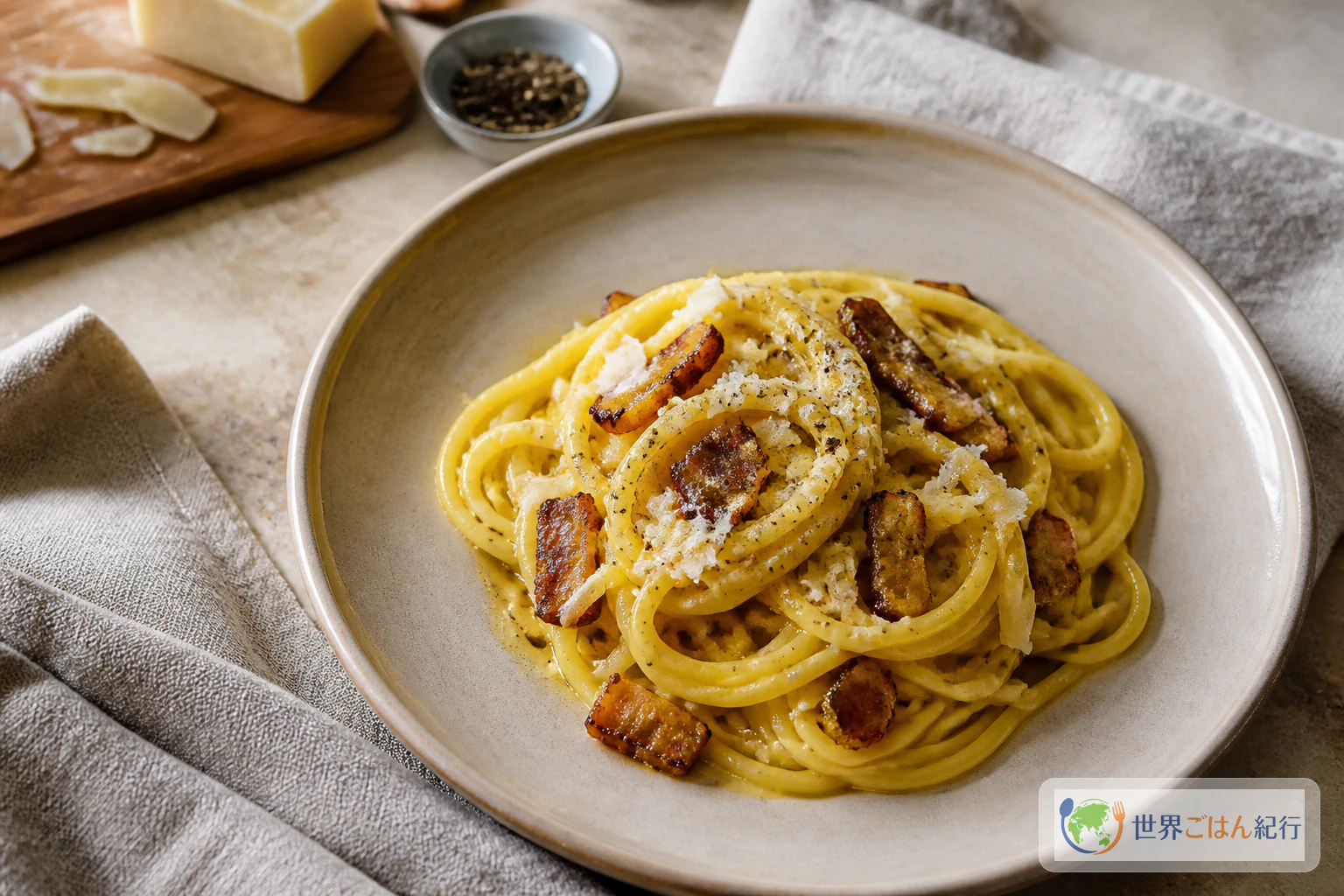
Ingredients
| Ingredient | Amount | Role & how to choose |
|---|---|---|
| Spaghetti | 200 g | About 1.6 mm thick. Rigatoni or mezze maniche are fine too |
| Pancetta, block | 80 g | Use the same amount of guanciale if you have it |
| Egg yolks | 3 | No whites, so it's rich and the setting is easy to read |
| Pecorino Romano | 50 g | Grate finely. If very salty, replace some with Parmigiano |
| Black pepper (whole) | 2–4 g | Half into the yolks, the rest for finishing |
| Water for boiling | 1.5 L | Reserve a little extra to loosen the noodles (about 6 1/3 cups) |
| Salt for the pasta water | 10 g | Adjust for the saltiness of the meat and cheese |
Steps
1Make the yolk and cheese paste
5 min
In a bowl, combine 3 egg yolks, 1.75 oz (50 g) finely grated Pecorino Romano and 1–2 g ground black pepper. No heat is used. Mix with a fork for about 40 seconds; it's ready when no dry cheese remains and it forms a thick paste that falls slowly when lifted. Don't add water or cream yet. Keep the bowl away from the stove, on a room-temperature counter.
2Render the pancetta
8 min
Cut the pancetta into pieces about 0.25 inch wide and 1 inch long (7 mm by 3 cm) and arrange them in a cold skillet. Set it over medium-low heat and cook for 6–8 minutes, turning occasionally. When the fat turns clear and the edges of the lean are golden, turn off the heat. The key is to stop before it smokes or the fat browns and burns.
Transfer the pancetta to a plate, leaving about 2 tbsp fat in the skillet. If there's too much fat, pour about 1 tbsp off into a separate container. Kept rather than thrown out, it's useful for other sautéed dishes, but never pour hot fat down a sink with water in it.
3Boil the pasta al dente and reserve the water
9–11 min
Bring 1.5 L water to a boil in a pot and dissolve 10 g salt. Add the spaghetti and cook 1 minute less than the package time. If the package says 9 minutes, pull out a strand at 8 minutes and bite it to check for a thin firm core in the center. One minute before it's done, scoop 150 ml pasta water into a measuring cup.
Don't leave the pasta sitting in a colander; lift it out with tongs and go straight to the next step. If the surface of the noodles dries out, the yolk paste won't spread easily.
4Coat the noodles with pancetta fat
1 min
Transfer the pasta to the skillet with the pancetta fat. With the heat still off, lift and toss with tongs for 30–45 seconds. It's enough when the noodles shine with fat and no fat runs to the bottom of the pan. Only if they look dry, add 1 tbsp of the reserved pasta water.
If steam keeps rising strongly from the skillet, move it to a cool surface and wait 30 seconds. Bringing the pan's heat down a little before the yolks go in helps the emulsion that follows.
5Add the yolk paste and emulsify
2 min
Add the yolk and cheese paste to the skillet and toss broadly from the bottom with tongs. At first the paste sticks to the noodles, so add pasta water 1 tbsp at a time, mixing for about 10 seconds after each. Expect to use about ¼ cup (30–60 ml) in total.
Aim for no visible egg curds, a glossy sauce, and noodles that trail thin threads of sauce that fall slowly when lifted. If thin liquid pools at the bottom, you've added too much water. If instead the cheese forms little lumps, immediately move the skillet to a cool surface and toss while adding pasta water 2 tsp at a time. If it feels like it's about to set, don't keep heating it. Residual heat alone cooks it enough.
6Plate on warm dishes and finish with black pepper
1 min
Warm the plates with hot water and wipe them dry, then mound the noodles in the center of each plate about 4 inches (10 cm) across. Top with the reserved pancetta and grind over the rest of the black pepper. If you add more cheese, keep it to a little, and serve within 1 minute of plating.
Toss off the heat so the egg turns creamy, and serve right away. Leave it waiting in the pan and the residual heat sets the egg while the noodles absorb moisture and turn heavy. Think of carrying it to the table as part of the cooking.