Ingredients and steps on one page. Print it, or choose “Save as PDF” in the print dialog.
Sekai Gohan
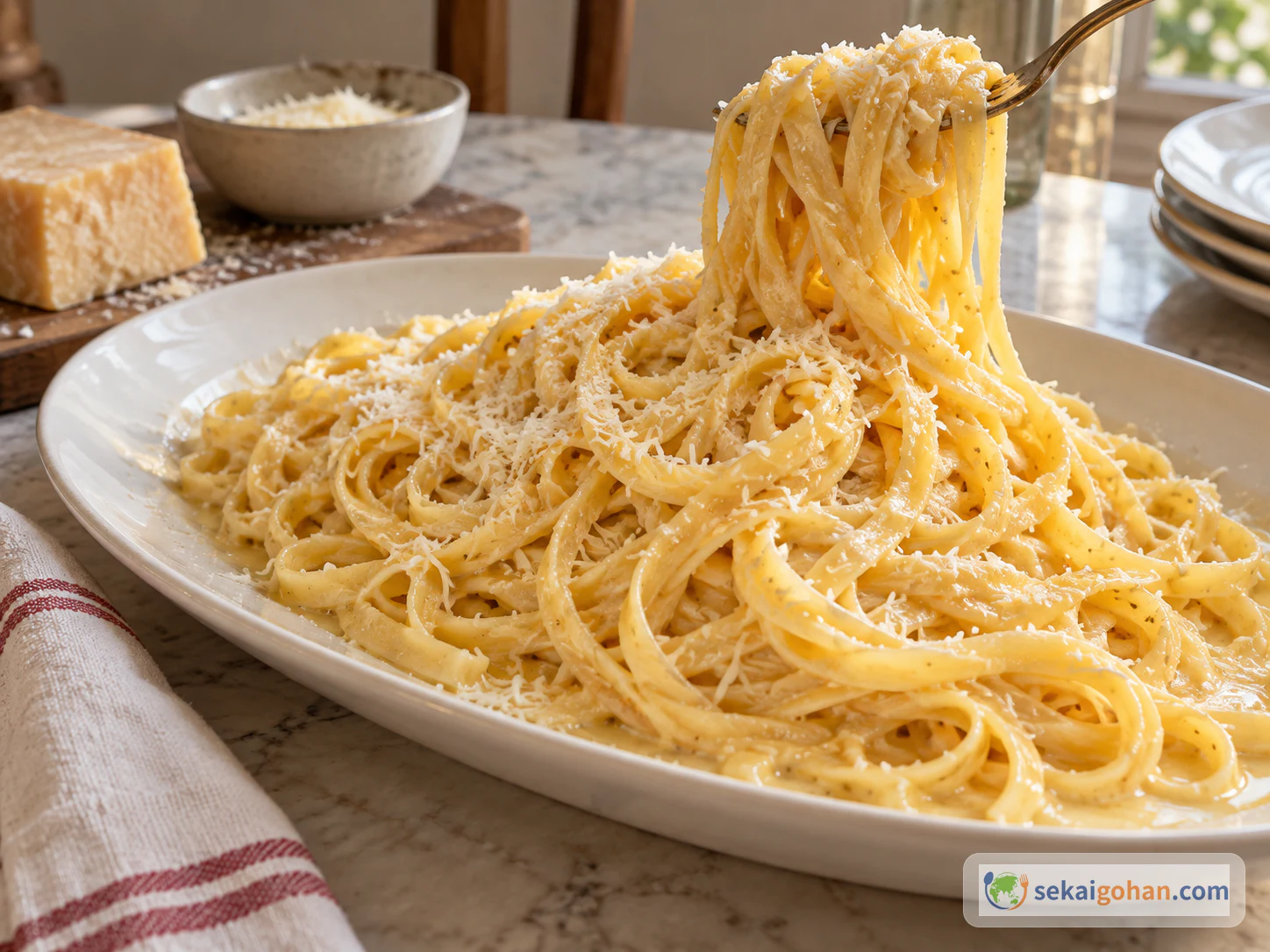
Fettuccine Alfredo: Rome's Butter and Parmigiano Pasta Without Cream
Ingredients
| Ingredient | Amount | Role |
|---|---|---|
| Very thin fresh egg fettuccine | 14 oz (400g) | The body of the dish. Thin fresh egg pasta cooks very quickly and carries the sauce |
| Unsalted butter, fresh, softened | 5.5 oz (160g) | Spread on the serving plate and softened at room temperature so it melts into the hot pasta |
| Parmigiano Reggiano PDO, aged 24 months | about 2.5 oz (70g) per person (about 10 oz (280g) for 4) | Grated finely and sifted. Gives savory depth and, with the butter and water, forms the sauce |
| Pasta cooking water | As much as needed to emulsify | Added a little at a time to bring butter and cheese together |
| Salt | As needed, for the cooking water | Added to the boiling water |
Steps
1Soften the butter and grate the cheese
Spread the 5.5 oz (160g) of unsalted butter over a wide serving plate and leave it at room temperature until soft. Grate the Parmigiano Reggiano (about 10 oz (280g)) finely and sift it. Large flakes are harder to blend in evenly during the short time the sauce has to come together.
2Cook the fresh pasta in salted water for under a minute
Bring a large pot of water to a boil and add salt, starting modestly since the cheese is salty. Add the 14 oz (400g) of fresh egg fettuccine and cook for under a minute. If your pasta's package gives a time, check it against the thickness of your product.
Restaurants often cook thin egg pasta for 20 to 30 seconds, and this recipe keeps to under a minute.
3Lift the pasta straight onto the buttered plate
Do not drain the pasta and do not throw away the water. Lift the pasta out with a large fork and move it directly onto the plate with the butter. The water still clinging to the ribbons moistens their surface so the cheese can blend in. Keep the pot of cooking water close by for the next steps.
4Add the cheese
Scatter the grated cheese over the hot pasta and begin lifting the ribbons with the fork so the cheese falls between them and meets the melting butter. Keep a little of the cheese back so you can judge the sauce as it forms.
5Lift, turn and add water until glossy
Add pasta water a little at a time and keep lifting and turning the pasta, bringing it up from the bottom of the plate to the top. This movement emulsifies the butter and cheese. Work in the remaining cheese as you go. Stop when the whole tangle has a sheen and the sauce coats each ribbon evenly. Do not put the plate over high heat or let the cheese boil.
6Serve at once
Serve immediately, straight from the plate, while it is still steaming. In Rome, it is finished in front of the diners, which is part of what makes the dish special.