Ingredients and steps on one page. Print it, or choose “Save as PDF” in the print dialog.
Sekai Gohan
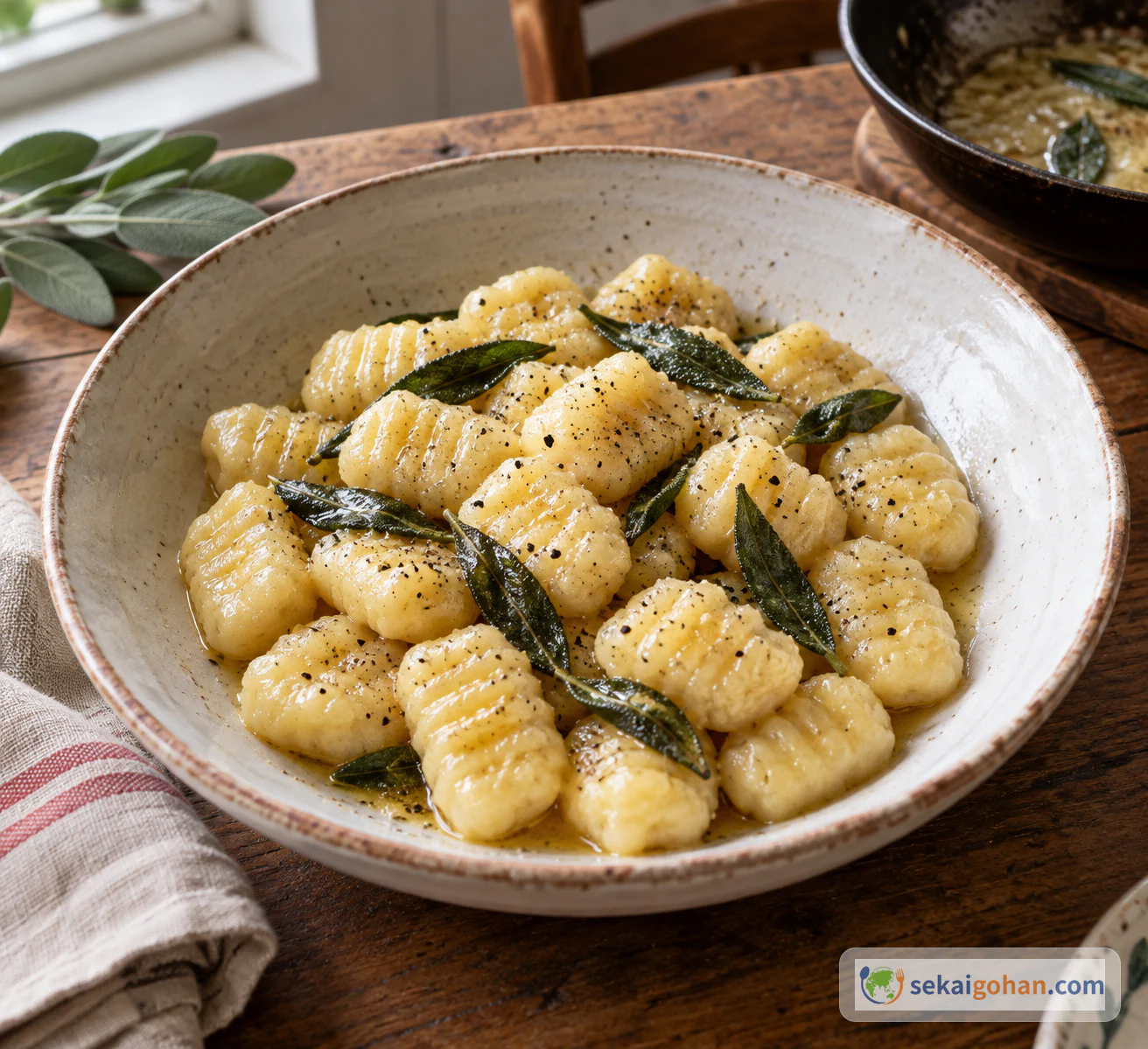
Potato Gnocchi: Italian Gnocchi di Patate with a Light Dough and Fork Ridges
Ingredients
Gnocchi dough
| Ingredient | Amount | Role and how to choose |
|---|---|---|
| Red potatoes (floury) | 2.25 lb (1 kg) | The body of the dough. Choose floury, drier potatoes. New potatoes hold more water and need more flour |
| All-purpose flour | 10.5 oz (300 g) | Binds the potato. Too much makes the gnocchi hard; too little and they fall apart |
| Medium egg | 1 | Lightly beaten before it goes in |
| Fine salt | to taste | For the dough |
| Remilled durum wheat semolina | as needed | For dusting the worktop and tray. Not mixed into the dough |
For cooking
| Ingredient | Amount | Role |
|---|---|---|
| Salt for the cooking water | as needed | Salt the boiling water separately from the dough |
Optional serving: butter and sage
| Ingredient | Amount | Role |
|---|---|---|
| Butter | as needed | One serving option. Not part of the dough |
| Fresh sage | a few leaves, as needed | Fragrance for the butter |
Steps
1Boil the potatoes in their skins from cold water
Put the potatoes, skins on, in a large pot and cover them generously with cold water. Bring to a boil. Allow about 30–40 minutes after the water boils, but size changes the time, so check with a fork: it should go into the center without resistance.
2Rice the hot potatoes onto the flour
Before draining, pour the 10.5 oz (300 g) of flour into a mound on a clean worktop. Drain the potatoes and, while they are still hot, press them through a potato ricer directly onto the flour. The skins stay behind in the ricer, so you don't need to peel them first. The potatoes are scalding: hold them with a cloth or a heat-resistant glove, not your bare hands.
3Add the egg and salt, and combine briefly
Add the lightly beaten egg and salt to taste over the potato and flour. Bring everything together quickly until you have a soft, even dough. Stop there: working the dough longer than necessary makes the gnocchi hard. Don't treat adding more flour as an automatic fix. If the dough feels sticky, handle it with a light dusting of semolina on the worktop rather than kneading flour in.
4Shape ropes about 1 inches (2 cm) thick and cut
Divide the dough into portions. Keep the portions you are not working on covered with a cloth so they don't dry out. Using your fingertips, roll one portion on the lightly dusted worktop into a rope about 1 inches (2 cm) in diameter, then cut it into bite-size pieces with a knife.
5Make ridges with a fork, then set the gnocchi apart
Press each piece lightly with your thumb against the back of a fork, or a gnocchi board if you have one, and roll it off to form ridges on the outside and a small hollow on the inside. The ridges are not only decoration: they give the sauce somewhere to cling. A fork works perfectly well. Place the finished gnocchi on a tray or cloth lightly dusted with semolina, spaced apart so they don't stick together.
6Boil in salted water in small batches and lift them as they float
Bring a large pot of water to a boil and salt it. Add the gnocchi a few at a time; dropping in too many at once cools the water. As each gnocchi rises to the surface, lift it out with a slotted spoon. Use floating as your signal rather than a fixed number of minutes.
7Toss with the sauce while warm
Move the gnocchi straight into the sauce you have chosen and toss gently while they are warm. For the optional butter and sage serving, melt butter in a pan with a few sage leaves and turn the cooked gnocchi through it; the pieces will pick up a little color in the pan. The amounts of butter and sage are up to you. Keep the sauce light enough that it sits in the ridges instead of burying the dough.