Ingredients and steps on one page. Print it, or choose “Save as PDF” in the print dialog.
Sekai Gohan
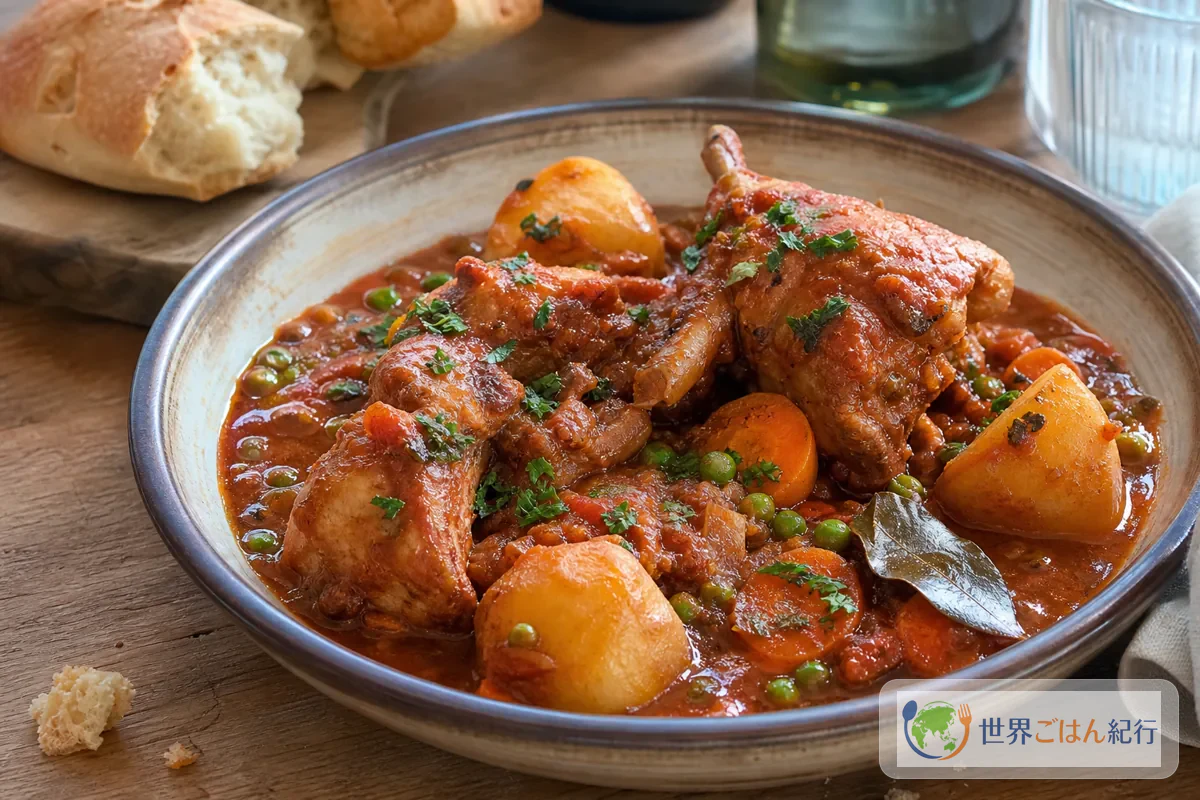
Stuffat tal-Fenek: Maltese Rabbit Stew with Red Wine and Tomato
Ingredients
Main ingredients
| Ingredient | Amount | How to buy and substitute |
|---|---|---|
| Rabbit (bone-in pieces) | 2.75 lb (1.2 kg) | Order online or from a butcher. If unavailable, 2 lb (900 g) bone-in chicken thighs |
| Salt | 2 tsp | Divided between seasoning the meat and finishing |
| Black pepper | 1/2 tsp | Coarsely ground suits it |
| Red wine | 1¼ cups (300 ml) | A dry one that is not too astringent. Leftover wine is fine |
| Garlic | 4 cloves | 2 crushed, 2 minced |
| Bay leaves | 3 | Dried is fine |
| Olive oil | 3 tbsp | A generous amount for searing the meat |
| Onion | 1 (7 oz / 200 g) | Minced |
| Carrot | 1 (5.5 oz / 150 g) | In 0.5 inches (1.5 cm) cubes |
| Celery | 1/2 stalk (1.75 oz / 50 g) | If you have it. If not, increase the onion by 1.75 oz (50 g) |
| Tomato paste | 2 tbsp | Ketchup would be too sweet |
| Diced tomatoes, canned | 1 can (14 oz / 400 g) | Tomato purée also works |
| Water or chicken stock | 1 cup (250 ml) | Water for rabbit; a light stock if using chicken |
| Potatoes | 3 (12.5 oz / 360 g) | Waxy types that hold their shape |
| Frozen green peas | 2.75 oz (80 g) | Adds a little of the local bean feel |
| Allspice | 1/4 tsp | Optional. Rounds out the aroma of the meat |
| Sugar | 1 tsp | Only if the tomato acidity is strong |
| Flat-leaf parsley | 10 g | For finishing |
To serve alongside
| Ingredient | Amount | Role |
|---|---|---|
| Spaghetti | 5.5 oz (160 g) | When tossing the sauce with pasta as a starter |
| Country loaf or baguette | 1/2 loaf | Catches the sauce |
| Lemon | 1/2 | A light squeeze at the end, to taste |
Steps
1Rest the rabbit in red wine
25 min (marinating takes at least 30 min)
No heat needed. Rub the rabbit with 1 tsp salt and the black pepper, then put it in a bowl with the red wine, 2 crushed garlic cloves and 2 bay leaves. Refrigerate for 30 minutes to overnight. Even a short rest lets the wine's aroma into the meat and ties the stew together.
After marinating, take the meat out and pat it thoroughly dry with paper towels. Do not throw out the marinade; set it aside. If moisture remains, the meat starts to stew before it browns in the next step and the sauce turns dull.
2Sear the meat
12 min
Put 2 tbsp olive oil in a heavy pot and warm it over medium heat for 2 minutes. It is hot enough when the meat makes a small sizzle as it goes in. Do not crowd the rabbit in all at once; cook in two batches, 2 minutes per side. The surface only needs to be pale golden; you do not need to cook it through.
Transfer the seared meat to a plate for now. The brown bits on the bottom of the pot are savor. Wipe off only the parts that have burned black, lightly, with damp paper.
3Sauté the aromatics
8 min
Add 1 tbsp olive oil to the same pot and, over the same medium heat, add the onion, carrot and celery. Sprinkle with 1/2 tsp salt and cook for 6 minutes, scraping the bottom with a wooden spoon. When the onion is translucent and the corners of the carrot have rounded a little, add the 2 minced garlic cloves and cook 1 minute.
Adding the garlic too early makes it bitter. Once the aroma rises, go straight on to the tomato paste.
4Dissolve the bottom of the pot with wine and tomato
7 min
Add the tomato paste and cook over medium heat for 1 minute. When the color has deepened a little, add the reserved marinade. Scrape the bottom with a wooden spoon to move the brown bits into the liquid. Keep it at a boil over medium heat for about 3 minutes, reducing until the sharp smell of alcohol turns round.
Add the canned tomatoes, 1 cup (250 ml) water or light stock, 1 bay leaf and the allspice. Taste the liquid here, and stop when it seems a little under-salted. It concentrates as it simmers, so do not make it strong from the start.
5Return the meat and simmer gently
45 min
Return the rabbit to the pot and let the liquid come up to about 70% of the meat. Bring it to a bubble once over medium heat, then immediately lower to low. If you put a thermometer in the liquid at the edge of the pot, aim for 90 to 95°C (up to 203°F); by eye, small bubbles should rise slowly at the edge of the pot. Leave the lid slightly ajar and simmer for 35 minutes.
Turn the meat once along the way. Boiling hard tightens the low-fat rabbit and clouds the sauce. If the heat feels too strong, take the pot off the heat once to bring the temperature down and then return it.
6Add the potatoes and peas
28 min
Add the potatoes and frozen peas. If the liquid is short, add just 3.5 tbsp (50 ml) water. Keep it at a low to slightly-above-low heat with small bubbles at the edge, lid slightly ajar, for 20 minutes. It is cooked through when a skewer goes easily into the potatoes and the thickest part of the rabbit reaches 160°F (71°C) or more.
For the chicken substitute, heat until the thickest part reaches 167°F (75°C) or more. Without a thermometer, open the meat near the bone a little and check that the juices run clear with no raw redness. But overcooking spoils the texture, so if possible judge by thermometer.
7Adjust the sauce and rest
10 min
Mix lightly so as not to break the meat and potatoes, take off the lid and reduce over a gentle medium heat for 3 to 5 minutes. As a guide, the sauce lightly coats the wooden spoon and a line drawn across the bottom of the pot stays for just a moment. Add 1/2 tsp salt a little at a time, and if the acidity is strong, 1 tsp sugar.
Turn off the heat, cover and rest for 5 minutes. Serve on a plate and scatter with chopped flat-leaf parsley. If tossing with spaghetti, take 1 ladleful of sauce from the pot, warm it lightly with the boiled spaghetti in a small pot and serve it alongside.