Ingredients and steps on one page. Print it, or choose “Save as PDF” in the print dialog.
Sekai Gohan
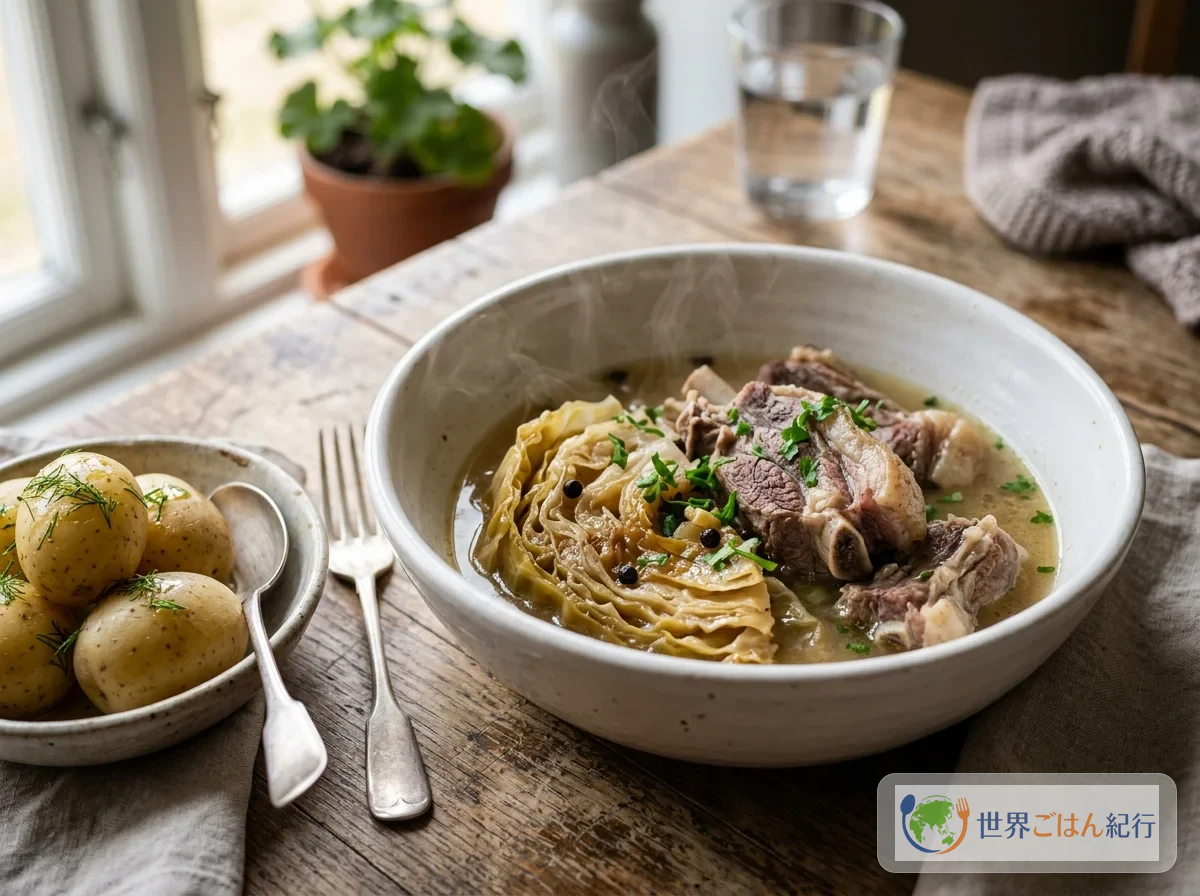
Fårikål: Norway's National Dish of Lamb and Cabbage
Ingredients
Ingredients
| Ingredient | Amount | Substitutes & notes |
|---|---|---|
| Bone-in lamb (shoulder or chops) | 3.25 lb (1.5 kg) | 1.75 lb (800 g) lamb shoulder plus 1.5 lb (700 g) bone-in ribs also works |
| Cabbage | 1 head (about 2.75 lb (1.2 kg)) | A large one. Winter cabbage suits it better than spring cabbage |
| Black pepper (whole) | 2 tbsp | Always whole peppercorns. Ground pepper will not do |
Seasoning
| Ingredient | Amount | Substitutes & notes |
|---|---|---|
| Salt | 1 tbsp | Coarse salt recommended. Taste at the end and adjust |
| Water | 1¼ cups (300 ml) | Just enough to keep the bottom of the pot from scorching. The cabbage releases water |
| All-purpose flour | 3 tbsp | For thickening. Sprinkle it over each layer |
Steps
1Prepare the ingredients
15 min
Cut the lamb into large bite-size pieces (2 inches (5 cm)), or leave bone-in pieces as they are. Cut the cabbage into 8 wedges with the core left in. Do not remove the cabbage core. The core keeps the cabbage from melting away during two and a half hours of simmering, so at the end the lamb falls off the bone and the cabbage is tender enough to be translucent. Mix 3 tbsp flour and 1 tbsp salt in a small dish.
2Layer in the pot
5 min
Lay 2 to 3 pieces of cabbage on the bottom of a heavy pot (cast iron such as Le Creuset or Staub is best). Arrange a single layer of lamb on top without overlapping. Sprinkle a pinch of the salt and flour mixture over it. Scatter about 10 peppercorns. Repeat these layers of cabbage, lamb, salt and flour, then pepper. Always finish with cabbage. It matters that the top layer is cabbage. If lamb is on top, it will scorch.
The logic of the layersLayering the lamb between cabbage works on the principle of a steam braise. Water from the cabbage turns to steam and keeps the lamb moist, and the cabbage above and below acts as a natural lid and base. Sprinkling the flour thinly over each layer thickens the cooking liquid. Added all at once it clumps, so add a little with each layer.
3Add water and put on the heat
5 min
Pour 1¼ cups (300 ml) water in from the side of the pot. Do not pour it over the top, or the layers collapse. Keep the water to a minimum. A great deal of liquid comes out of the cabbage, so too much water makes a watery stew. The 1¼ cups (300 ml) is insurance against scorching the bottom. Bring to a boil over high heat, then lower to low.
4Simmer on low heat for two and a half hours
2 to 2.5 hours
Cover and simmer on low heat for 2 to 2 and a half hours. Do not open the lid along the way. Lift it only once every 30 minutes to check the liquid, and if the bottom looks about to scorch, add 3.5 tbsp (50 ml) water. Otherwise leave it alone. No stirring. Breaking the layers mixes cabbage and meat evenly and both lose their textures. After two and a half hours it is done when the lamb falls easily from the bone.
Wrong heat is fatalMost failures of fårikål come from heat that is too high. Boiling makes the lamb tough and the cabbage dissolves into mush. The right level is low heat where a bubble only rises now and then, "barely a simmer".
5Adjust the seasoning and serve
5 min
When the simmering is done, open the lid and adjust the salt. Taste the broth, which concentrates the savor of the lamb and cabbage. If it lacks salt, add 1/2 tsp at a time. Divide lamb and cabbage into deep bowls and spoon plenty of the cooking liquid over them. Serving boiled potatoes alongside is the Norwegian tradition. Add 2 to 3 waxy potatoes boiled in their skins.