Ingredients and steps on one page. Print it, or choose “Save as PDF” in the print dialog.
Sekai Gohan
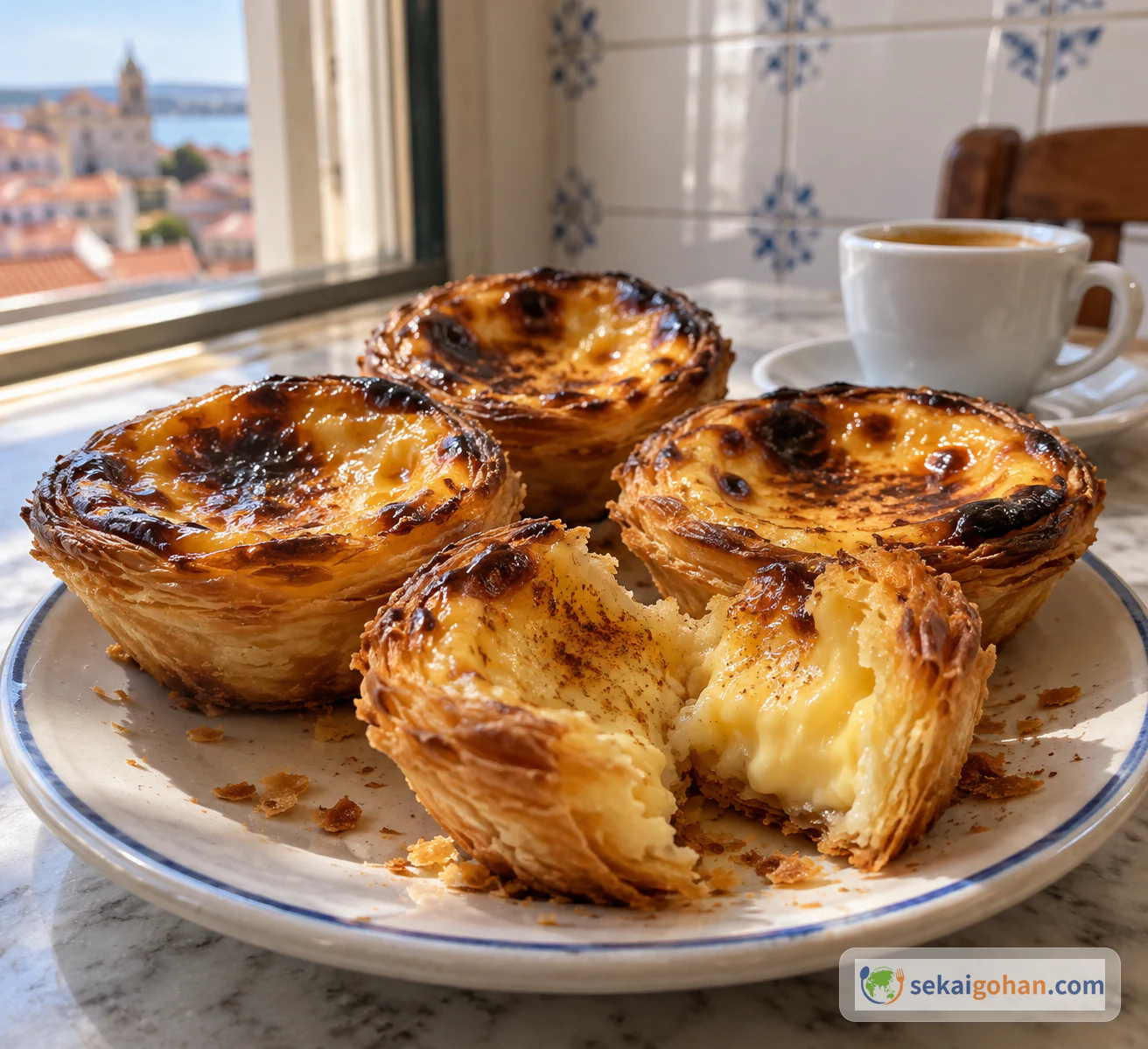
Pastel de Nata: Portuguese Custard Tarts Baked Hot (Pastéis de Nata)
Ingredients
| Ingredient | Amount | Role |
|---|---|---|
| Laminated puff pastry (massa folhada), preferably made with butter | 1 sheet, about 9 oz (250 g) | The crisp spiral shell. Thaw as directed on the package and keep it chilled |
| Granulated sugar (açúcar) | 7 oz (200 g) | Sweetness and body for the custard |
| Water (água) | ½ cup (100 ml) | Dissolves the sugar into syrup |
| Cinnamon stick (pau de canela) | 1 | Scents the syrup; removed before mixing |
| Lemon peel (casca de limão) | 1 strip | Scents the syrup; peel thinly, with little white pith; removed before mixing |
| Whole milk (leite gordo) | 1 cups (250 ml), divided into ½ cup (125 ml) and ½ cup (125 ml) | The base of the custard. Keep it cold |
| Wheat flour (farinha de trigo) | 1 oz (30 g) | Thickens the custard |
| Egg yolks (gemas de ovo) | 6 | Richness and set. Whites are not used |
| Salt (sal) | a pinch | Sharpens the flavor of the custard |
Steps
1Cook the lemon and cinnamon syrup
Put 7 oz (200 g) sugar, ½ cup (100 ml) water, 1 cinnamon stick and 1 strip of lemon peel in a small saucepan. Bring to a boil without stirring and cook until the syrup reaches about 221°F (105°C), the thread stage. Without a thermometer, lift a little on a spoon: it should fall back in a fine thread. Judge by the thread, not by color; the syrup should not caramelize. Take the pan off the heat and remove the cinnamon stick and lemon peel.
2Cook the milk and flour into a smooth paste
In a second saucepan, whisk 1 oz (30 g) flour into ½ cup (125 ml) of the cold milk until no lumps remain, then add the remaining ½ cup (125 ml) milk. Cook over medium heat, stirring constantly, until it becomes a smooth paste. Do not let it boil hard.
3Pour the hot syrup into the paste
Pour the hot syrup into the paste in a thin stream while stirring, and keep stirring until it is evenly combined. Hold the pan steady so the hot syrup does not splash. Set aside until it is no longer hot.
4Add the egg yolks and strain
Once the mixture has cooled down from hot, add the 6 egg yolks and a pinch of salt and mix well. Never add the yolks while the mixture is still hot. Strain through a fine sieve into a jug or another bowl. The finished custard should be loose enough to pour.
5Roll the pastry and cut it into 12
Take the cold puff pastry and roll it up tightly from the long side into a log. Cut it into 12 equal pieces about 1 inches (2 cm) wide. Turn each piece so a cut side, showing the spiral, faces up.
6Press the pastry into the tins
Place one spiral, cut side up, in each of the 12 small tart tins. With a moistened thumb, press from the center outward to spread the pastry thinly and evenly over the base and up the sides. Leave the rim slightly higher than the edge of the tin.
7Chill the shells and heat the oven
Set the lined tins on a baking sheet and chill in the refrigerator for 20–30 minutes. Meanwhile, preheat the oven to its highest setting, ideally 250–290°C (up to 550°F). Many home ovens do not reach 550°F (290°C); never go beyond the maximum in your oven's manual.
8Fill the shells
Pour the custard into each chilled shell to about three-quarters of its height, leaving room for it to rise.
9Bake hot on the lowest rack
Bake on the lower rack of the oven for 12–15 minutes. They are done when the pastry is crisp and dark scorched spots have appeared on the custard. The aim is spots, not a top that is black all over. Ovens differ, so adjust the time by watching the pastry and the surface.
10Rest, unmold and eat warm
Let the tarts stand for a few minutes, then remove them from the tins. Serve while still warm, with ground cinnamon and powdered sugar on the side if you like.