Ingredients and steps on one page. Print it, or choose “Save as PDF” in the print dialog.
Sekai Gohan
Cocido Madrileño: Madrid's Chickpea and Meat Stew, Served in Three Courses
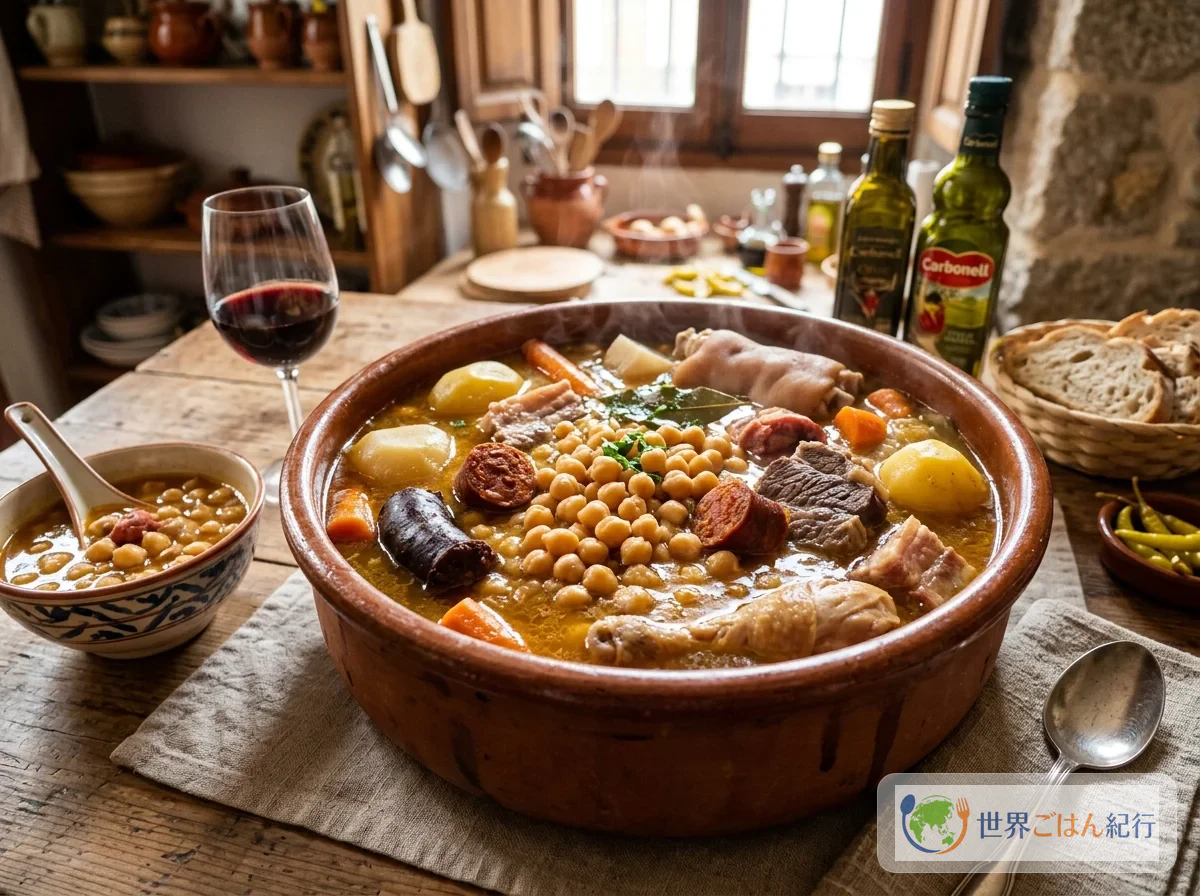
Ingredients
Main ingredients
| Ingredient | Amount | Substitutes, notes |
|---|---|---|
| Dried chickpeas | 14 oz (400 g) | Must be soaked overnight, from the day before |
| Beef shank (bone-in) | 1 lb (500 g) | A boneless block also works |
| Chicken thighs (bone-in) | 2 | — |
| Pork belly (in a piece) | 10.5 oz (300 g) | Slab bacon can stand in |
| Chorizo | 2 | Spanish chorizo with paprika recommended |
| Morcilla (blood sausage) | 1 | Optional (if hard to find) |
| Beef marrow bones | 2 | Optional |
| Ham bone (hueso de jamón) | 1 | Optional (adds a great deal of flavor if you have one) |
Vegetables
| Ingredient | Amount | Substitutes, notes |
|---|---|---|
| Potatoes | 4 (large) | — |
| Carrots | 2 | — |
| Cabbage | 1/2 head | Savoy cabbage also works |
| Turnips | 2 | 7 oz (200 g) daikon radish can stand in |
| Onion | 1 (whole) | — |
| Garlic | 4 cloves | — |
To finish (for the first course)
| Ingredient | Amount | Substitutes, notes |
|---|---|---|
| Fideos (very thin pasta) | 3.5 oz (100 g) | Capellini or somen noodles can stand in |
| Salt | to taste | — |
Steps
1Soak the chickpeas overnight
10 hours or more (prep the day before)
Soak the dried chickpeas in plenty of water (four times their volume) and leave overnight (10 hours or more). Spanish cooks sometimes use lukewarm water for the soak and add 1 tsp baking soda. Baking soda softens the skins and shortens the cooking time, but too much spoils the flavor, so take care. Well-soaked chickpeas resist falling apart and turn out creamy and fluffy.
2Put the meat and water in a big pot and set it on the heat
20 min
Put 3 liters of water in a large pot (8 liters or more) and add the beef shank, chicken thighs, pork belly, marrow bones and ham bone. Add the whole onion and garlic too. Bring to a boil over high heat and carefully skim the scum that rises.
For a clear cocido broth, skimming is vital. Give this step at least 15 minutes. When no more scum comes up, lower to low heat.
Don't boil too hardBoiling hard over high heat for a long time clouds the broth white. The ideal cocido broth is a clear amber, and the key is to cook it gently over low heat, just a bubble at a time breaking the surface.
3Add the chickpeas and simmer
2 hours
Once the skimming is done, add the soaked and drained chickpeas to the pot. What matters here is to put the chickpeas in a cloth bag (cheesecloth or muslin) before they go in the pot. This is a traditional Spanish technique so that you can lift the chickpeas out easily later. If you have no bag you can add them loose, but it makes more work when you sort them at serving.
Simmer 2 hours over low heat. If the water level drops along the way, always top up with hot water. Cold water makes the chickpea skins tough (the Spanish call this "asustar," to frighten). It is done when the chickpeas crush softly under your finger and a bamboo skewer slides into the beef shank without resistance.
4Add the vegetables and sausages
30 min
After 2 hours of simmering, add the potatoes (peeled, quartered), carrots (1 inches (3 cm) rounds) and turnips (quartered) to the pot. Add the chorizo and morcilla at the same time.
Parboil the cabbage in a separate pot. Cut it into quarters, boil 5 minutes in salted boiling water, then drain in a colander. Add the parboiled cabbage to the cocido pot and simmer another 20 minutes. The reason for parboiling the cabbage is so it doesn't cloud the broth and to remove its raw green smell.
The red paprika oil of the chorizo melts into the broth and tints the chickpeas faintly orange. This color change is one of the beauties of cocido.
5Plate it in three acts
10 min
Now comes the heart of cocido, the tres vuelcos (three turnings-out).
Act one (primer vuelco): the broth. Strain the broth out of the pot, move it to a small pot and bring it lightly to a boil over medium heat. Add the fideos, boil 3 minutes, and stop the heat when a faint core remains in the center of the noodles and the broth is still a clear amber. Ladle into deep bowls and take to the table. It is a restorative broth that warms you to the core.
Act two (segundo vuelco): chickpeas and vegetables. Take the chickpeas out of the cloth bag and arrange them on a large platter with the potatoes, carrots, turnips and cabbage. Chickpeas that have absorbed the broth's savor are satisfying enough to make a complete meal of this plate alone.
Act three (tercer vuelco): the meat. Cut the beef shank, chicken and pork belly into 4 to 5 cm pieces, and slice the chorizo and morcilla 0.5 inches (1 cm) thick, then arrange on a large platter. The meat is ready to eat when its fibers have loosened and the red fat of the chorizo seeps onto the plate. Scoop the marrow with a spoon and spread it on bread.