Ingredients and steps on one page. Print it, or choose “Save as PDF” in the print dialog.
Sekai Gohan
Baghali Polo: Persian Rice with Fava Beans and Dill
Ingredients
Ingredients
| Ingredient | Amount | Role & substitutes |
|---|---|---|
| Basmati rice | 12.5 oz (360 g) | Long-grain and aromatic, holds up after parboiling. Thai jasmine rice can also be used |
| Frozen peeled fava beans | 9 oz (250 g) | Thaw before use. If fresh, about 14 oz (400 g) in the pod, double-peeled |
| Fresh dill | 3.5 oz (100 g) | Use leaves and thin stems. 1 oz (30 g) if dried |
| Saffron | 0.2g | Bloom in hot water; half goes into the layers, half to finish |
| Hot water | 2 tbsp (30 ml) | For the saffron liquid |
| Vegetable oil | 2 tbsp (30 ml) | For the bottom of the pot and the steaming. Rice bran oil or a neutral oil is fine |
| Unsalted butter | 1 oz (30 g) | For aroma during the rest. To avoid dairy, replace with 1 tbsp (15 ml) vegetable oil |
| Lemon | 1/2 | To add aroma at the table. Squeeze the juice over the rice |
| Black pepper | 0.5g | Sprinkle on the fava beans. Optional |
Ingredients
| Ingredient | Amount | Role & notes |
|---|---|---|
| Water for soaking | 1.25 quarts (1.2 L) | Enough to cover the rice fully |
| Salt for soaking | 5g | Seasons the rice; discarded after soaking |
| Water for parboiling | 2.75 quarts (2.5 L) | Deep enough for the rice to swim |
| Salt for parboiling | 1 oz (30 g) | Dissolve in the water. The rice is lifted out of the water, so not all of it remains |
| Water for the bottom of the pot | 1 tbsp (15 ml) | Combined with the oil to moisten the bottom of the pot |
Steps
1Prepare the surface of the rice
Put 12.5 oz (360 g) of basmati rice in a bowl, pour in water, swirl lightly with your fingertips and discard the cloudy white water. Repeat this 4–5 times; it is enough when the last water goes from milky to pale and translucent. Rubbing hard breaks the grains and makes them sticky when heated later, so wash by rolling them rather than pressing.
Add 1.25 quarts (1.2 L) of water and 5 g of salt and leave at room temperature (a guide of 20–25°C, up to 77°F) for 40 minutes. After soaking, the grains are plumper and whiter at the center than when dry, and when you press with a finger only the surface is a little soft. Some recipes extend this to 2 hours, but fixing it at 40 minutes the first time makes the next parboiling stage easier to judge.
2Pass the beans briefly through hot water
Thaw 9 oz (250 g) of frozen peeled fava beans and wipe off the surface moisture. Bring water to a boil in a pot, reduce to medium heat and boil the fava beans for only 1–2 minutes. Lift them when the center is a little soft when pressed with a finger and the surface is bright green. If you keep boiling until soft, they fall apart as the rice steams, and the shape of the beans is lost.
If you use fresh fava beans, after taking them from the pod, remove the inner skin and likewise pass them through hot water for only 1–2 minutes. For beans with thick skin remaining, remove it from the cut while still hot.
3Lift it out leaving a core in the center
Put 2.75 quarts (2.5 L) of water and 1 oz (30 g) of salt for parboiling in a large pot and bring to a boil over high heat. Drain the soaked rice, add it to the water once the boil has returned, and boil over medium-high heat for 5–6 minutes. After 6 minutes take out one grain and bite it, and stop when the outside is soft and a thin white core remains in the center. If it is soft through to the center it will fall apart during the rest, and if the core is floury and hard, add 30 seconds at a time.
Lift into a fine-mesh colander and drain the water thoroughly. If the surface has a lot of starch and looks likely to stick, run cold water over it for just 10 seconds and drain. When the grains are plump and fall one by one, keeping their length, they are ready to be layered.
4Make the golden saffron liquid
Crumble 0.2 g of saffron with your fingertips and pour on 2 tbsp (30 ml) of hot water. Leave for 10 minutes; it is ready when the liquid is a reddish golden color and the threads have softened. Rather than putting a large amount of saffron in water and turning all the rice yellow, putting half into the layers and the rest to finish lets you tell apart the white rice, green dill and golden grains on one plate.
5Prepare the bottom of the pot and mound the rice
Wipe the 3.5 oz (100 g) of dill dry and chop it coarsely, and combine with 0.5 g of black pepper and the fava beans. Divide the filling into 2 and the drained rice into 3, and lay them softly in the pot in the order rice, filling, rice, filling, rice. Strong mixing splits the beans and shifts the dill's moisture to one part of the rice, so make the layers as if scattering the filling.
Put 1 tbsp (15 ml) of vegetable oil and 1 tbsp of water in a dry 8.5-inch (22 cm) heavy pot and warm over medium heat for 2–3 minutes. When the oil spreads smoothly over the whole bottom, place the layers of rice and filling in a mound in the center. Spread the rice at the bottom thin, pile on the rest without pressing it down, and poke 5–6 holes with chopsticks. Scatter half of the saffron liquid, the remaining 1 tbsp (15 ml) of vegetable oil and 15 g of unsalted butter over the surface of the rice.
6Trap the steam and make the bottom crust savory
Wrap the lid in a clean thick towel and make sure the ends do not hang over the flame. Cover the pot and heat over medium heat for 5 minutes; when steam comes from around the lid and you hear a small sizzle from the bottom of the pot, lower to low heat. Steam it on low for 45–50 minutes. Opening the lid partway lets steam escape, leaving the center of the rice hard or only the bottom scorching, so judge by sound and time.
Before turning off the heat, place the rest of the saffron liquid and 15 g of butter in the holes of the rice. It is steamed when the rice has swelled plump, a savory smell rises from the sides of the pot, and the sound at the bottom changes from a light crackle to a quiet one.
7Loosen the rice and serve the tahdig separately
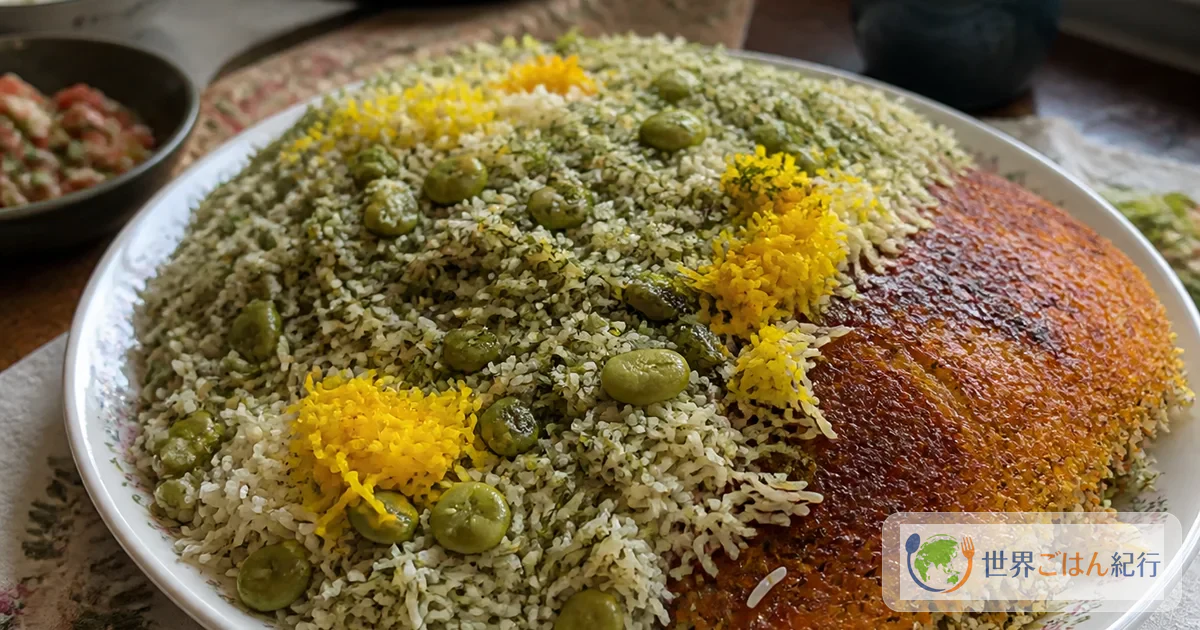
Turn off the heat and rest for 5–10 minutes with the lid on. After removing the lid, do not turn the top rice from the bottom with chopsticks or a fork; loosen only the surface lightly. It is done when the bottom of the pot is golden to a deep golden brown, makes a hard sound when pressed, and the mound of rice is not watery.
Serve the rice on a large plate, and either release the remaining tahdig from the edge with a wooden spatula and serve it separately, or break it and scatter it over the rice. If the bottom does not come off, set the pot on a wet towel for 2–3 minutes and then run around the edge. Don't force the black, bitter parts into the rice; separate the rice on top from the savory parts.