Ingredients and steps on one page. Print it, or choose “Save as PDF” in the print dialog.
Sekai Gohan
Bulgur Pilavı: Turkish Tomato Bulgur Pilaf
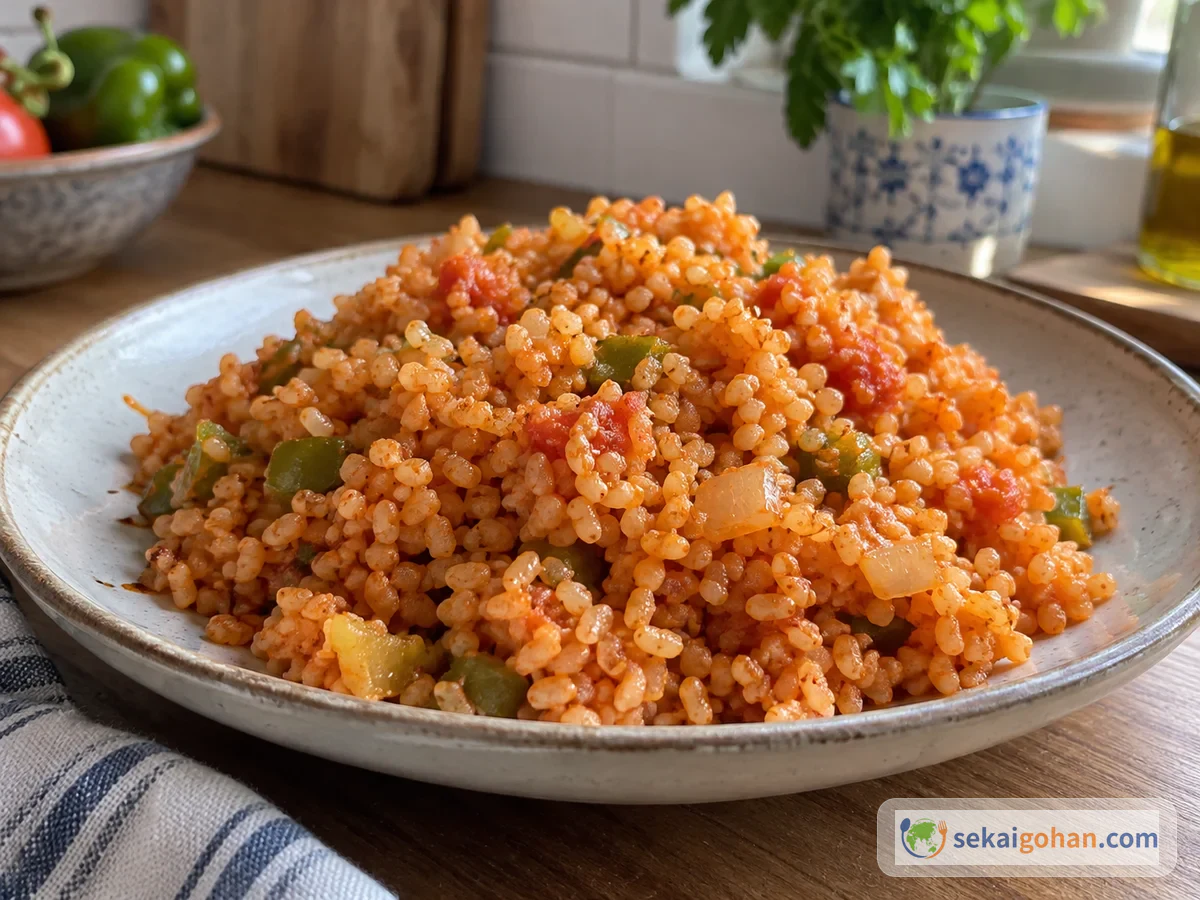
Ingredients
For the pilaf
| Ingredient | Amount | Substitutes & notes |
|---|---|---|
| Coarse bulgur | 200 g | Labeled "coarse" or "pilavlık." Don't substitute fine bulgur or couscous at the same ratio |
| Tomatoes | 300 g (about 2 medium) | If using canned, weigh 200 g of tomatoes and juice combined; the boiling water stays at 350 ml |
| Onion | 150 g (about 1 medium) | Chopped into about 5 mm (1/4 in) pieces |
| Green bell pepper | 60 g (about 2) | Weight after removing seeds and stem. 60 g red bell pepper also works |
| Tomato paste | 10 g (about 2 tsp) | Ketchup has different sugar and acidity; don't substitute it 1:1 |
| Olive oil | 30 ml (2 tbsp) | Using less oil also changes how the grains feel in the mouth |
| Boiling water | 350 ml | About 1 1/2 cups. Have another 50 ml on hand, used 1 tbsp at a time if the grains are hard |
| Salt | 3 g (about 1/2 tsp) | If using salted stock, start with 1 g |
| Black pepper | 0.2 g | Leave out for less heat |
To serve on the side
| Ingredient | Amount | Substitutes & notes |
|---|---|---|
| Plain unsweetened yogurt | 7 oz (200 g) | 1.75 oz (50 g) per person. Serve on a separate plate; don't cook it into the pilaf |
| Parsley | 5 g | If chopping some to add at the end. Optional |
Steps
1Prep the vegetables and bulgur
Prep takes about 10 minutes. Chop the onion and the seeded green peppers into about 0.25 inch (5 mm) pieces and cut the tomatoes into 0.5 inches (1 cm) dice. If using parsley, chop it finely and set it aside. Weigh out 7 oz (200 g) of bulgur and check for any debris; if your product needs rinsing, rinse it as the package says and drain it well in a sieve. Don't soak it for a long time beforehand. Set out the 1½ cups (350 ml) of boiling water and the extra 3.5 tbsp (50 ml) for hard grains separately. Don't let wet grains sit around; go straight on to cooking.
2Sauté the onion and green pepper
Put 2 tbsp (30 ml) olive oil, 5.5 oz (150 g) onion and 2 oz (60 g) green pepper in the pot and sauté over medium to medium-low heat for 4–5 minutes. You're looking for the onion to turn translucent and the edges of the pepper to soften. This step is not about browning. If things start sticking to the bottom, lower the heat and stir. If the outside is scorching while the center stays hard, the heat is too high.
3Sauté the tomatoes and bulgur together
Add 10.5 oz (300 g) tomatoes and stir over medium heat for 2–3 minutes. When the cubes break down and release their juice, add 10 g tomato paste and stir for another minute. Add 7 oz (200 g) bulgur and sauté everything together over medium-low heat for about 2 minutes. Stir until the tomato color coats every grain evenly, and check that the vegetables and paste aren't scorching on the bottom. If the tomatoes dry out and start sticking, use 1 tbsp of the 1½ cups (350 ml) boiling water now. Don't add other, unmeasured water.
4Cover and let the bulgur absorb the liquid
Pour in the rest of the boiling water, add 3 g salt and 0.2 g black pepper, and stir just once. Bring to a boil over medium heat, cover, and simmer on low for 8–12 minutes. Take a peek at around 8 minutes. If the liquid on the surface has almost disappeared, the grains have swelled and there is no hard core when you bite one, you're on track. Go by the package directions and the state of the grains. If there's no liquid and the grains are still hard, add the extra boiling water 1 tbsp at a time and give it another 2 minutes covered on low each time. If liquid remains but the grains are hard, keep cooking without adding water. Don't keep stirring the bottom or blast off the liquid over high heat.
5Rest and fluff the grains
When there is no hard core and the liquid is nearly gone, turn off the heat and let it rest, covered, for 10 minutes off the heat. When you lift the lid, keep the steam away from your face and hands. Gently turn the pilaf from the bottom with a wooden spatula, fluffing the grains without crushing them, and serve. If using 5 g parsley, add it now. If a lot of liquid remains and the grains are soft, take off the lid before resting and cook off the moisture on low 1–2 minutes at a time. Don't try to fix it by adding lots of oil.