Ingredients and steps on one page. Print it, or choose “Save as PDF” in the print dialog.
Sekai Gohan
İrmik Helvası: Turkish Semolina Halva
Ingredients
For roasting the semolina
| Ingredient | Amount | Substitutes and notes |
|---|---|---|
| Fine semolina | 7 oz (200 g) | Durum wheat semolina. If the grind is coarse, allow longer for absorption and resting |
| Pine nuts | 25 g | Leaving them out reduces the toasty bite. If you substitute another nut, check the label |
| Unsalted butter | 2.5 oz (70 g) | Salt-free. To avoid dairy, replace with 3 tbsp (45 ml) oil, but aroma and mouthfeel change |
| Neutral oil | 1 tbsp (15 ml) | Rice bran oil or light sesame oil. Burns less easily than butter alone, and the aroma is rounder than oil alone |
Sweet liquid
| Ingredient | Amount | Substitutes and notes |
|---|---|---|
| Milk | 1 cups (250 ml) | Some regions use water alone. Milk gives richness but scorches more easily |
| Water | ½ cup (150 ml) | Together with the milk, 1¾ cups (400 ml) in total. For water only, use the same 1¾ cups (400 ml) for a lighter result |
| Granulated sugar | 5.5 oz (150 g) | Involved not only in sweetness but in how the liquid holds together, so do not cut much the first time |
Steps
1Warm the sweet liquid first
4 min
Put 1 cups (250 ml) milk, ½ cup (150 ml) water and 5.5 oz (150 g) granulated sugar in a small pot and warm over medium-low heat for 3 to 4 minutes. When the sugar grains are no longer visible and steam rises from the edge of the pot, turn off the heat. Do not boil the milk. Boiling hard forms a skin and makes the bottom of the pot scorch easily. This hot liquid should not be allowed to cool too much during the next step. If it cools, keep it warm over very low heat.
2Roast the pine nuts and semolina over low heat
17 min
Put 2.5 oz (70 g) unsalted butter and 1 tbsp (15 ml) oil in a heavy pot and melt over low heat. Roast 25 g pine nuts for about 2 minutes until light golden brown, then add 7 oz (200 g) fine semolina. From there, keep stirring the bottom and edges of the pot with a wooden spoon without a break for about 15 minutes over low heat. When the whiteness of the flour has gone, it has turned pale beige and the nutty aroma has risen, move on. The key is to stop just short of a dark brown. Once black specks, smoke or a bitter smell appear it is too late, and the color keeps advancing from residual heat even after it leaves the heat.
TipThe 15-minute mark depends on your pot and heat, so do not watch the clock alone. Check all of these together: whether the raw flour look is gone, whether the flour is a pale color, whether the pine nuts are light in color, and whether the aroma has risen. The guide is a loose, flowing feel just before it becomes so heavy that the track of the spoon stays for a few seconds. Under-roasting leaves a floury grain smell. A burnt bitterness does not come back even if you add sugar liquid afterward.
3Add the hot liquid a little at a time
4 min
Take the roasting pot off the heat for now and get a long wooden spoon. Add the hot liquid in 3 parts, stirring broadly from the bottom each time. At first strong steam and foam come up, so do not pour it all at once. The steam rises suddenly and it spatters easily. Stir until the steam settles; over 3 to 4 minutes, when the semolina holds the liquid and starts to come away from the sides of the pot, move on. The guide is that the grains become thick and heavy and start to come together.
CautionAlways add the liquid after taking the roasting pot off the heat, and do not bring your face or hands directly over the pot. Keep children and pets away from the cooking area, and work where your sleeves and the wooden spoon do not touch the edge of the pot. If liquid splashes, treat any burn first, then adjust the taste.
4Absorb over low heat, then rest
28 min
When all the liquid is in, return to low heat and stir from the bottom for about 8 to 10 minutes to let it absorb the moisture. When streaks from the spoon on the bottom of the pot remain, no liquid comes back, and the grains hold together moistly, turn off the heat. Cover, put a dry kitchen towel or paper towel under the lid, and begin a 20-minute rest. Turn off the heat before placing the cloth so it does not touch the flame. The grains keep taking in moisture and tighten during the rest. Do not reduce it until it hardens while hot.
TipWhen you lift the lid, the surface should not be completely dry, and the grains should loosen when you turn them from the bottom. If liquid is still visible, heat 2 minutes at a time over low heat. If it is too dry, add hot milk or water 1 tbsp (15 ml) at a time, warm 1 to 2 minutes, and rest another 5 minutes. It firms up as it cools, so do not reduce it more than necessary right after finishing.
5Fluff and serve in bowls
5 min
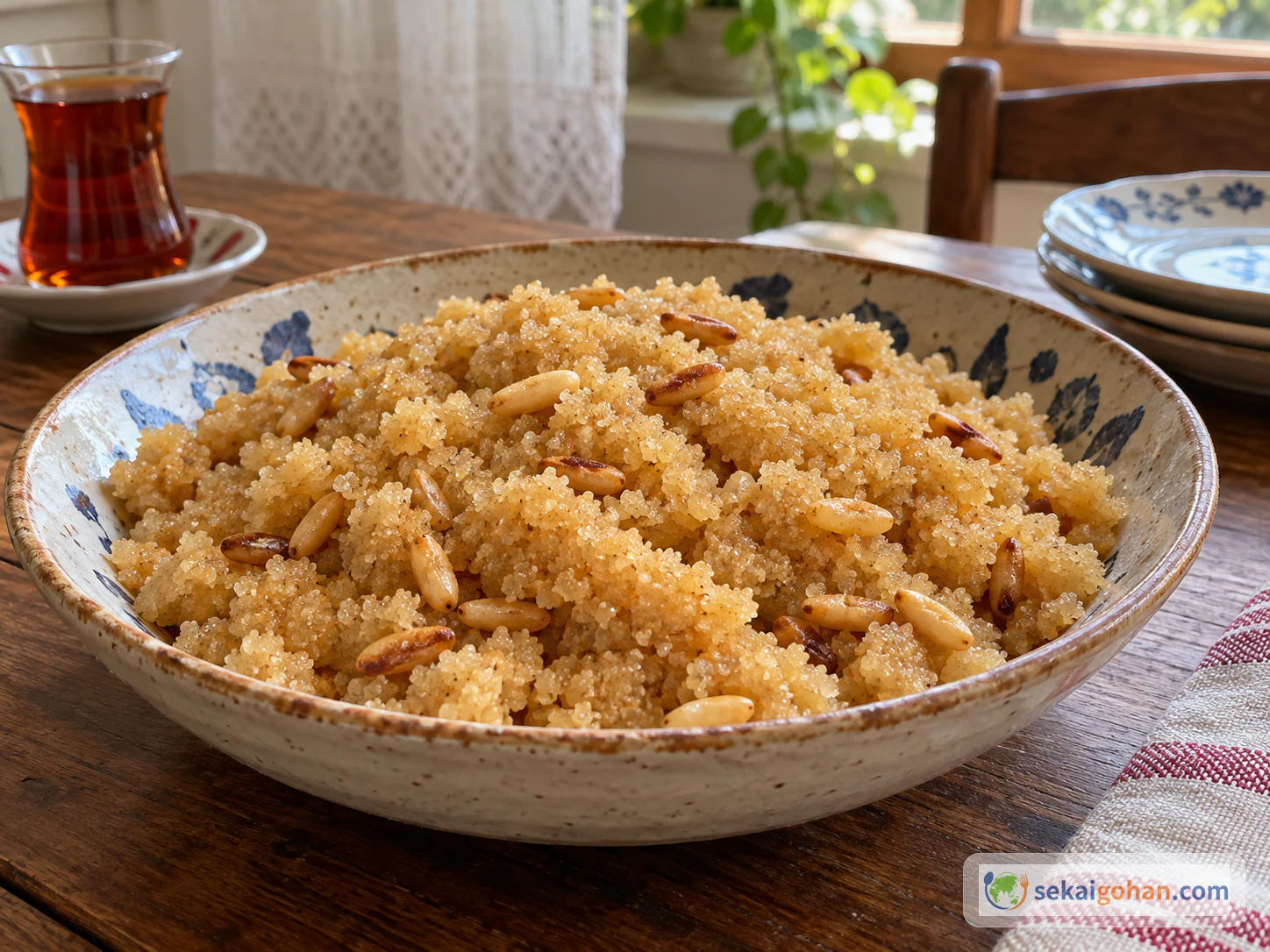
Turn the rested pot from the bottom with a wooden spoon, crushing large lumps as you loosen the grains. Mound into 4 bowls, or press into small bowls and turn out onto plates. Packing it hard makes it tight and heavy, so leave air between the grains. Serve while warm. Hot halva is also eaten with cold ice cream, Maraş ice cream. To make a version elsewhere, add a little unsweetened vanilla ice cream, but it will not match Maraş ice cream in texture or ingredients.