Ingredients and steps on one page. Print it, or choose “Save as PDF” in the print dialog.
Sekai Gohan
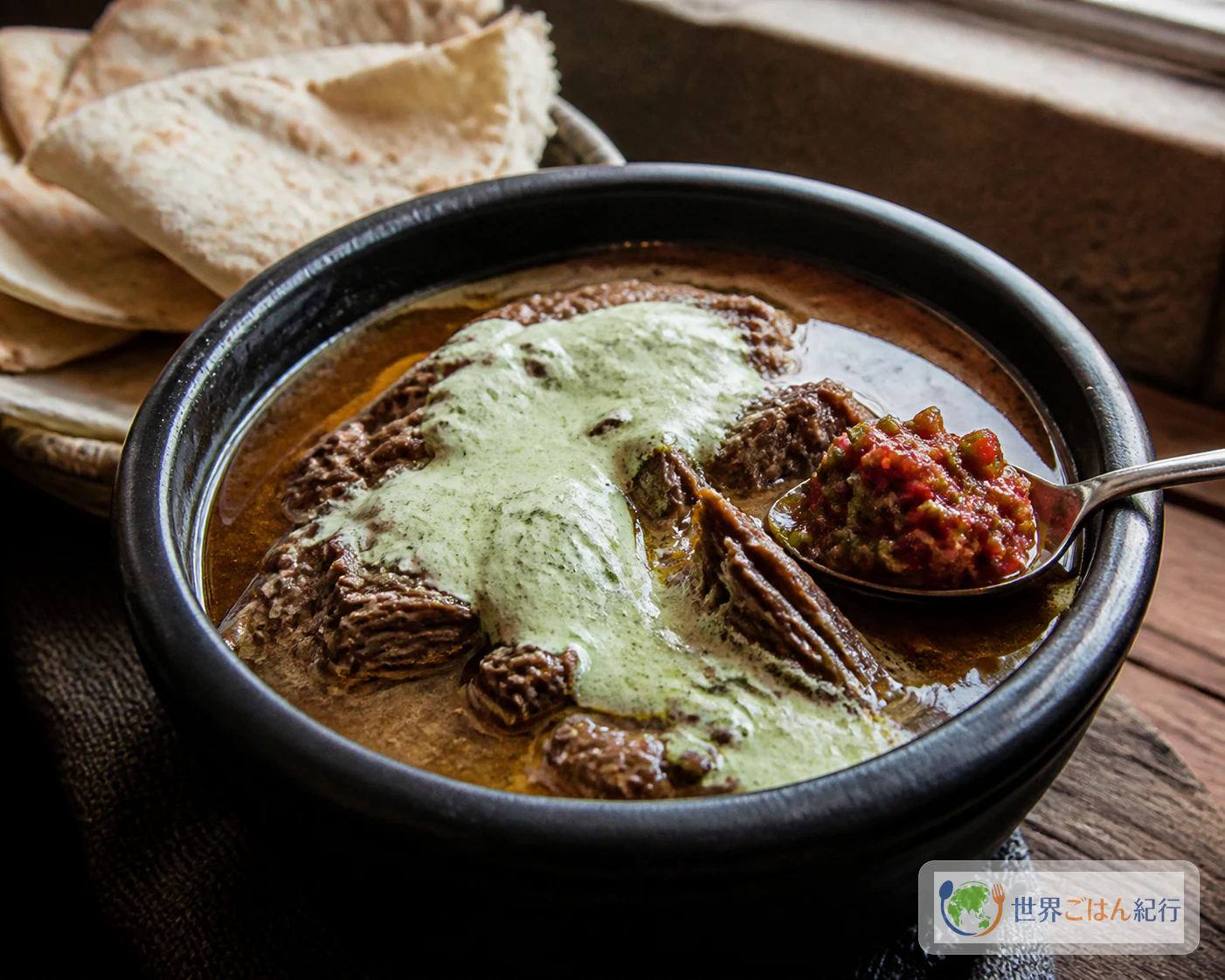
Fahsa: Yemeni Meat Stew with Hulba and Sahawiq
Ingredients
Meat stew
| Ingredient | Amount | Substitutes and how to choose |
|---|---|---|
| Beef shoulder or shank (1.5 inches (4 cm) cubes) | 1.5 lb (700 g) | For lamb shoulder, 1.75 lb (800 g). Avoid lean meat with too little fat |
| Onion | 6.5 oz (180 g) | Thinly sliced. Gives the broth sweetness |
| Garlic | 3 cloves (about 15 g) | Crushed, then roughly chopped |
| Tomato | 9 oz (250 g) | If no fresh, 7 oz (200 g) unsalted canned diced tomatoes |
| Green chile | 1 | Half for less heat. Remove the seeds |
| Cilantro | 20 g | Stems go in the stew, leaves go to the sahawiq |
| Ground cumin | 1 tsp (2 g) | The aromatic base of the stew |
| Ground coriander | 1 tsp (2 g) | Powder of cilantro seeds. If none, use a little more cumin |
| Turmeric | 1/2 tsp (1 g) | For color. Too much turns bitter |
| Black pepper | 1/2 tsp (1 g) | Coarsely ground is fine |
| Salt | 1 1/3 tsp (8 g) | The broth is reduced, so start light |
| Oil | 1 tbsp (15 ml) | A mild-scented oil such as rice bran or sunflower |
| Water or unsalted meat stock | 3½ cups (850 ml) | Leave 500 to 600 ml at the end of cooking |
Hulba (hilbeh)
| Ingredient | Amount | Role |
|---|---|---|
| Fenugreek seeds | 20 g | Creates the stickiness and the distinctive bitterness. Use whole seeds |
| Water for soaking | 1½ cups (350 ml) | Change once along the way |
| Cold water for whipping | 100 to 120 ml | Add by the teaspoon |
| Cilantro leaves | 10 g | Adds a green aroma |
| Scallion or leek (green parts) | 1 oz (30 g) | Gives the foam body. Can be left out |
| Green chile | 1/2 | Leave out if you dislike heat |
| Lemon juice | 2 tsp (10 ml) | Rounds off the edge of the bitterness |
| Salt | A pinch | Adjust at the end |
Steps
1Soak the fenugreek
2 hours to overnight
Put 20 g fenugreek seeds into 1½ cups (350 ml) water and leave in the refrigerator for 2 hours or more. Once the seeds have swollen and a thin stickiness has formed at the bottom, move on. To reduce bitterness, pour off the water once along the way and replace it with the same amount. A hard core that remains when you crush a seed between your fingers is fine at this stage.
2Brown the meat and aromatics
10–12 min
Put oil in a heavy pot and cook the onion over medium heat for 4 minutes. Add the garlic, green chile and cilantro stems, and when fragrant, lay in the beef without overlapping. Turn and brown 5 to 6 minutes until the surface is lightly colored all over. Burnt onion passes bitterness to the broth, so lower the heat once if the bottom of the pot looks about to blacken.
Add the cumin, coriander, turmeric and black pepper and stir 30 seconds to coat the meat. Toasting ground spices dry for long loses their aroma, so move on once they cling to the oil and meat.
3Simmer the meat and leave the broth
75–90 min
Add 9 oz (250 g) tomato and 3½ cups (850 ml) water and scrape the bottom of the pot with a wooden spoon. When it boils, skim, set the lid slightly ajar and lower the heat. Cook until a fork goes into the center of the meat with no resistance: about 75 minutes for beef shoulder, 90 minutes for beef shank or lamb shoulder.
If the water drops too far, add 3.5 tbsp (50 ml) boiling water at a time. The goal is 500 to 600 ml (up to 2½ cups) of broth remaining at the end, with fine fat floating on the surface. This is not a dish where the broth is boiled away completely, so do not reduce until the bottom of the pot shows.
4Shred the meat and make the sahawiq and hulba
20 min
Take the meat out of the pot and shred the large fibers with two forks. Only if there is a lot of watery broth, simmer the pot, with the meat removed, over medium heat for 5 to 10 minutes. Return the shredded meat and taste for salt. If it is still firm, add 3.5 tbsp (50 ml) water and extend by 15 to 20 minutes before reducing.
For the sahawiq, crush the garlic, salt and green chile in a mortar first, then add the tomato, cilantro and lemon juice in turn. Do not grind it to a liquid; stop at a coarseness where some corners of tomato remain.
For the hulba, pour off the water from the soaked seeds and grind the seeds to a smooth paste in a mortar or small blender. Add 100 to 120 ml (up to ½ cup) cold water 1 teaspoon at a time and whip. At first it is grayish and sticky, but after about 8 to 10 minutes of mixing it turns into a pale green foam. Add the cilantro, scallion, green chile and lemon juice, and adjust with a pinch of salt. Once the foam forms, do not leave it long; go straight to finishing the meat.
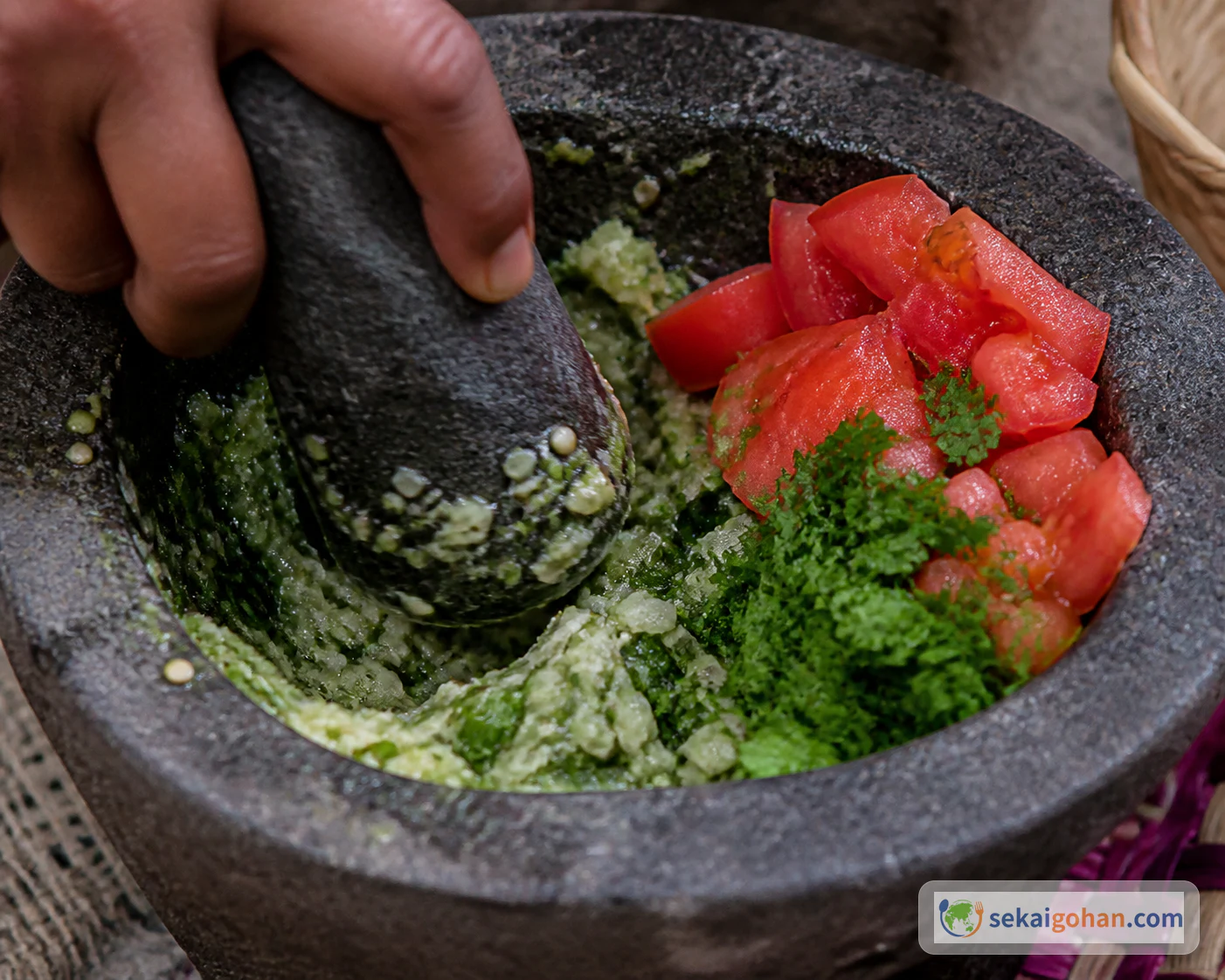
Keep the sahawiq as a coarse paste so acidity and heat can be added just before eating 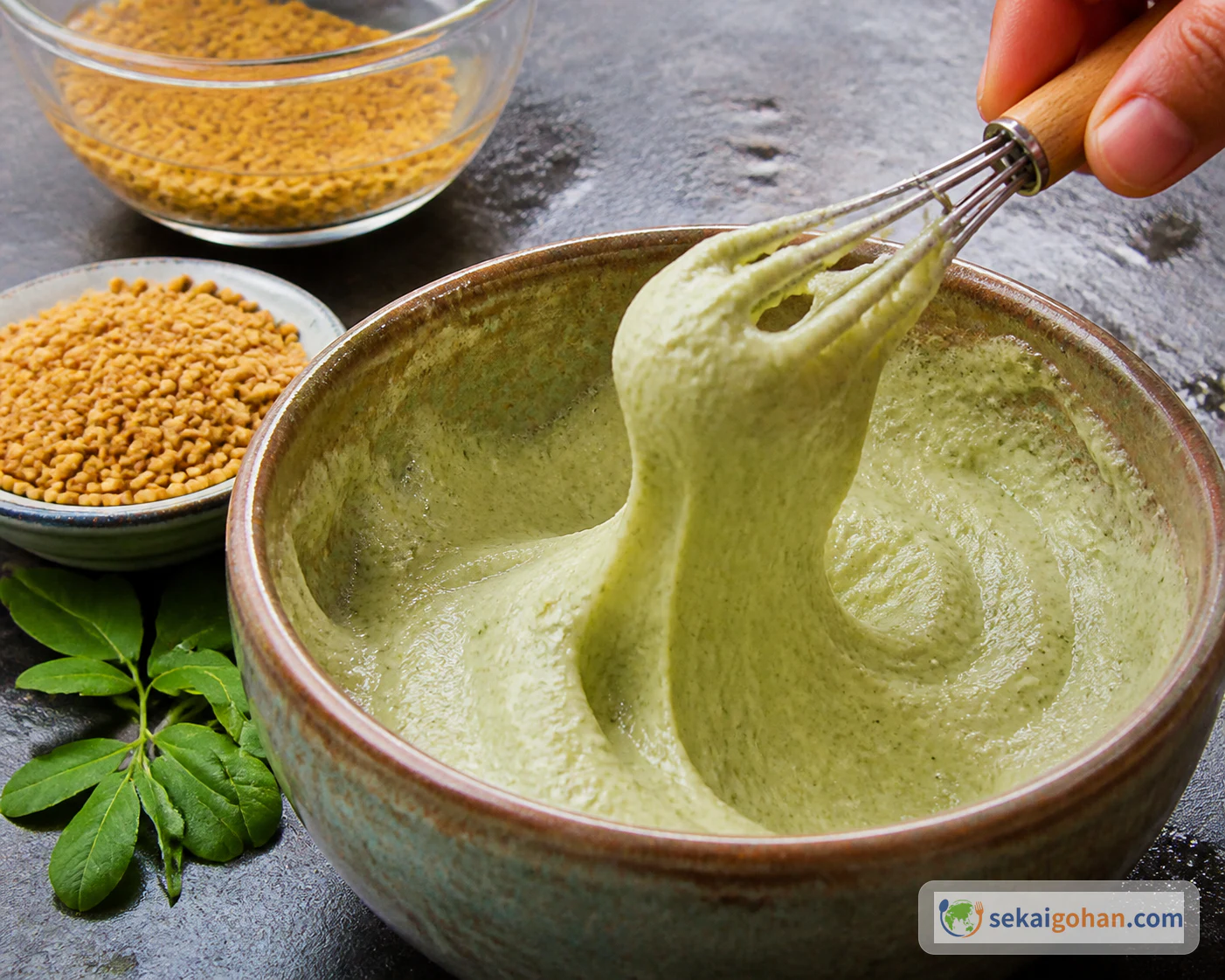
Whip hulba with cold water added a little at a time, aiming for a pale color and airy stickiness 5Serve in a hot bowl and layer the three flavors
5 min
Warm a heavy serving bowl with boiling water and wipe it dry. If you use a stone or clay pot, never put it empty over high heat; always warm it from low heat. Put the meat and broth in the bowl, place 2 to 3 tablespoons of hulba in the center and 1 to 2 tablespoons of sahawiq at the side. Rather than mixing in all the hulba, mixing a little at a time wherever you scoop with bread lets you vary the richness of the meat, the bitterness of the foam and the heat of the sahawiq as you eat.
Even with beef, make sure it is cooked through to the center. For whole cuts of beef, lamb and goat, cook to 145°F (63°C) and rest for 3 minutes. Ground meat or reheated leftovers need a higher temperature. This recipe simmers a whole cut for a long time until it breaks apart; if you replace it with chicken, cook to 165°F (74°C). For exact temperatures, see the safe temperature chart.