Ingredients and steps on one page. Print it, or choose “Save as PDF” in the print dialog.
Sekai Gohan
Saltah: Yemeni Stew Topped with Whipped Hilbeh
Ingredients
The stew
| Ingredient | Amount | Substitutes and notes |
|---|---|---|
| Chicken thighs | 14 oz (400 g) | With 1 lb (450 g) lamb shoulder, cut into 1 inches (3 cm) cubes and extend the simmer to 35 minutes |
| Potatoes | 9 oz (250 g) | Peeled, in 1 inches (2 cm) cubes. Beans or carrots can replace them |
| Tomatoes | 10.5 oz (300 g) | In 0.5 inches (1 cm) cubes. Canned diced tomatoes, 10.5 oz (300 g), also work |
| Onion | 4 oz (120 g) | Sliced 0.25 inch (5 mm) thick |
| Garlic | 8 g | Minced. About 2 tsp if using paste |
| Chicken stock or water | 3 cups (700 ml) | Use low-sodium store-bought stock |
| Vegetable oil | 1 tbsp (15 ml) | Olive oil also works |
| Ground cumin | 2 g | A little under 1 tsp |
| Ground coriander | 3 g | A little over 1 tsp |
| Turmeric | 1 g | 1/3 tsp. Can be left out if it is only for color |
| Black pepper | 1 g | Coarsely ground |
| Salt | 7 g | Start with 5 g and adjust to the saltiness of the stock |
| Eggs | 2 | Optional. If used, beat and add to the stew |
Hilbeh and sahawiq
| Ingredient | Amount | Where it goes |
|---|---|---|
| Fenugreek seeds | 20 g | Crushed coarsely and soaked to make the hilbeh |
| Water for soaking | 1½ cups (350 ml) | Not used in the finish; pour off the top liquid |
| Cold water for whipping | About ½ cup (120 ml) | Add 1 tsp at a time and stop when it looks right |
| Tomato | 5.5 oz (150 g) | For the sahawiq. Roughly chopped |
| Green chile | 1/2 | Seeding it lowers the heat |
| Cilantro | 15 g | Parsley if you do not like cilantro |
| Garlic | 1 clove | For the sahawiq |
| Lemon juice | 2 tsp (10 ml) | Lime also works |
| Salt | 1.5 g | For the sahawiq |
| Flatbread | 4 pieces | Pita, naan or thin chapati can stand in |
Steps
1Soak the hilbeh and pour off the bitter water
at least 2 hours
Crush 20 g fenugreek seeds coarsely in a mortar or spice mill. Powder can irritate the airways, so keep your face away and handle small amounts at a time. Pour in 1½ cups (350 ml) water and soak for at least 2 hours, ideally 6 hours to overnight in the refrigerator.
When clear water has collected on top and a sticky layer of seeds has formed at the bottom, drain in a sieve. Do not use the soaking liquid in the finish; discard it and rinse the seeds once with water.
2Make the sahawiq into a coarse paste
8 min
Put 1 clove garlic, 1/2 green chile and 1.5 g salt in the mortar and crush until the chile skin breaks down. Add 15 g cilantro and press until the green is spread throughout. Add 5.5 oz (150 g) tomato in two batches and stop while the paste is still coarse with pieces of flesh.
Mix in 2 tsp (10 ml) lemon juice and check the heat. Because it is eaten with the stew, it should taste a little sour on its own. To lower the heat, remove the chile seeds and use 1/4 chile. If it turns watery, do not add more tomato to restore the thickness; first let it stand 10 minutes and pour off the liquid on top.
3Make the tomato stew
25 min
Put 1 tbsp (15 ml) vegetable oil in a heavy pot and warm over medium heat for 1 minute. Add 4 oz (120 g) onion and cook 5 minutes; when the edges color lightly, add 8 g garlic, 2 g cumin, 3 g coriander, 1 g turmeric and 1 g black pepper. Cook only 30 seconds, and add 10.5 oz (300 g) tomato before the spices stick to the bottom.
Simmer the tomato 4 minutes, until some liquid returns when you crush it with a wooden spoon. Cut 14 oz (400 g) chicken thighs into 1 inches (3 cm) pieces, add them and stir-fry 3 minutes until the surface turns white. Add 9 oz (250 g) potatoes, 3 cups (700 ml) chicken stock or water and 5 g salt, bring to a boil, then reduce to a medium-low heat.
Simmer with the lid slightly ajar for 18 to 20 minutes. When a bamboo skewer goes through the potatoes and the thickest part of the chicken is 165°F (74°C) or higher, turn off the heat. Check the thickness: it should leave a light coat on the back of a spoon. If it is watery, remove the lid and reduce for 3 minutes; if it is too thick, add water 3.5 tbsp (50 ml) at a time.
4Whip the hilbeh
10 min
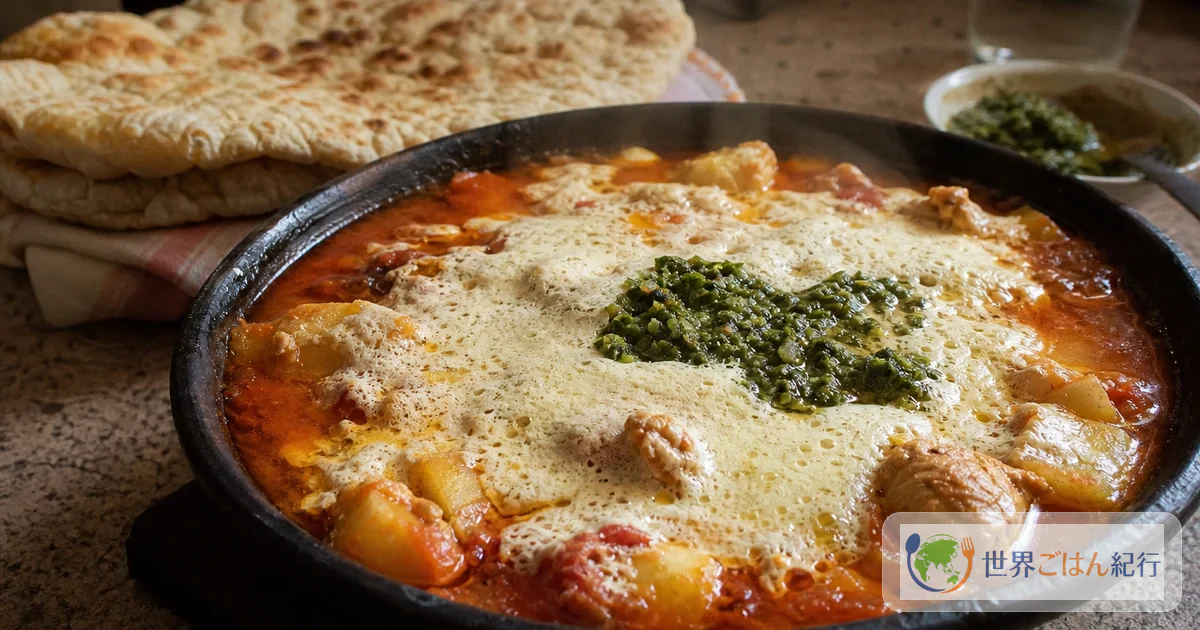
Move the soaked fenugreek to a bowl. Add cold water 1 teaspoon at a time and mix in one direction with a whisk or spoon. The first 3 minutes feel heavy; over the next 5 minutes the color pales and it becomes as smooth as loose tahini. In the last 2 minutes it changes to a state where ridges of foam remain. Aim for about ½ cup (120 ml) of water, but you do not need to add all of it.
When you lift the whisk, the hilbeh should fall in a thin ribbon and leave a ridge on the surface for about 3 seconds; stop there. If it is still strongly bitter, rather than diluting with more water, mix in a few drops of lemon juice and check whether the edges soften. If it is still bitter, the soak was too short: do not put all of it into this stew, and soak longer next time.
5Take it off the heat, layer and eat hot
5 min
Taste and add 2 g salt to the stew. Turn off the heat, then move the stew to a heatproof bowl. Spread the hilbeh over the surface with a spoon and place 1 to 2 teaspoons of sahawiq in the center. Not boiling the hilbeh in the pot is the secret to not bringing the bitterness back.
If using eggs, return the stew to the heat, pour in 2 beaten eggs in a thin stream and cook 1 1/2 minutes until set, then move to the bowl. Adding the egg first clouds the whiteness of the foam, so it is fine to skip it this time. Tear flatbread by hand and scoop up stew, foam and sahawiq in one go.