Ingredients and steps on one page. Print it, or choose “Save as PDF” in the print dialog.
Sekai Gohan
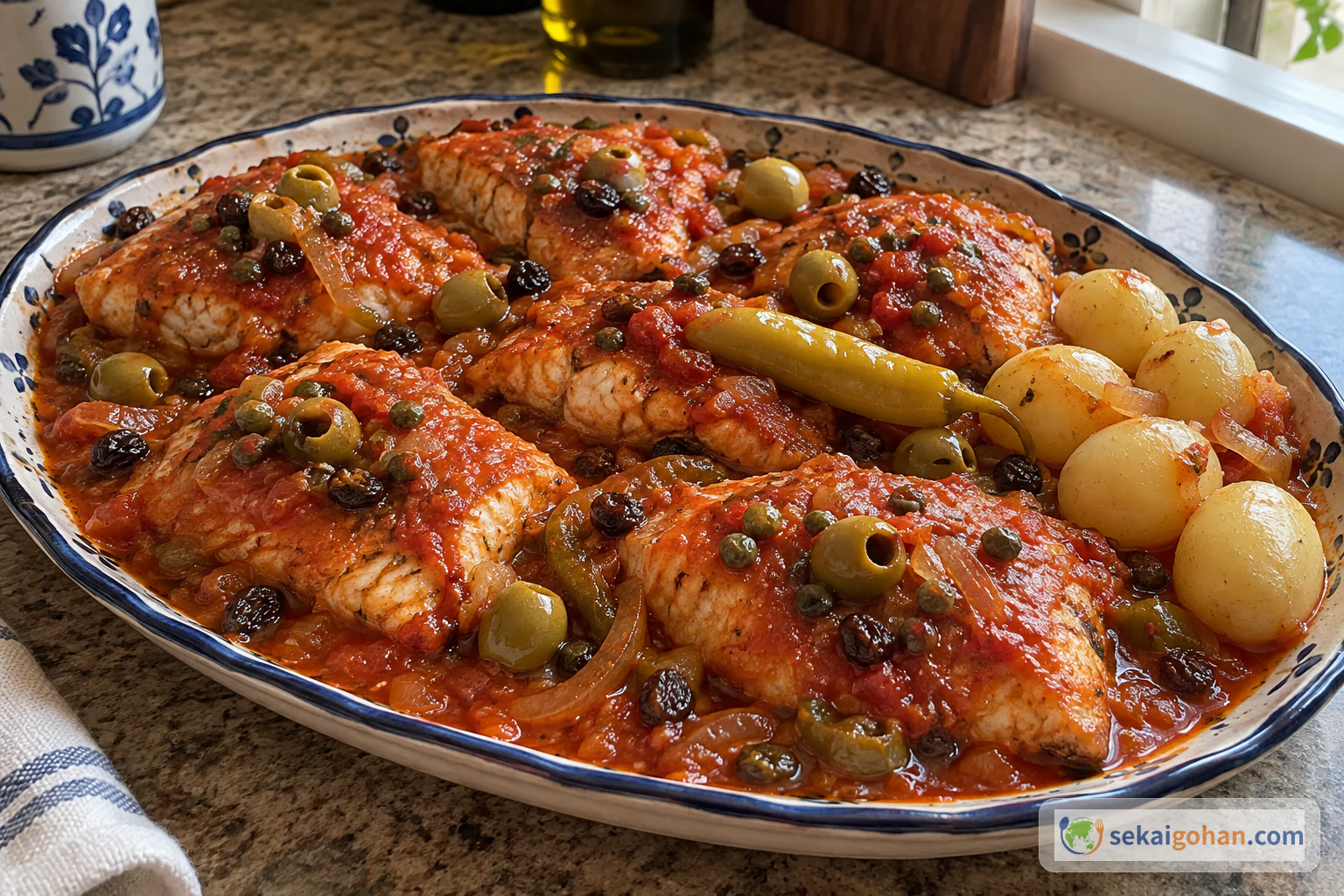
Huachinango a la Veracruzana: Veracruz-Style Fish in Tomato, Olive and Caper Sauce
Ingredients
| Ingredient | Amount | Role |
|---|---|---|
| Thick red snapper fillets, at least 1 cm thick (filetes gruesos de huachinango) | 6 fillets, 150 g each; or 1 whole fish | The main ingredient. This method uses fillets |
| Salt, for the fish (sal) | ½ tsp (cucharadita) | Seasons the fish before it rests in the refrigerator |
| Salt, for the sauce, only if needed (sal) | 1 tsp (cucharadita) | Added only after the olives and capers are in and you have tasted the sauce |
| Ripe tomatoes (jitomate bola o guajillo maduro) | 2 kg | Skinned and seeded. The flesh is chopped and the juice kept separate |
| Virgin olive oil (aceite de oliva virgen) | ⅓ cup (taza) | Lightly browns the potatoes. The same oil then cooks the onion and garlic |
| Small potatoes, cooked and peeled (papitas cambray cocidas y peladas) | 18 (300 g) | Weighed already cooked and peeled. Browned lightly and served on the side |
| White onion, finely chopped (cebolla blanca) | ¼ cup (taza) | Aromatic base of the sauce |
| Garlic, minced (ajo) | 1 tbsp (cucharada) | Cooked briefly after the onion turns translucent |
| Sugar, optional (azúcar) | 2 tbsp (cucharadas) | Only if the tomatoes are very acidic |
| Bay leaves (hojas de laurel) | 3 | Aroma for the simmering sauce |
| Oregano (orégano) | 1 tsp (cucharadita) | Dried oregano for the tomato sauce |
| Parsley, finely chopped (perejil) | 2 tbsp (cucharadas) | Fresh herb flavor in the sauce |
| Pitted green olives, whole, rinsed (aceitunas verdes sin hueso) | ¼ cup (taza) | Salt and briny flavor. Rinsing tames the salt |
| Capers, rinsed (alcaparras) | 2 tbsp (cucharadas) | Salty, tangy bursts. Rinsed like the olives |
| Black raisins (pasitas negras) | 2 tbsp (cucharadas) | Sweetness against the acidity |
| Long pickled güero or carricillo chiles, drained (chiles güeros largos o carricillos curtidos o en escabeche) | 6 | Acidity, aroma, color and some heat. One per plate when serving |
Steps
1Salt the fish and refrigerate it
Season the six fillets with the first ½ tsp of salt in a shallow nonreactive dish. Cover and refrigerate for at least 30 minutes, the whole time you're making the sauce. This rest firms the flesh. Keep the fish in the refrigerator during this time, not on the counter.
2Skin and seed the tomatoes, keeping the juice
Cut out the tomato cores. Bring 2–3 L of water to a boil. Dip the tomatoes in the boiling water a few at a time for a few seconds each, then move them to ice water and slip off the skins. Halve them and remove the seeds, catching the seeds and juice in a separate bowl.
Finely chop the flesh and drain it in a colander. Add the juice that drips out to the bowl of reserved juice. You now have two things: chopped tomato pulp and tomato juice. They go into the sauce at different times.
3Lightly brown the potatoes
Heat the olive oil in a wide pan. Add the 18 cooked, peeled small potatoes and turn them until they are just lightly golden. You're coloring them, not deep-frying them. Lift them out onto a plate and leave the oil in the pan for the next step.
4Cook the onion and garlic, then add the tomato
In the same oil, cook the chopped white onion until it turns translucent. Add the minced garlic and stir for just a few seconds, then add the chopped tomato pulp.
5Season the sauce and add the olives, capers and raisins
Cook the tomato until its raw taste is gone. The recipe gives no exact time here, so go by taste and smell rather than the clock. Add the 3 bay leaves, 1 tsp oregano and 2 tbsp parsley. Pour in the reserved tomato juice and simmer for a few minutes.
Near the end, add the rinsed olives, rinsed capers and black raisins. Now taste. Add the extra 1 tsp of salt only if the sauce needs it. Add the 2 tbsp of sugar only if the tomatoes are very sour. Neither one is required.
6Cook the fish in the sauce
Nestle the thick fillets into the sauce and cook them for 5–7 minutes. Spoon sauce over them, but don't push them around, so they stay whole.
Time alone doesn't tell you the fish is done. Fillet thickness, the pan and how cold the fish was all change it. Check that the thickest part reaches 145°F (63°C), or that the flesh is no longer translucent and separates easily with a fork. If it needs longer, keep cooking until it passes this check, handling it gently so it doesn't break apart.
7Serve
Remove the bay leaves before serving, since they aren't pleasant to eat. On each plate, place one fillet and three potatoes, spoon plenty of sauce over the fish, and add one pickled chile. If you'd like rice, serve plain white rice in a separate bowl.