Ingredients and steps on one page. Print it, or choose “Save as PDF” in the print dialog.
Sekai Gohan
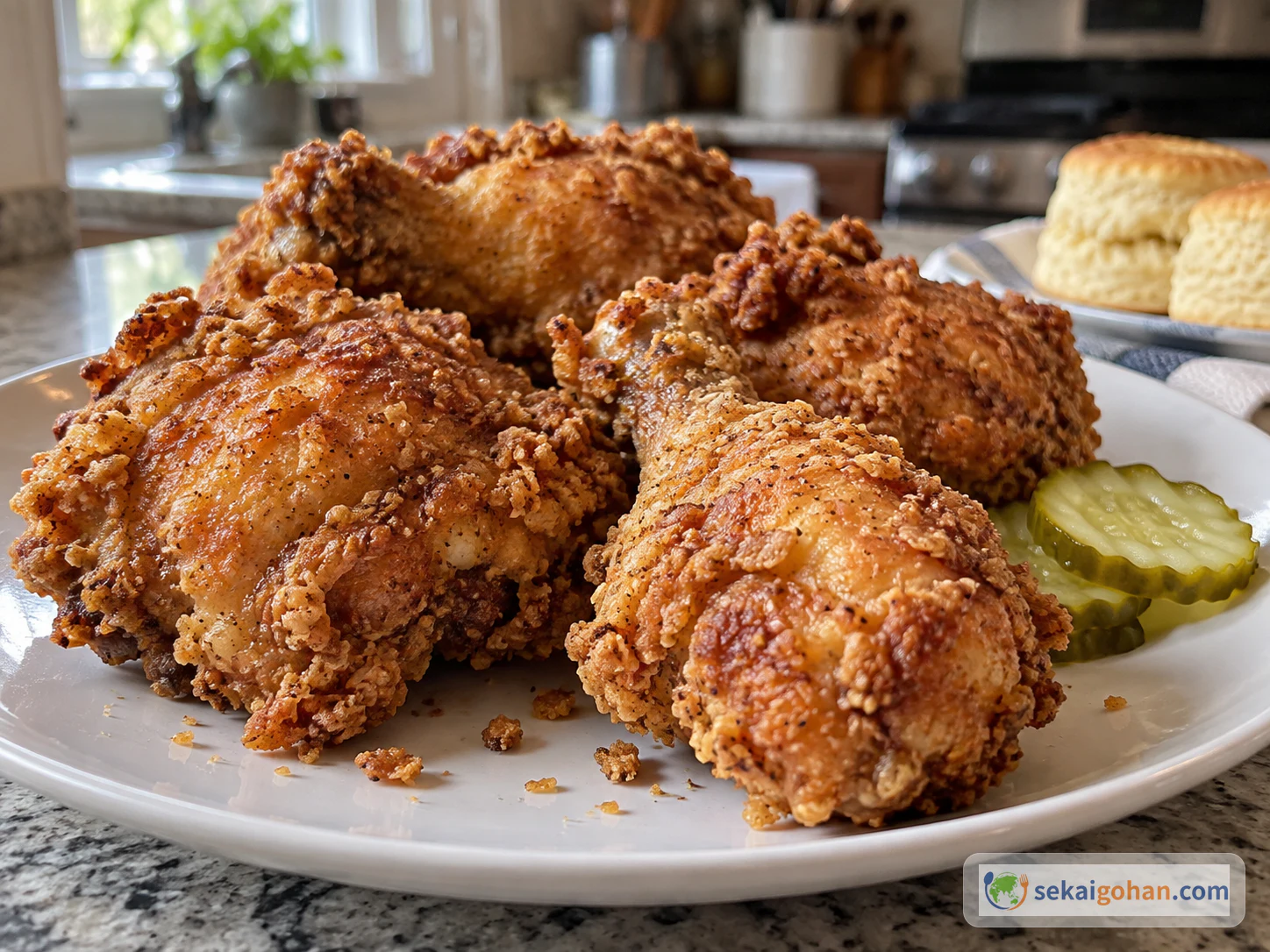
Southern-Style Buttermilk Fried Chicken: Bone-In Pieces with a Craggy Seasoned-Flour Crust
Ingredients
Chicken and buttermilk marinade
| Ingredient | Amount | Role and notes |
|---|---|---|
| Bone-in, skin-on chicken thighs and drumsticks | about 1.8kg (4 lb) | Choose pieces of similar size so they cook evenly. Judge doneness by temperature, not time |
| Plain buttermilk | 900ml (1 quart) | Unsweetened. Flavors the meat and helps the flour cling |
| Salt | 1 tsp | Kosher salt. Measure by spoon; grain size varies between salts |
| Black pepper | 1/2 tsp | For the marinade |
| Sweet paprika | 1/2 tsp | Color and a gentle aroma |
| Hot sauce | 1–2 tsp | Heat and acidity. If using Tabasco, 4–6 dashes is the amount. Omit for less heat |
| Garlic | 2 cloves, crushed | Crush rather than chop, so the aroma moves into the marinade |
| Fresh thyme | 2 sprigs | Aroma for the marinade |
Seasoned flour
| Ingredient | Amount | Role and notes |
|---|---|---|
| All-purpose flour | 10.5 oz (300g) | The base of the crust |
| Salt | 2 tsp | Seasoning for the crust. Measure by spoon; grain size changes how salty a spoonful is |
| Black pepper | 1 tsp | Heat and aroma |
| Paprika | 2 tsp | Mild aroma and color, carrying the marinade's flavors into the crust |
| Garlic powder | 1 tsp | Extra savory aroma. The coating works without it |
For frying
| Ingredient | Amount | Role and notes |
|---|---|---|
| Neutral frying oil (canola or similar) | Enough to come close to the height of the chicken; about 700ml–3¾ cups (900ml) as a guide | The amount needed changes with the width of your pan and the size of the pieces |
Steps
1Marinate the chicken in seasoned buttermilk
Don't rinse the chicken; just press off excess moisture with paper towels. In a bowl, mix the buttermilk, 1 tsp salt, 1/2 tsp black pepper, 1/2 tsp sweet paprika and the hot sauce, then add the crushed garlic and thyme sprigs. Submerge the chicken, cover, and refrigerate for 4–8 hours.
For a fuller method, brine the chicken for 6–8 hours, then soak it in buttermilk for 4 hours as a separate stage. This recipe uses the simpler single marinade above.
2Press on the seasoned flour
In a shallow dish, mix the flour, 2 tsp salt, 1 tsp black pepper, 2 tsp paprika and the garlic powder. Lift one piece of chicken from the marinade, let the excess run off, then lay it in the flour. Cover every surface and press lightly with your fingers so the coating bonds to the skin. Work one piece at a time so the flour in the dish doesn't turn wet and clumpy, and set coated pieces on the wire rack.
This is a single dredge. Some versions coat twice and add baking powder; that is a different method.
Discard the marinade once all the chicken is out. Don't taste the seasoned flour, even before it touches the chicken; check the seasoning on a fully cooked piece instead.
3Heat the oil to 177°C (350°F)
Pour the oil into a heavy, deep skillet or pot, leaving plenty of room below the rim. Clip on the deep-fry thermometer and heat the oil to 177°C (350°F). Position the thermometer to suit your pan so it reads the oil itself.
4Fry a few pieces at a time
Lower the chicken into the oil gently, to avoid splatter, without stacking or crowding the pieces. Adding too many at once drops the oil temperature. Aim to keep the oil at 170°C–350°F (180°C), adjusting the heat as you go, and don't move the pieces around much at first while the crust sets.
Keep the oil at 350°F and fry for about 20–25 minutes, until the chicken is deep golden and reaches 165°F inside. The cut, the size of the pieces and the amount of oil all change the time.
5Turn once
Partway through, turn each piece once with long tongs so both sides brown evenly. Move slowly and keep the tongs low to the oil.
6Check the center with a thermometer
Insert the instant-read thermometer into the thickest part of the meat, without touching the bone, which can throw off the reading. The chicken is done when it reads 74°C (165°F) or higher. Check several pieces, especially the largest. If a piece hasn't reached temperature, return it to the oil and check again. A deep golden crust alone does not tell you the chicken is safe.
7Rest on a rack
Move the cooked pieces to the wire rack, spaced apart so they don't touch. Setting them flat on a plate or paper towels traps steam and softens the crust. Keep cooked chicken away from the tongs, trays and surfaces that held raw chicken. Bring the oil back to temperature before the next batch.
Once the first batch is done, taste a fully cooked piece to judge the salt, and keep that in mind for the next time you make it.