Ingredients and steps on one page. Print it, or choose “Save as PDF” in the print dialog.
Sekai Gohan
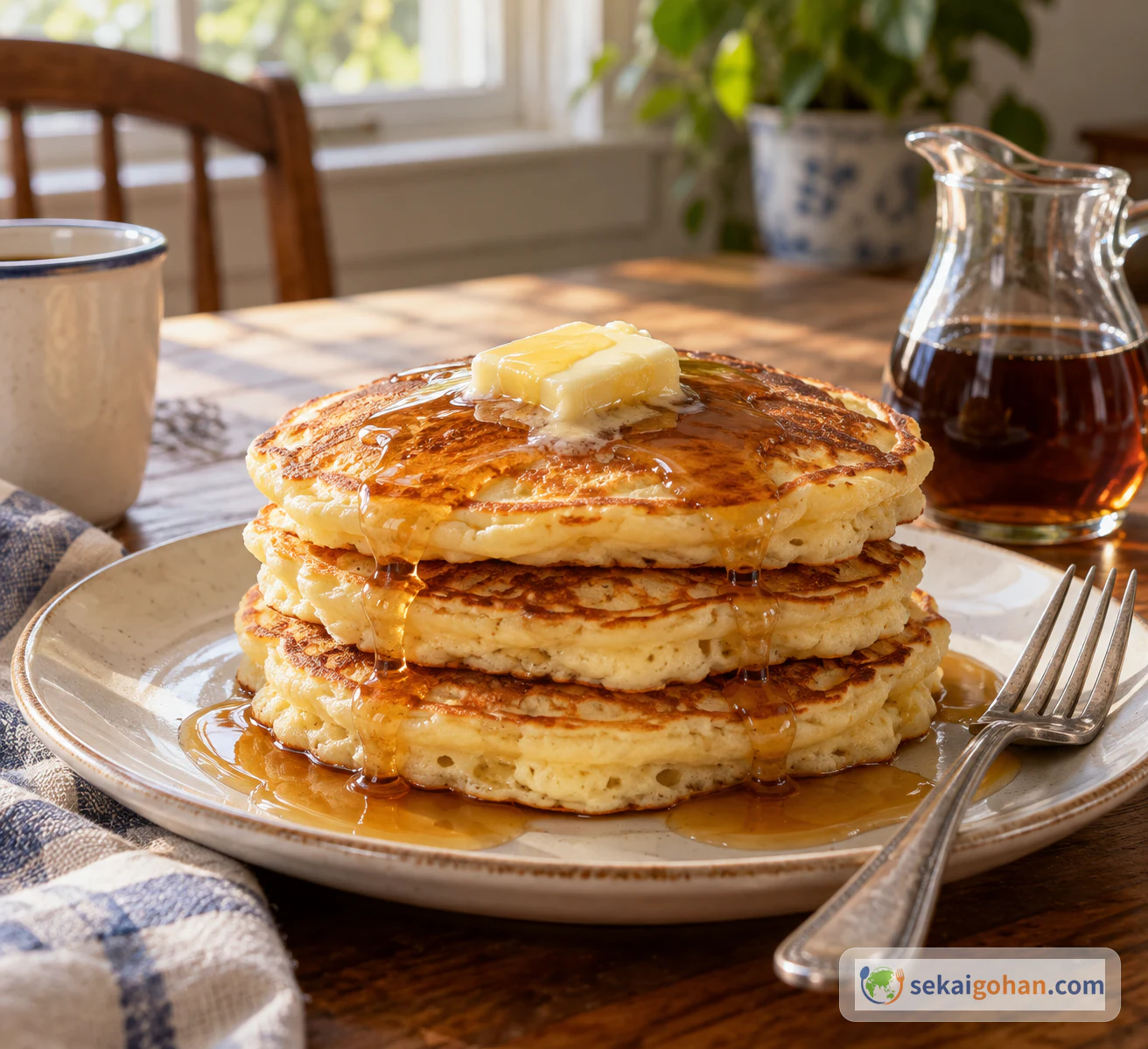
American Buttermilk Pancakes: Fluffy Griddle Cakes with Butter and Maple Syrup
Ingredients
Batter
| Ingredient | Amount | Role and how to choose |
|---|---|---|
| All-purpose flour | 8.5 oz (240 g) | The structure of the pancake |
| Granulated sugar | 1.25 oz (35 g) | Light sweetness and browning |
| Baking powder | 1 tsp | Leavening |
| Baking soda | 1 tsp | Reacts with the acid in buttermilk. Do not swap it for baking powder; you need both |
| Table salt | 1/2 tsp | Seasoning |
| Large egg | 1 | Binds and adds richness |
| Buttermilk | 1 lb (454 g) | Tang and moisture. See the substitute below |
| Melted butter | 1 oz (28 g) | Richness. Or use vegetable oil, 25 g, instead; choose one, not both |
| Vanilla extract (optional) | 1 1/2 tsp | Aroma. Leave it out if you like |
For the pan
| Ingredient | Amount | Role and how to choose |
|---|---|---|
| Butter or vegetable oil | A thin film | For greasing the griddle only; separate from the butter in the batter |
For serving
| Ingredient | Amount | Role and how to choose |
|---|---|---|
| Butter | As desired | A pat on top of the stack |
| Pure maple syrup | As desired | Poured over at the table |
Steps
1Whisk the dry ingredients together
In a large bowl, whisk the flour, sugar, baking powder, baking soda and salt until evenly combined. Break up any clumps of flour so the leaveners are spread through the whole bowl rather than concentrated in pockets, which can leave some pancakes flat and others uneven.
2Whisk the wet ingredients separately
In another bowl or jug, whisk the egg, buttermilk, and the melted butter or oil, plus the vanilla if you are using it. Make sure the butter is liquid but not sizzling hot.
3Combine until fairly smooth
Pour the wet ingredients into the dry ingredients and mix until the batter is fairly smooth. A few small lumps can stay. Don't stop while large pockets of dry flour remain, but don't keep mixing in pursuit of a perfectly even batter either; extended mixing makes the pancakes tighter and less tender.
4Rest the batter uncovered for 15 minutes
Leave the batter uncovered for 15 minutes. This is not a fermentation step; the rest simply lets the batter settle. No cloth or lid is needed. Use this time to heat the pan.
5Preheat and lightly grease the pan
Heat a griddle to 350°F (about 177°C), or heat a skillet over medium heat. Grease the surface with a thin film of butter or oil, a light sheen rather than a pool. Because home pans vary, cook one pancake first and use its color to decide whether to turn the heat up or down.
6Pour 1/4 cup of batter per pancake
Pour 1/4 cup of batter onto the hot surface for each pancake. Let it settle into its own round; don't press it or spread it out forcibly. Leave room between pancakes so they don't run together.
7Flip when bubbles form and the underside is browned
Cook for about 1–2 minutes, until bubbles form on the surface and the underside has taken on color. Go by the bubbles and color rather than the clock. Flipping by the clock alone can leave the center underdone or the outside scorched.
8Cook the second side until colored
Flip the pancake and cook the second side for about another 1–2 minutes, until it too has browned. Check the color just as you did for the first side.
9Lift out and serve
Move the finished pancake to a plate and serve right away, with butter and maple syrup. If some people will eat later, hold pancakes briefly in a warm oven. Leftovers can be frozen on the day they are made and reheated in a 250°F oven.