Ingredients and steps on one page. Print it, or choose “Save as PDF” in the print dialog.
Sekai Gohan
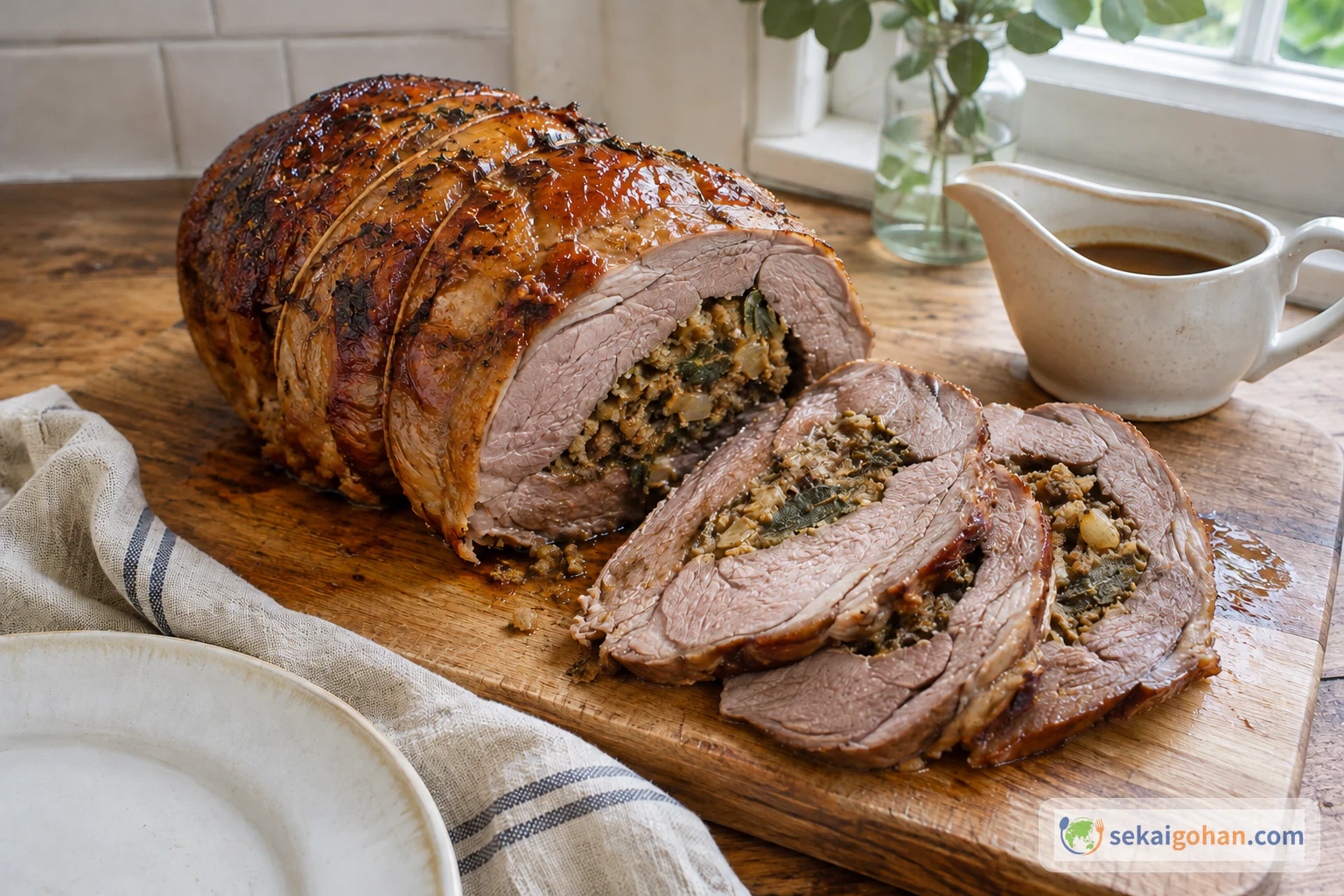
Colonial Goose: Australian Stuffed and Rolled Roast Leg of Lamb
Ingredients
| Ingredient | Amount | Role |
|---|---|---|
| Leg of lamb, boned | 1 leg, 5½ lb (2.5 kg) | The roast; have the butcher bone it |
| Butter | 3 oz (90 g) | Fries the onion and kidney and carries the stuffing |
| Onion | 1 medium, finely chopped | Sweet base of the stuffing |
| Lamb kidneys | 2 | Depth and richness in the stuffing |
| Fresh rosemary, chopped | 2 tsp (or ½ tsp dried) | Resinous herb note |
| Fresh sage, chopped | 2 tsp (or ½ tsp dried) | The classic goose-stuffing herb |
| Ground ginger, finely ground | a little | Warm background note in the stuffing |
| Soft white breadcrumbs | 2 cups | Body of the stuffing |
| Pepper | to taste | Seasons the stuffing and the outside of the roast |
| Fat from the roasting tray | 2 tbsp | Base of the gravy |
| Flour | as needed | Thickens the gravy |
| Stock | as needed | Liquid for the gravy |
Steps
1Soften the onion in butter
Have the boned leg out on a board, ready to fill later. Melt the butter in a frying pan and add the finely chopped onion. Stir it often so it cooks evenly without catching. Move on when the onion is soft, translucent and golden, and the kitchen smells sweet rather than sharp.
2Trim and brown the kidneys
Peel the thin, shiny membrane off each kidney, then cut out the white core with a small knife. Dice what remains into small pieces. Add them to the onion and cook, turning them, until they are lightly coloured on every side. Turn off the heat once they are lightly coloured.
Take the core out completelyThe white core of the kidney is tough and carries a strong taste. Cut it all away before dicing, so every piece in the stuffing is tender.
3Mix the stuffing and let it cool
With the heat off, add the breadcrumbs, rosemary, sage, ground ginger and a good grind of pepper to the pan. Fold everything together with a wooden spoon until the crumbs have taken up the butter. Leave it to cool a little. The stuffing is ready when it is moist and crumbly, holds loosely when pressed, and is cool enough to handle.
4Fill the leg and tie it
Heat the oven to a moderate heat. Open the boned leg out on the board and spoon the stuffing into the cavity where the bone was, pressing it in gently. Bring the meat back around the filling and tie it with butcher's twine into a neat shape, then grind pepper over the outside. The roll is right when it is firm and even, with no stuffing spilling from the ends.
Fill it full, not tightPacked too hard, the stuffing swells in the heat, splits the meat and snaps the string. Fill until the leg closes easily around it, then tie.
5Roast and baste
Set the roast on the rack in the roasting tray and put it in the moderate oven. Roast it for about 2 hours for well-done lamb, or 1½ hours if you want the meat medium pink. Every so often, open the door and spoon the juices from the tray back over the top. It is done when the crust is deep golden, the juices running from the stuffing are nearly clear, and the stuffing at the centre is thoroughly hot.
Heat the stuffing right throughThe kidney stuffing sits at the very centre of the roast and is the last part to heat. Even when you take the lamb to medium pink, check that the stuffing in the middle is fully hot and its juices run nearly clear before the roast comes out. Use thick oven gloves when lifting the tray; the fat in it is very hot.
6Rest, cut the string and carve
Lift the roast onto a carving board and leave it to rest for 20 minutes. Keep the roasting tray and its fat for the gravy. Snip every loop of string and pull each piece away, then carve across the roll into thick slices. Each slice should hold a round of stuffing and keep its shape, with the juices settled into the meat.
7Make the gravy
Pour the fat from the roasting tray, leaving 2 tbsp behind. Add flour and stir it well over low heat until smooth. Pour in the stock a little at a time, stirring after each addition, until the gravy thickens. Taste it, then pour it into a gravy jug or boat. For a dark brown gravy, first cook the flour slowly over low heat until it turns brown without scorching, then add the stock. It is ready when it is smooth and thickened.