Ingredients and steps on one page. Print it, or choose “Save as PDF” in the print dialog.
Sekai Gohan
Te Tuae: Kiribati's Sun-Dried Pandanus Paste and the Ways It Is Eaten
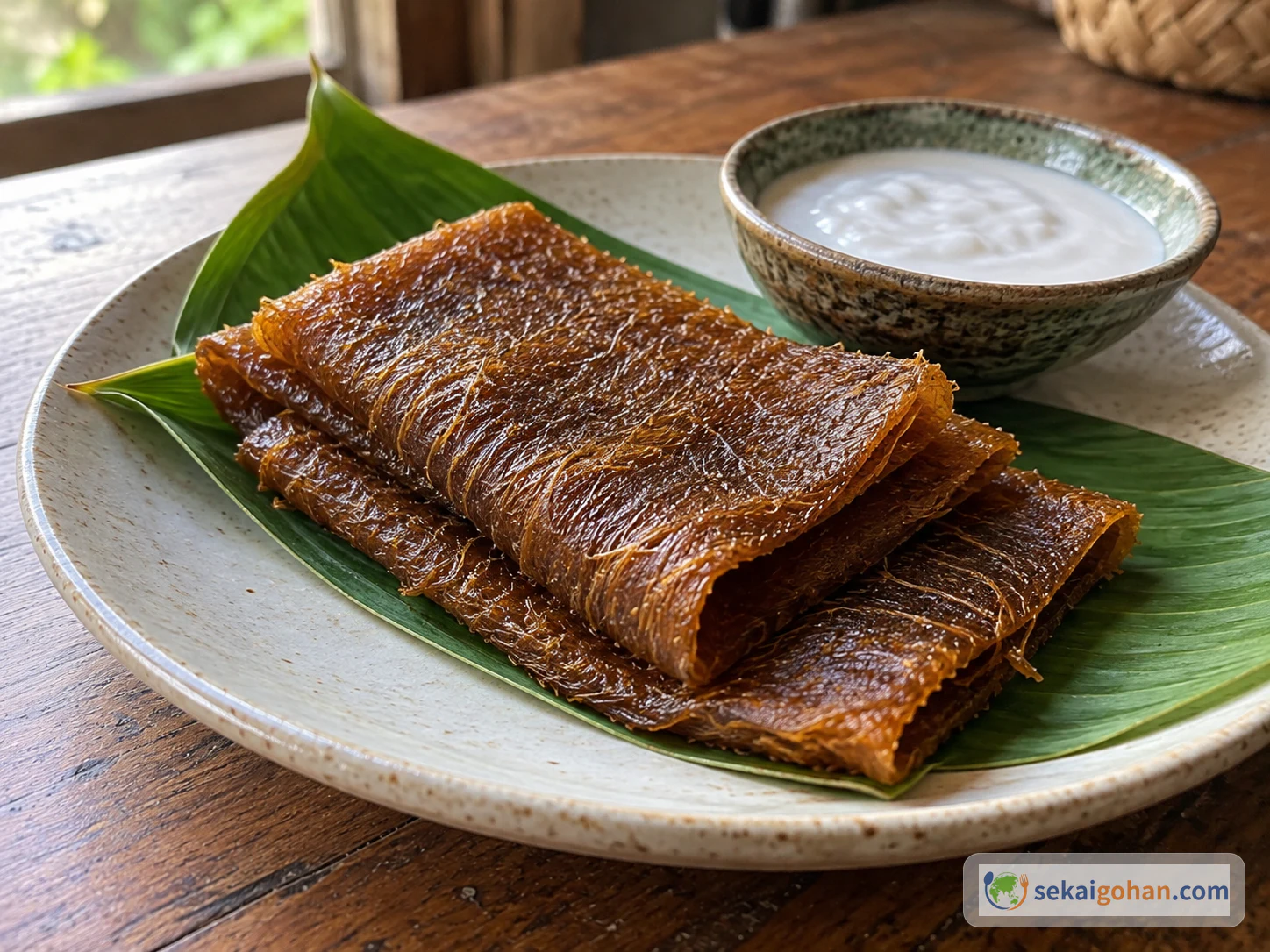
Ingredients
| Ingredient | Amount | Role |
|---|---|---|
| Ripe pandanus fruit (pandanus keys) | as needed | The only ingredient in the paste. It is cooked, the fibre is mostly removed, and the pulp is made into a paste |
| Clean leaves | as needed | The surface the paste is spread on to sun-dry |
| Coconut milk or grated coconut | as needed | For eating with the preserved paste. Not mixed into the paste before drying |
| Coconut cream | as needed | Only for the separate fresh dish of pandanus fruit mixed with coconut cream |
Steps
1Cook the ripe pandanus fruit
Boil the ripe pandanus keys until the fruit softens. No set time or internal temperature is given, so judge by how soft the fruit is.
2Take out the edible pulp and remove most of the fibre
Separate the edible pulp from the cooked keys and remove most, not all, of the tough fibre. Take care when handling the fruit.
3Mash the pulp into a paste
Crush the pulp into a thick paste. Nothing else goes in: no sugar, salt, water or coconut.
4Spread the paste on clean leaves
Spread the paste out on clean leaves. No thickness is set.
5Dry in the sun
Leave the paste on its leaves to dry in the sun. Outdoor drying raises hygiene and climate concerns, and no oven method has been tested.
6Cut the drying paste into pieces
As the paste dries, cut it into pieces.
7Dry the pieces further until preserved
Keep drying and cutting the pieces until the paste is preserved. No moisture level is given, and no shelf life can be recommended for home storage.