Ingredients and steps on one page. Print it, or choose “Save as PDF” in the print dialog.
Sekai Gohan
Sakau: Pohnpei Kava Root Pounded and Wrung Through Hibiscus Bark
Ingredients
| Ingredient | Amount | Role |
|---|---|---|
| Fresh kava root (sakau, Piper methysticum) | as needed | The drink itself; pounded into fibres on the stone |
| Drinking water, boiled or disinfected | half a coconut shell at a time, as needed | Loosens the pounded root so its liquid can be wrung out |
| Inner bark of sea hibiscus (kohlo, Hibiscus tiliaceus) | 1 long strip | Wraps the root and squeezes the liquid out; adds a slippery sap |
Steps
1Scrub the root clean
Set the root in a clean basin and scrub it with a stiff brush under drinking water. Work the bristles into the forks between the branches, where soil hides. Lift the root, look into each crevice and scrub again wherever grit remains. If you have the time, let the washed root dry in the sun for 24 hours before pounding, as sakau bars do. The root is ready when the water runs clear off it and no grit shows in the joints.
2Pound the root on the flat stone
Rinse both stones with drinking water and set the flat one on a steady, clean surface. Lay the root on it and strike with the rounded stone, working across the pile. Gather the pieces back to the middle and turn them so every part gets pounded. Keep going until the root has broken into coarse, stringy fibres with no hard chunks left.
3Add water and knead
Scoop half a coconut shell of drinking water over the pounded root. Knead it in with both hands, squeezing and folding the fibres together until the water disappears into them. Add the next half shell and knead again, and repeat as needed. Stop when the fibres are evenly damp and cling together into a soft, heavy mass with no dry strands.
4Soften the bark and lay out the root
Wet the strip of hibiscus inner bark and rub it between your hands until it turns supple. Lay it open and flat on the clean stone, never on the ground. Rinse it once more with drinking water if it has touched anything else. Place the damp root mass along the middle of the strip. The bark is ready when it bends and folds without cracking, and the root sits centred with bark free on both sides.
Soft bark wrings, stiff bark tearsRub the bark until it moves like a damp cloth before the root goes on. Bark that is still stiff splits under the twist and lets fibres escape into the drink.
5Wrap and wring with two pairs of hands
Fold the bark up around the root and close it into a long bundle. One person holds one end firmly over the clean bowl while the other grips the far end and twists. Twist slowly and keep turning as the bundle tightens, squeezing along its length with the free hand. The cloudy, slightly slippery liquid runs out into the bowl, and the bundle is done when the twist yields only a few last drops.
Twist togetherOne person anchors and one turns. When both pull against each other the bundle tightens evenly from end to end.
6Pour into the coconut cup
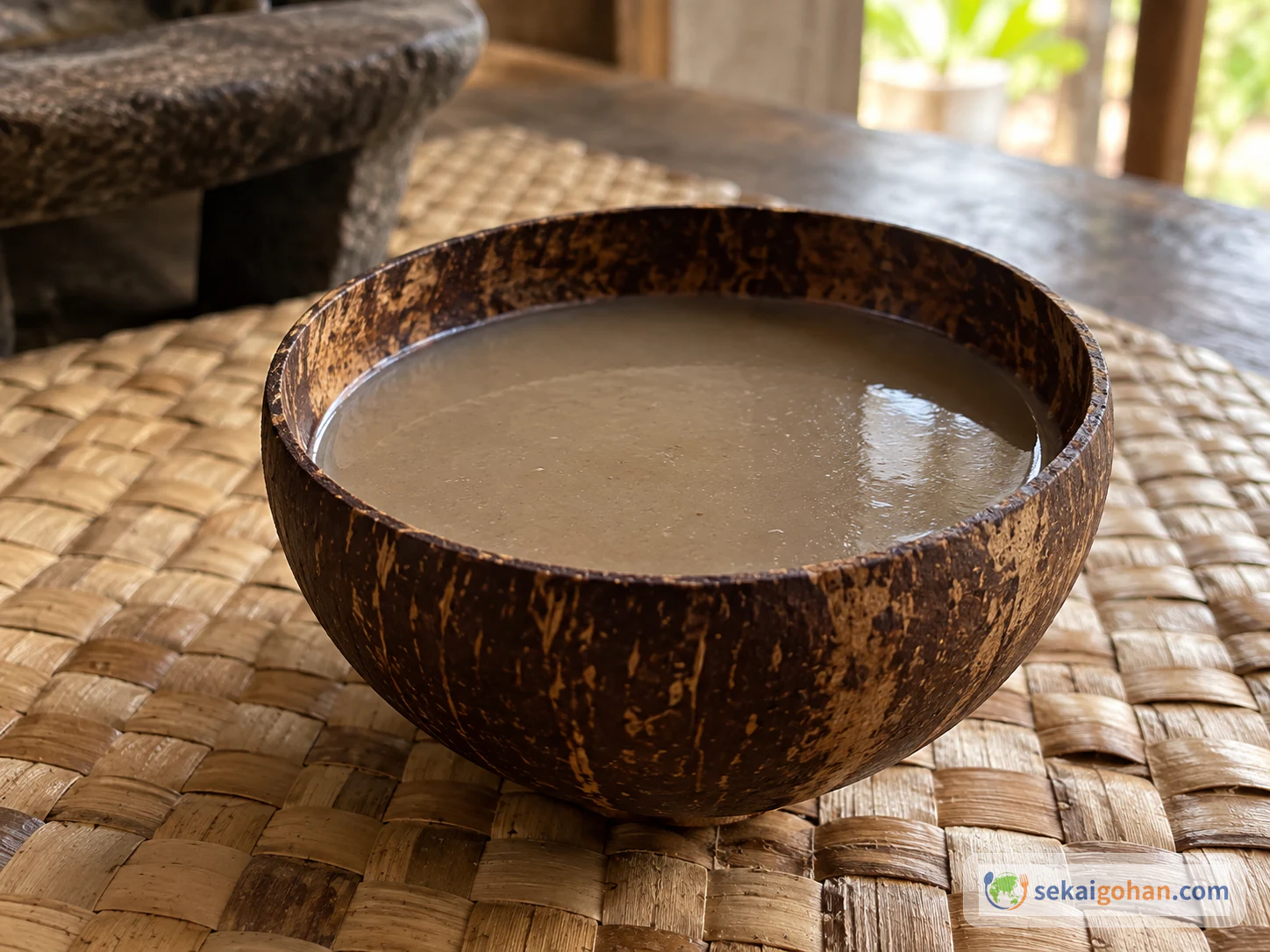
Pour the liquid from the bowl into a coconut-shell cup and hand it over right away. Give each person their own cup. Throw away the used root fibre and the bark once the batch is finished, and start each new batch with fresh root and freshly rinsed bark. The sakau is right when it pours cloudy grey-brown and slightly thick.