Ingredients and steps on one page. Print it, or choose “Save as PDF” in the print dialog.
Sekai Gohan
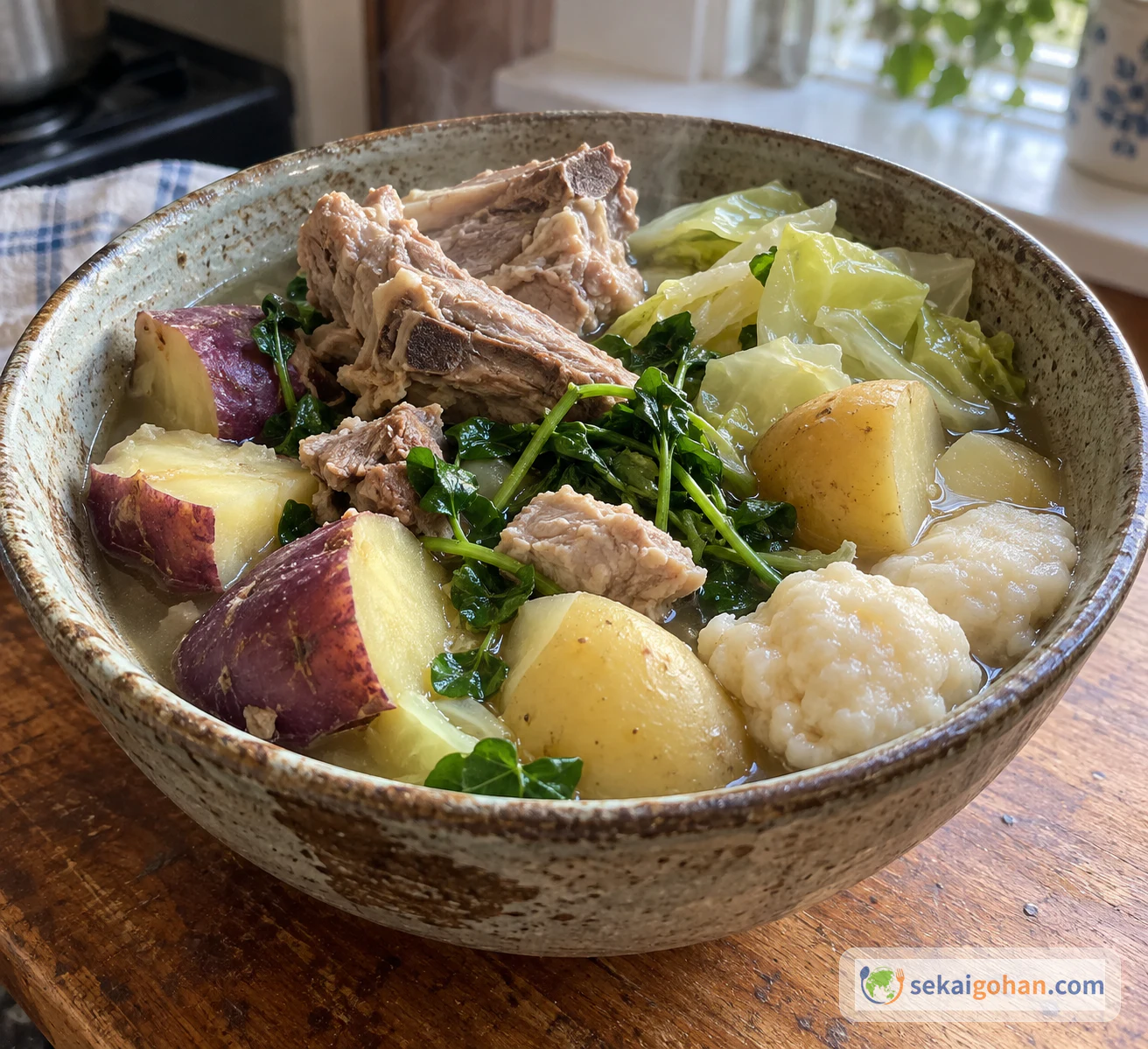
Boil-Up: New Zealand Māori Pork Bone Pot with Kūmara, Watercress and Doughboys
Ingredients
For the pot
| Ingredient | Amount | Role |
|---|---|---|
| Pork bones, with meat attached | 2 kg | The broth and the substance of the dish. This is the weight of bones with their attached meat, not 2 kg of boneless meat |
| Water for the pot | Enough to cover the bones | Simmers the bones. Kept separate from the dough water |
| New potatoes | 500 g, halved | Small potatoes that hold their shape in the broth |
| Purple kūmara | 500 g, in large chunks | Sweetness and color |
| Cabbage | 500 g, roughly chopped | Bulk and gentle sweetness |
| Fresh watercress | 2 cups (about 500 ml loosely measured, using a 250 ml cup) | A fresh green aroma and a light peppery bite |
| Salt and pepper, for the pot | To taste | Seasoning the broth; taste and adjust |
For the doughboys
| Ingredient | Amount | Role |
|---|---|---|
| Self-raising flour | 1 cup (250 ml, using a 250 ml cup) | The body of the doughboys. Use flour that already contains raising agent |
| Water for the dough | 1/4 cup (62.5 ml, using a 250 ml cup) | Brings the dough together. Kept separate from the pot water |
| Salt and pepper, for the dough | A little of each | Seasoning the dough itself |
To serve (optional)
| Ingredient | Amount | Role |
|---|---|---|
| Rewena bread | As you like | Served alongside; not cooked in the pot |
| Butter | As you like | For the bread, on the side |
| Tomato sauce | As you like | On the side, at the table |
Steps
1Simmer the pork bones, skim, then add the potatoes and kūmara
Put the pork bones in a large pot and add enough water to cover them. Bring to a boil.
Once it boils, cover the pot and turn the heat down to a gentle simmer. Use a slotted spoon to lift off any foam that rises to the surface. A gentle simmer matters: a hard boil kept up for a long time clouds the broth and breaks up the vegetables and doughboys later on.
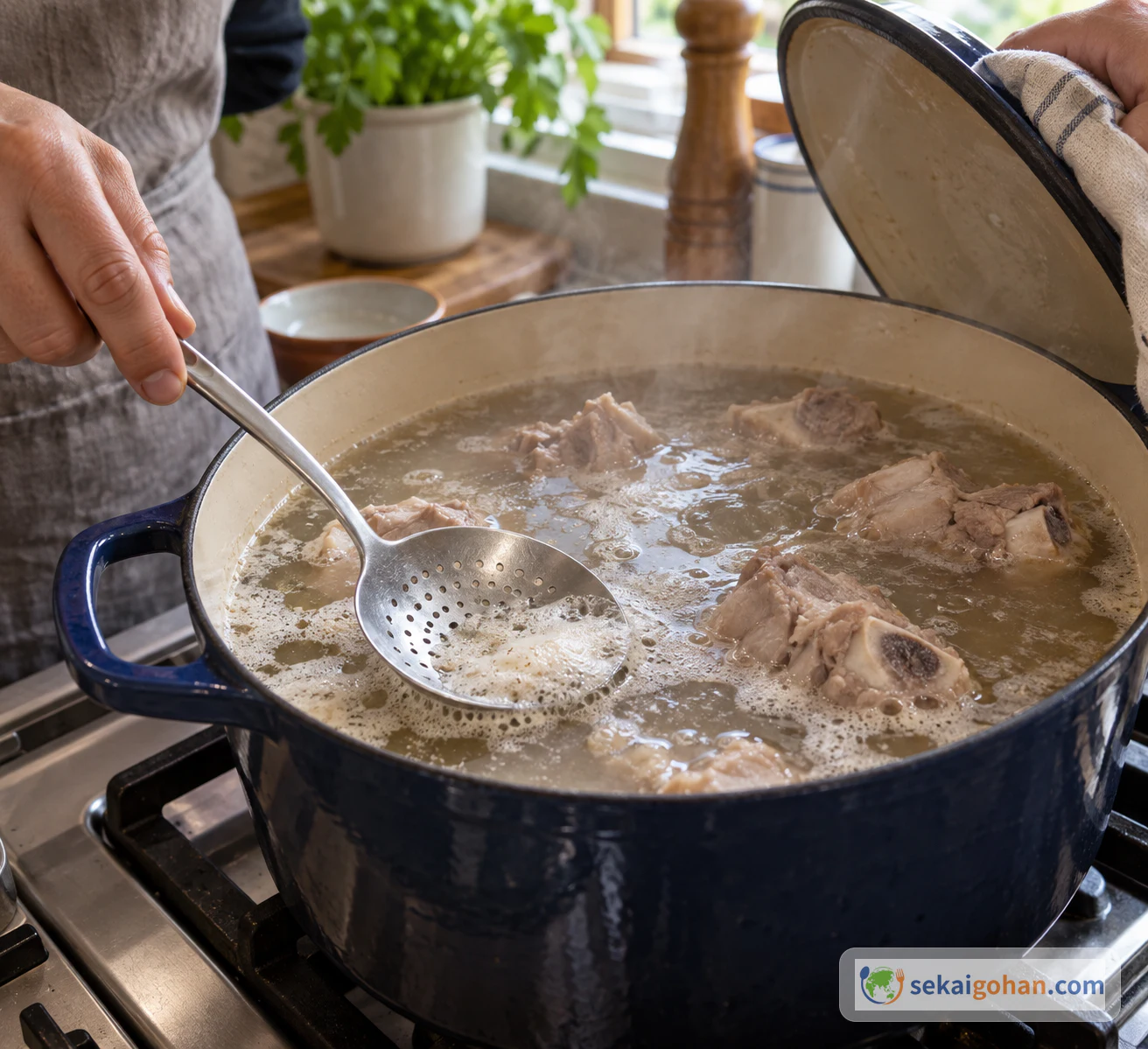
Keep the simmer quiet and skim the foam as it appears After 1 hour, add the halved new potatoes and the kūmara chunks. Keep the bones under the liquid. If evaporation leaves bones sticking out, add a little boiling water.
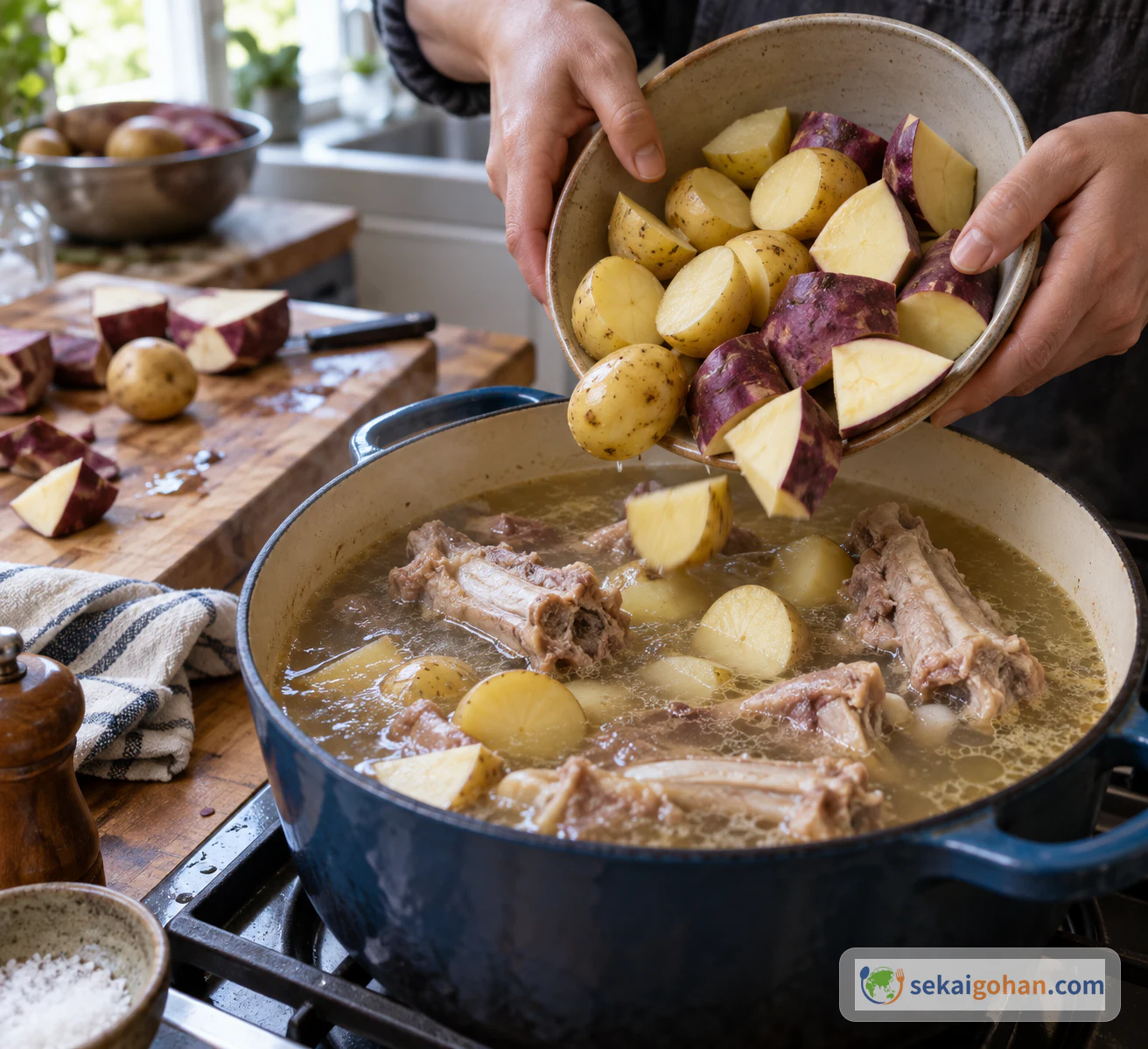
The root vegetables go in 1 hour after you start, not after the bones are fully cooked 2Make the doughboy dough
While the pot simmers, put the self-raising flour, the dough water, and a little salt and pepper in a bowl and mix into a soft dough. Have it ready before the final 15 minutes of cooking. Do not taste the dough raw.
3Add the cabbage and watercress, then drop in the doughboys
Fifteen minutes before the end of cooking, add the cabbage and watercress to the pot.
Five minutes later, shape the dough into balls and drop them into the broth. Make them small and even, since larger doughboys take longer to cook through to the center. Let everything simmer gently for about the remaining 10 minutes.
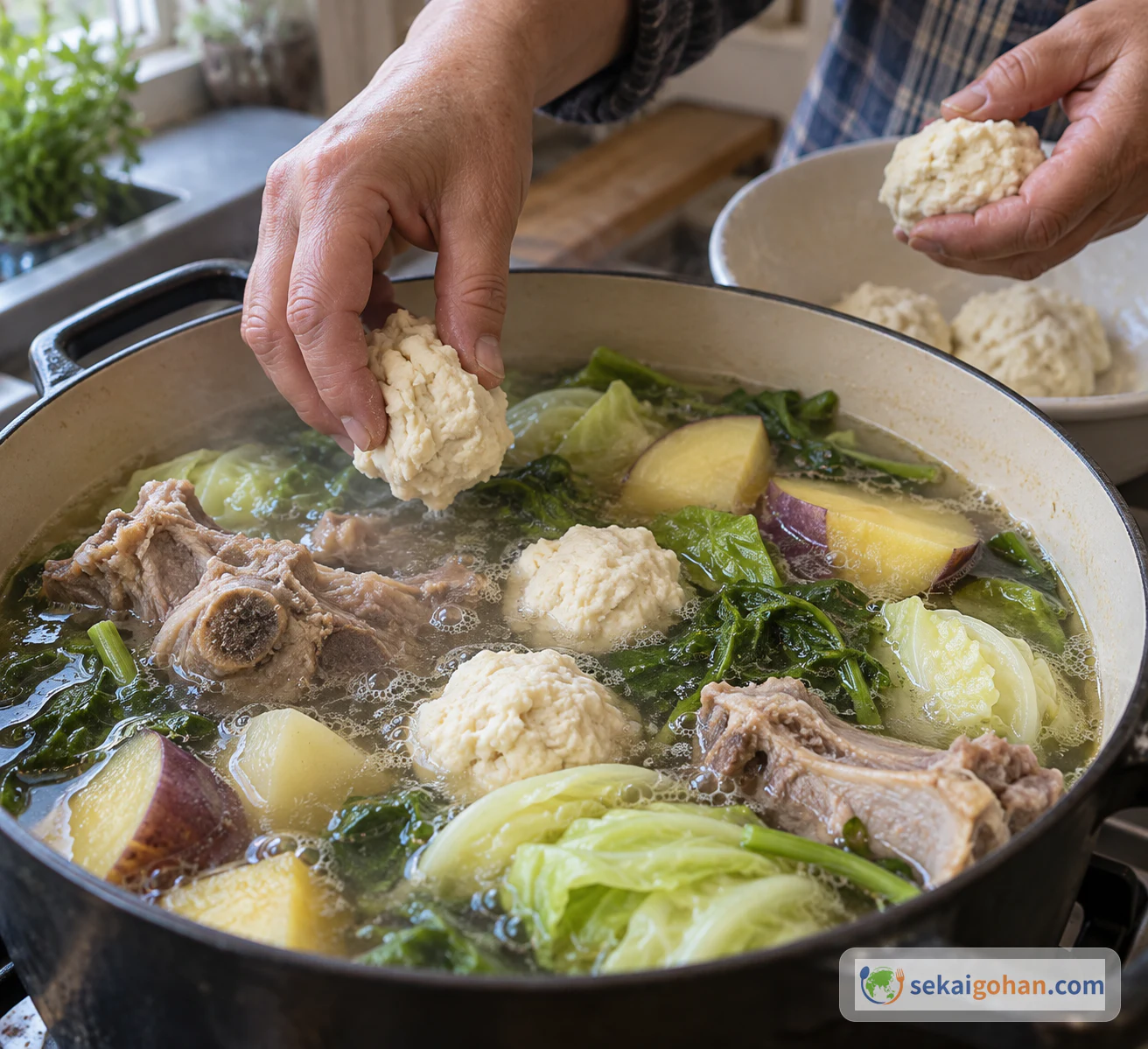
Drop the dough into gently simmering broth, not a rolling boil Before serving, lift out one doughboy and break it open: there should be no raw, floury dough in the center. If there is, keep simmering and check again. The root vegetables should be tender, and the meat should come away easily from the bone. Cook the meat until the center reaches 167°F (75°C) for at least 1 minute. Check the thickest part of the meat, away from the bone. The clock alone does not prove the meat is cooked.
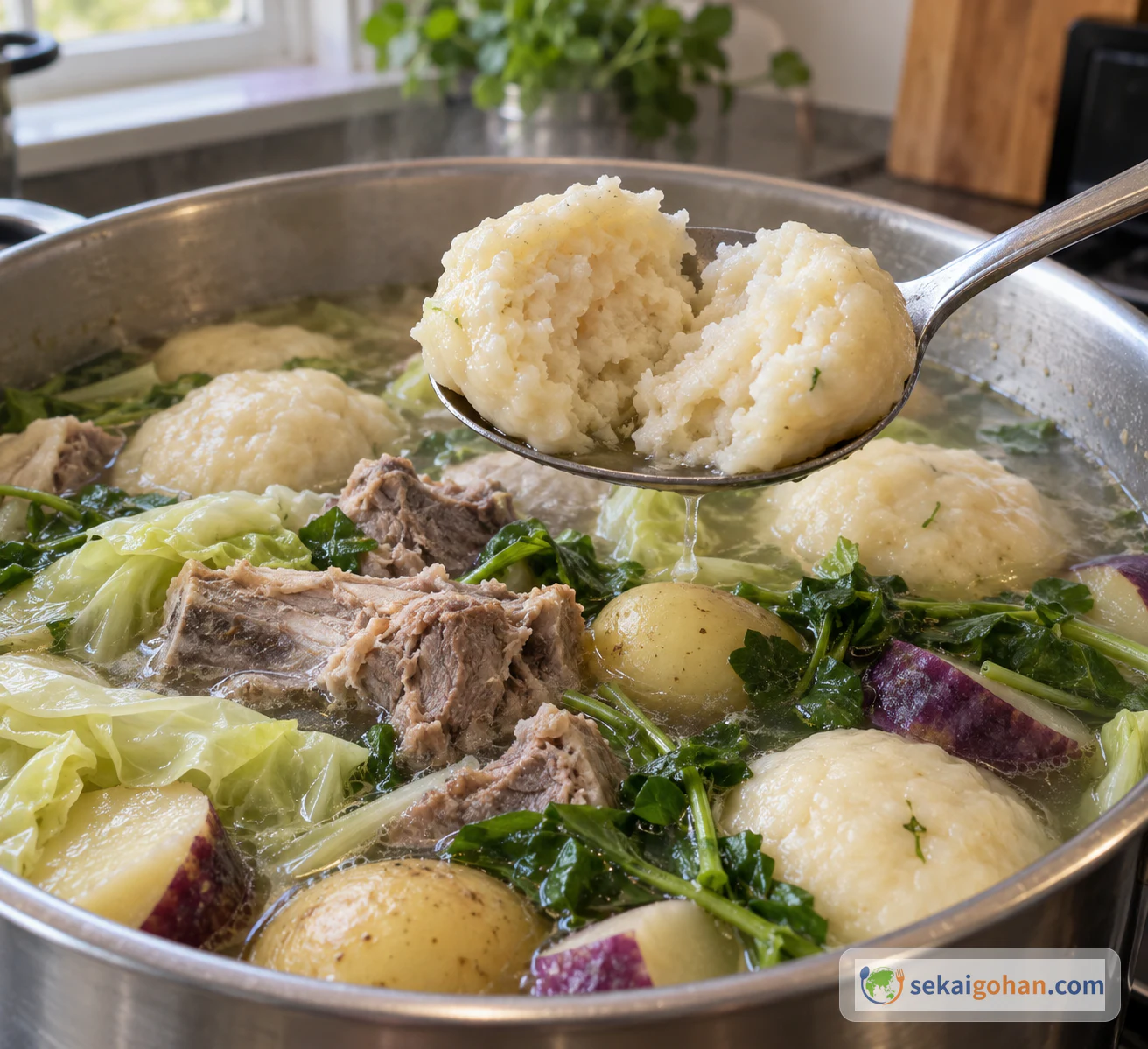
Break one open: no raw dough should remain in the middle 4Serve in deep bowls
Ladle bone-in meat, vegetables, doughboys and broth into deep bowls. Season the broth with salt and pepper to taste. If you like, serve rewena bread, butter and tomato sauce on the side. Use clean serving utensils rather than ones that touched raw pork, and watch for small bone fragments as you eat.