Ingredients and steps on one page. Print it, or choose “Save as PDF” in the print dialog.
Sekai Gohan
Rēwena Bread: Māori Potato Bread Raised on a Fermented Bug
Ingredients
| Ingredient | Amount | Role |
|---|---|---|
| Floury potatoes | 14 oz (400 g) | Bug: peeled, sliced thin, boiled and mashed as the base of the starter |
| Salt | as needed | Bug: for the potato cooking water |
| Plain (all-purpose) flour | 10¾ oz (300 g) | Bug: mixed into the cooled mash |
| Caster sugar | 2 oz (55 g) | Bug: mixed into the cooled mash |
| Bug (the finished starter) | 9¼ oz (260 g) | Dough: the rise and the tang |
| Plain (all-purpose) flour | 12½ oz (350 g) | Dough: the body of the loaf |
| Caster sugar | 4 oz (110 g) | Dough: the sweetness in the crumb |
| Hot water | ½ cup (125 ml) | Dough: brings everything together into a soft dough |
| Butter | as needed | Pan: a generous greasing |
| Butter, melted | 1 tbsp | Finish: brushed over the top partway through baking |
| Caster sugar | 1 tsp | Finish: sprinkled over the butter for a caramelized top |
Steps
1Boil and mash the potatoes
Peel the potatoes and slice them thin. Bring a saucepan of salted water to a boil, add the slices and cook for 10 minutes, or until soft. Drain them well in a colander, then mash until completely smooth. The potatoes are ready when they are soft and the mash is smooth.
2Cool the mash and mix the bug
Leave the mash to cool before anything else goes in. Add the 10¾ oz (300 g) flour and 2 oz (55 g) caster sugar for the bug, and stir with a wooden spoon until no dry flour remains. Scrape the paste into a large container with plenty of headroom. The bug is mixed when it is a thick, even, beige paste with no streaks of flour.
Cool the potato firstMixing flour into hot mash turns it gluey. Let the mash cool, then stir in the flour and sugar. The bug stays a thick, workable paste.
3Leave the bug to ferment
Cover the container and set it in a warm place. In warm weather the bug is ready in about a day; in cold weather, give it up to 3 days. Judge it by what you see: it is ready when it has begun to rise and bubbles show on the surface and along the sides. Keep the container no more than partly full so the bug has room to climb.
Fermenting the bug safelyStart with a clean container, a clean spoon and clean hands. Keep to the salt and timing given here. Throw the bug away if it smells wrong, grows mold or turns an unexpected color, then wash the container and start again.
4Mix and knead the dough
Weigh 9¼ oz (260 g) of the bug into a mixing bowl. Add the 12½ oz (350 g) flour, 4 oz (110 g) caster sugar and ½ cup (125 ml) hot water, and mix until it comes together as a soft dough. Turn it out onto a lightly floured counter and knead for about 3 minutes. Stop when the dough feels soft and slightly tacky and the surface has turned smooth.
5Proof in the buttered pan
Butter the loaf pan generously, into the corners. Settle the dough in the pan, cover it with a clean tea towel and leave it in a warm, draft-free place for about 2 hours, until doubled in volume. Toward the end of the proof, heat the oven to 355°F (180°C), or 320°F for a fan oven. The dough is ready when it has risen to twice its first size.
Doubled, not timedTwo hours is the guide, but the dough decides. In a cool kitchen it takes longer to double; wait for it rather than baking a loaf that has only half-risen.
6Bake, then brush with butter and sugar
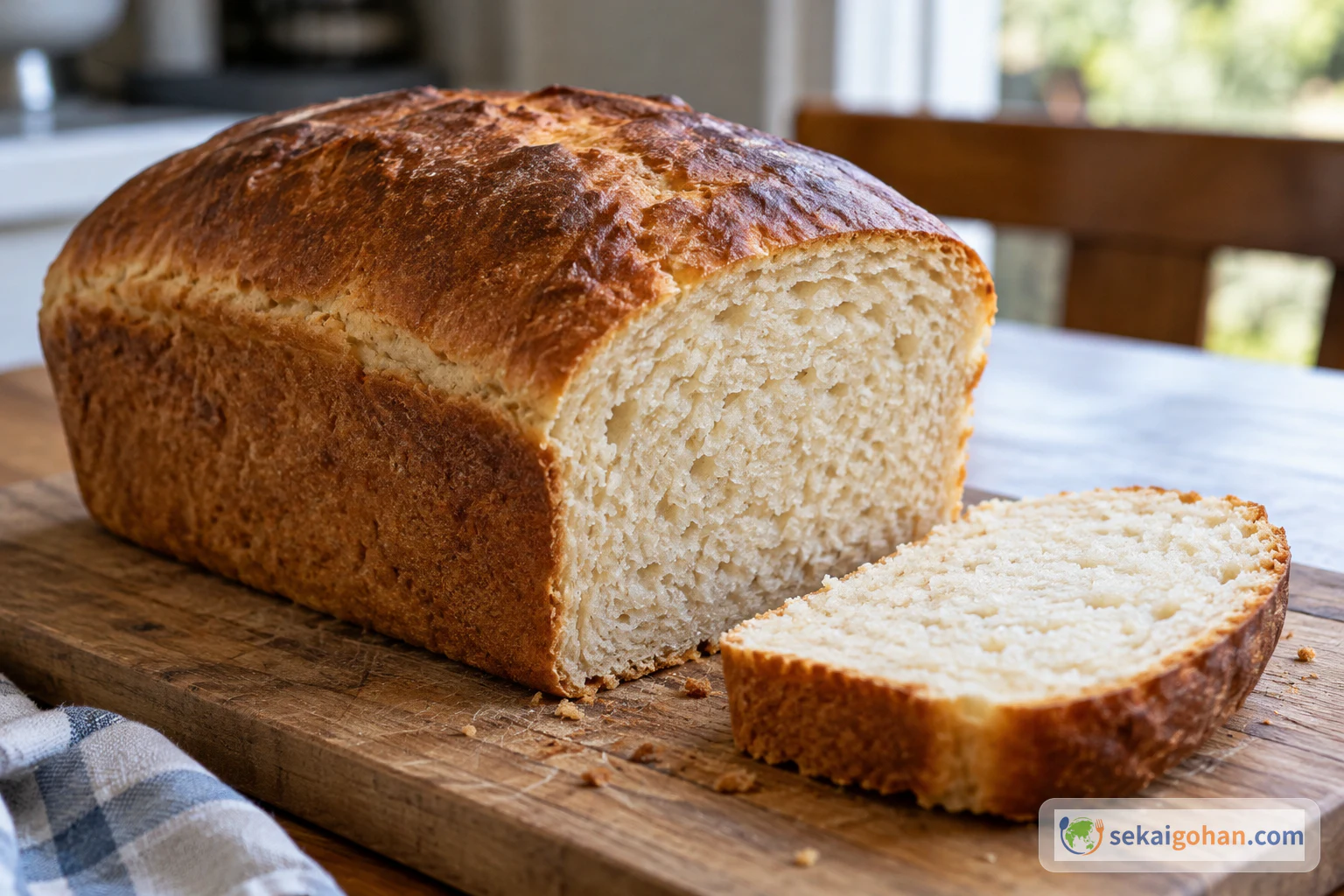
Bake the loaf for 45 minutes. Take it out and set it on a heatproof surface. Brush the top all over with the 1 tbsp melted butter, then sprinkle the 1 tsp caster sugar evenly across it. The top is ready to go back in when it is glossy with butter and lightly dusted with sugar.
Hot panThe pan and the oven rack are very hot at this point. Use oven gloves, set the pan down on a heatproof surface and keep your hand above the crust while you brush.
7Finish baking and slice while hot
Return the loaf to the oven for 15 minutes more. It is done when the top is golden and the sugar has turned lightly caramelized. Take it out and cut it while it is still hot. Steam rises from the soft crumb as the knife goes through.