Ingredients and steps on one page. Print it, or choose “Save as PDF” in the print dialog.
Sekai Gohan
Solomon Islands Fish Cooked in Coconut Cream with Taro and Green Banana
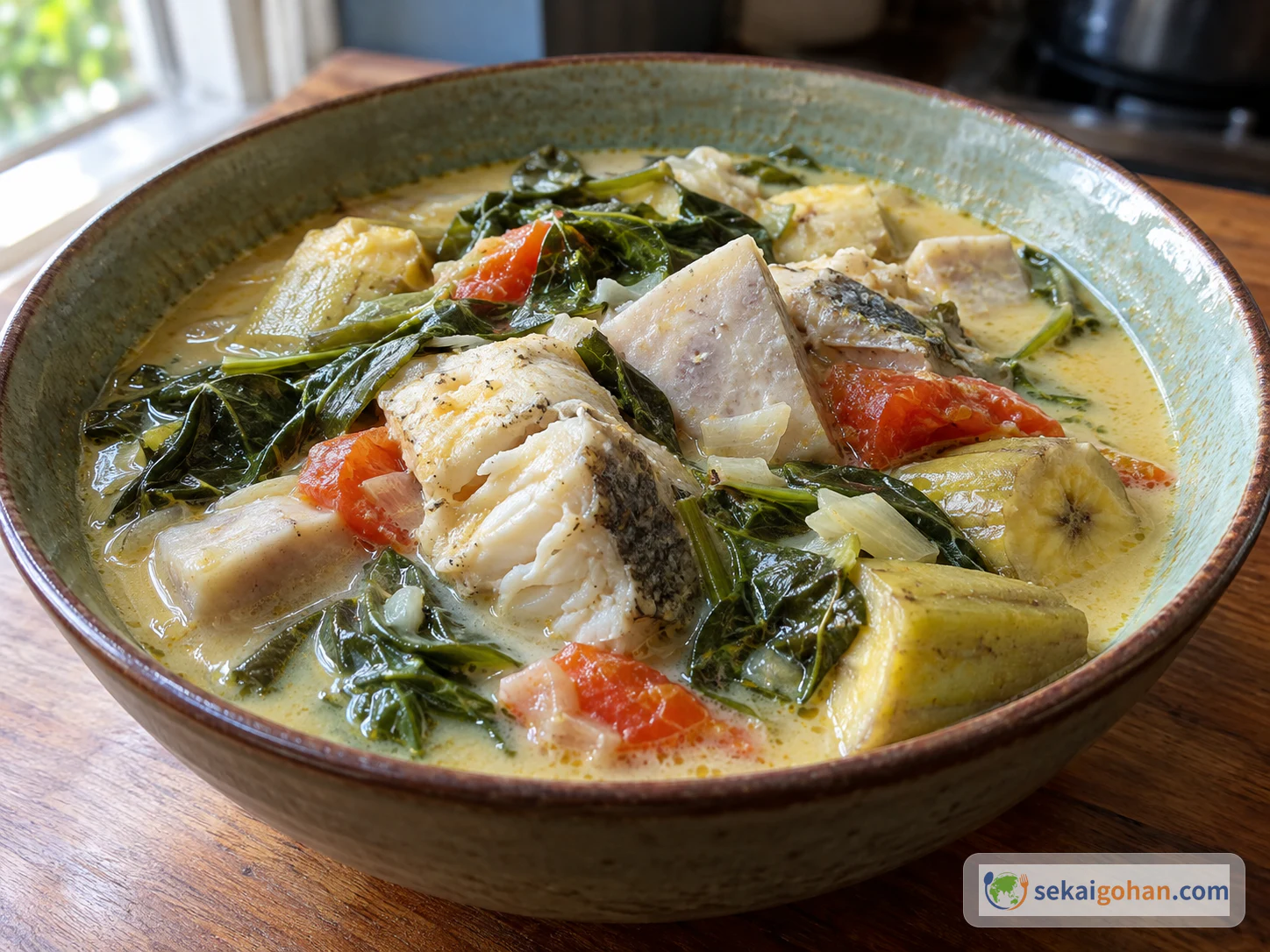
Ingredients
| Ingredient | Amount | Role |
|---|---|---|
| Fish | 2 fish | The main protein. Cut into even pieces |
| Taro | 2 medium | Starchy root that softens in the broth. Peel and cut into even pieces |
| Green banana | 2 | Unripe cooking banana for body. Not a ripe, sweet eating banana |
| Onion | 1 | Chopped and added with the coconut cream |
| Coconut cream | 2 cups | Body and richness for the broth |
| Salt | pinch | Goes in with the fish and roots at the start |
| Chilli | 2 | Heat, cooked with the fish and roots from the start |
| Curry powder | 1 tsp | Added with the coconut cream |
| Slippery cabbage (sliperi kabis) | 1 bundle | Leafy green added in the last 5 minutes |
| Tomato | 2 | Acidity and color, added with the leaves at the end |
| Water | sufficient to cover | Just enough to cover the fish, taro and banana at the start |
Steps
1Cut the taro, banana and fish into even pieces
Peel the taro and the green bananas and cut them into pieces of similar size. Cut the fish into pieces of a similar size too; the point is evenness, so that pieces cook at a similar rate. Avoid cutting the fish very small, since it cooks in the pot for the whole time alongside the roots.
Keep raw fish on its own board or work area, away from the taro and banana, and wash hands, knife and board after handling it.
2Simmer the fish and roots with salt and chillies
Put the fish, taro and green banana in the pot with the pinch of salt and the two chillies. Pour in just enough water to cover them. Bring to a simmer.
There is no coconut cream, curry powder or onion in the pot yet, and there is no oil or frying step in this recipe.
3Add the coconut cream, curry powder and chopped onion
Add the 2 cups of coconut cream, the 1 tsp of curry powder and the chopped onion, and bring the pot back to a boil. Decide by looking at all the ingredients rather than waiting a fixed time: the taro and banana still need time to soften after this, with about five minutes still to come for the leaves and tomato.
Once it has come to the boil, keep it at a calm simmer so the pieces stay whole. A hard, rolling boil can break up the fish.
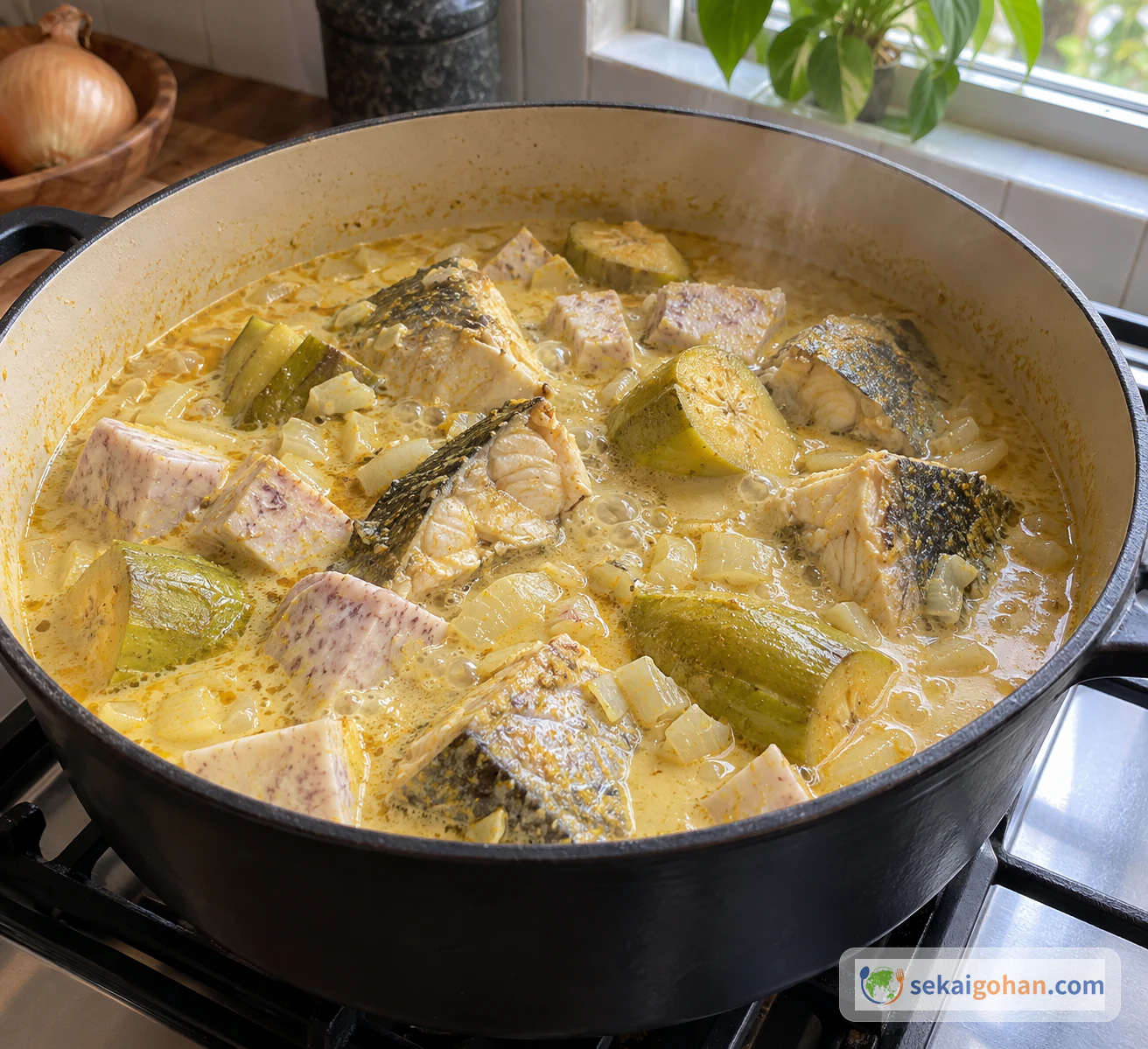
A gentle simmer keeps the fish and roots in whole pieces 4Add the slippery cabbage and tomato in the last 5 minutes
Five minutes before you plan to finish, add the bundle of slippery cabbage and the two tomatoes. Fold them gently into the broth without breaking up the fish.
These five minutes are for the leaves and tomato. They do not by themselves make the whole pot safe or done; that is checked in the next step.
5Check the fish and the roots separately
Check the fish and the taro and banana as two separate things. Cook the fish to 63°C (145°F), or until the flesh is opaque and separates easily with a fork. Insert the thermometer into the thickest piece of fish. For the whole dish, heat thoroughly to the center, at 75°C for at least 1 minute.
Then test the taro and banana with a fork; they should be tender right to the center. Looks alone do not tell you the dish is cooked through.
If the fish is done but the roots are still firm, lift the fish out onto a clean plate with clean utensils, keep cooking the roots, then return the fish. Never put cooked fish back on a plate that held raw fish.