Ingredients and steps on one page. Print it, or choose “Save as PDF” in the print dialog.
Sekai Gohan
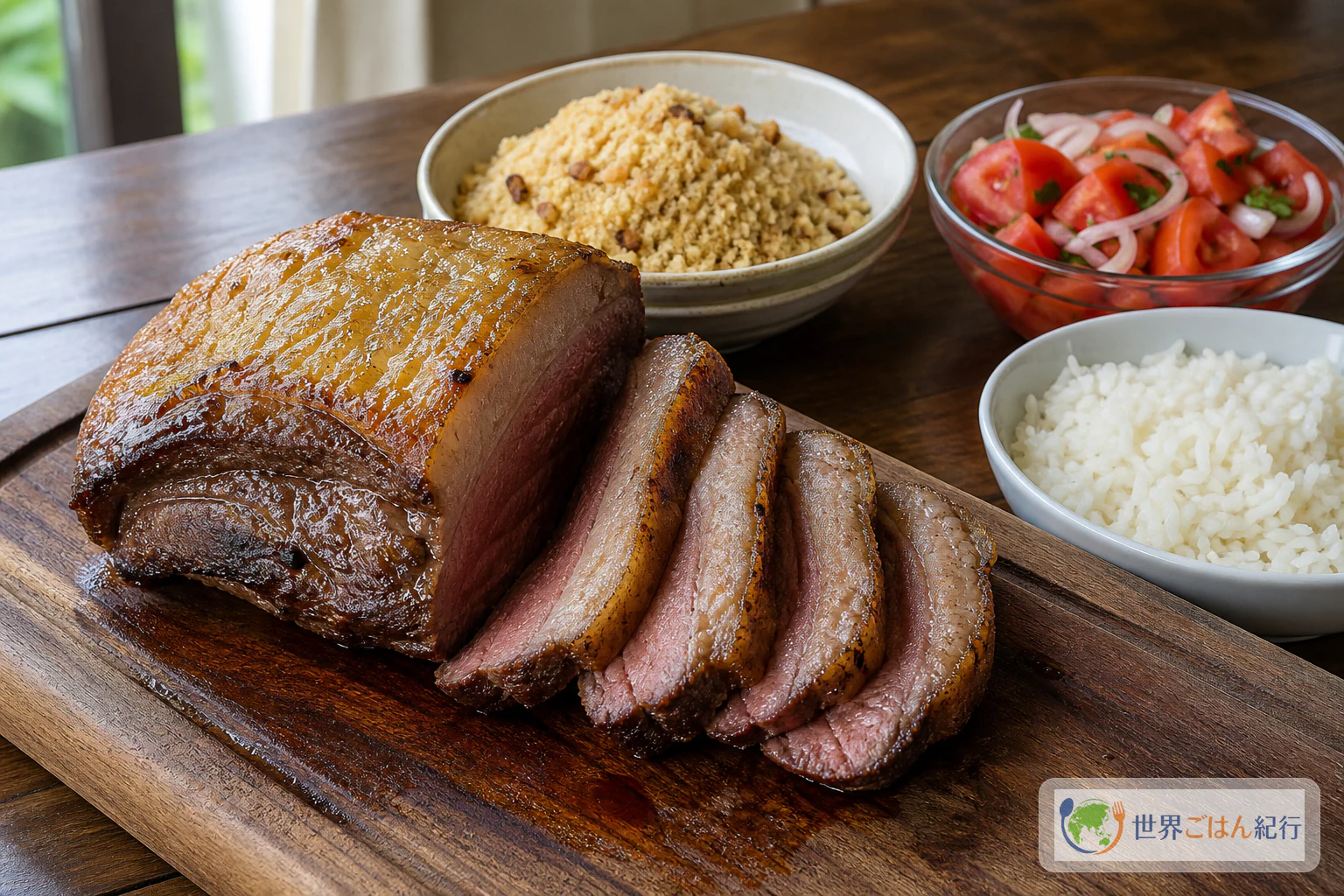
Picanha: Brazilian Fat-Cap Steak Over Charcoal
Ingredients
Picanha
| Ingredient | Amount | Choosing & substitutes |
|---|---|---|
| Beef picanha (sirloin cap, rump cap) | 900 g | A piece with 1–1.5 cm of fat cap. Very large pieces may include sinew or a neighboring muscle. About 2 lb |
| Coarse salt or large-grain sea salt | 14 g | Spread over the surface before grilling and knock off excess grains. Don't use fine table salt |
| Charcoal | about 1.5 kg | Adjust to the size of your grill. Burn until covered in ash. About 3 1/4 lb |
Farofa
| Ingredient | Amount | What to look for |
|---|---|---|
| Cassava flour (farinha de mandioca) | 4 oz (120 g) | Dry and granular. Fine flour works, but coarser grains soak up meat juices better |
| Bacon | 2 oz (60 g) | Cut into 0.25 inch (5 mm) dice |
| Onion | 3.5 oz (100 g) | Cut into 0.25 inch (5 mm) dice |
| Unsalted butter | 20 g | If salted, reduce the final salt |
| Garlic | 1 clove, about 5 g | Minced |
| Salt | 1 g | Adjust to the saltiness of the bacon |
Vinagrete
| Ingredient | Amount | Substitutes |
|---|---|---|
| Tomato | 6.5 oz (180 g) | Seeding it keeps the salsa from getting watery |
| Onion | 2.75 oz (80 g) | White or red onion both work |
| Green bell pepper | 1.75 oz (50 g) | Any green sweet pepper works |
| White wine vinegar | 3 tbsp (45 ml) | Distilled white vinegar also works; if it's too sharp, add 1 tsp water. About 3 tbsp |
| Olive oil | 2 tbsp (30 ml) | Not too strongly flavored. About 2 tbsp |
| Salt | 2 g | Adjust just before serving |
| Parsley | 10 g | Minced. Optional |
Steps
1Shape the meat
10 min
No heat is needed. Pat the surface of the picanha dry, and if there's a tough silvery membrane on the underside, trim it off thinly. Leave 0.5 inches (1–1.5 cm) of fat, taking care not to cut into the red meat. Looking at the long side, cut it into 1.5 inches (4 cm) wide steaks and bend each one into a C shape with the fat on the outside. If using skewers, push them through from the broad side and make sure the meat doesn't slide along the skewer. If the C springs back flat, cut the steaks a little thicker or use two skewers.
2Apply the coarse salt just before grilling
5–10 min
Spread the 14 g coarse salt thinly over both the meat side and the fat side, and leave at room temperature for just 5–10 minutes. You're looking for a surface that has lost some moisture, with the salt grains evenly distributed. Just before grilling, lightly brush off any loose grains that haven't stuck to the meat. Swapping in the same amount of fine salt makes it too salty, so avoid that. If you're salting too early, put the meat back in the refrigerator and take it out once the coals are ready.
3Split the coals into a hot zone and a safe zone
20–30 min
Light the charcoal and wait until the surface turns gray, the centers glow red and the flames settle down. Push the coals to one side of the grill to separate a zone for hard searing from a zone where you can move the meat when fat drips. Don't test the grate temperature with your hand; use tongs and long-handled tools. If flames flare up high, that's when the safe zone earns its place.
4Sear the fat side first, then finish the meat
15–20 min
Turn the fat side toward the hot zone and grill for 3–4 minutes. When the surface of the fat goes from white to light golden and the edges shrink slightly, turn the meat sides toward the fire. Grill each side for 4–6 minutes, and once browned, move any steaks whose centers are still low to the cool zone. If fat drips onto the coals and flames shoot up, move the meat rather than leaving it over the flames. When the center reaches 63°C (145°F), take it off the heat. Until it meets the safe standard, don't judge by whether it's pink or not.
5Rest, slice across the grain, and return to the grill if needed
8–10 min
Transfer the grilled meat to a cutting board, tent loosely with aluminum foil and rest for 5–10 minutes (at least 3 minutes after it reaches 63°C/145°F). Check which way the fibers run on the cut face, and slice at a right angle to the grain, 8 mm–1 cm (about 3/8 in) thick. If the outside is nicely browned and the center has come up to temperature, plate it as is. If someone prefers it more done, return just the meat side of the slices to the grate for 20–40 seconds at a time. Use clean tongs, not the ones that touched raw meat.