Ingredients and steps on one page. Print it, or choose “Save as PDF” in the print dialog.
Sekai Gohan
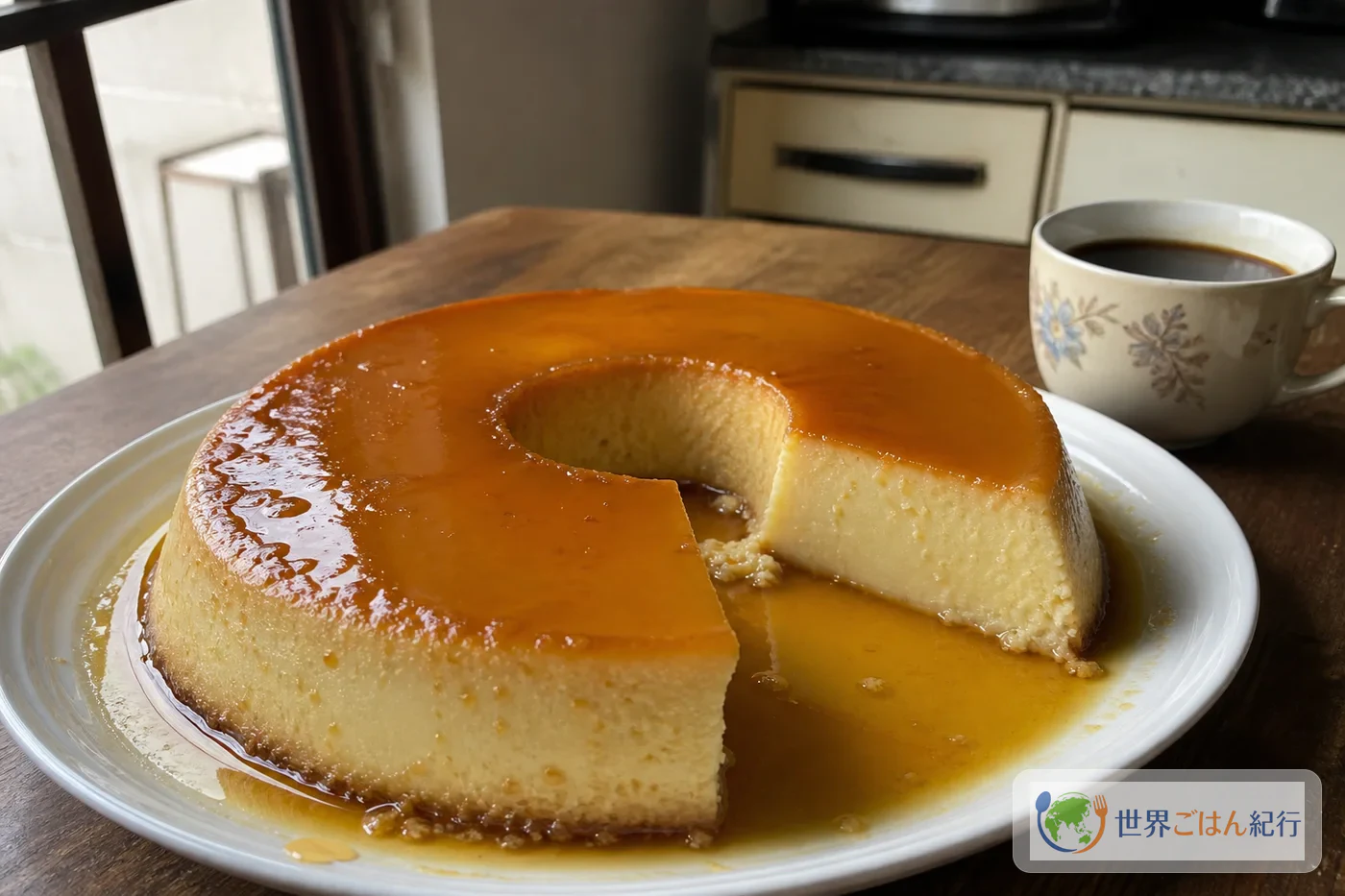
Pudim: Brazilian Condensed Milk Flan with Caramel
Ingredients
| Ingredient | Amount | Substitutes & notes |
|---|---|---|
| Granulated sugar | 120 g | For the caramel. Regular white sugar works but scorches a little faster |
| Water | 30 ml | To moisten the sugar |
| Boiling water | 45 ml | To loosen the caramel. It spatters, so be careful |
| Sweetened condensed milk | 395 g (1 can) | The backbone of Brazilian-style sweetness. Not evaporated milk. A standard 14 oz can is close |
| Milk | 450 ml | Whole milk is easiest to work with (about 1 3/4 cups + 2 tbsp) |
| Eggs | 4 (about 200 g) | Medium to large. Crack them first and remove any blood spots or shell |
| Vanilla extract | 1 tsp | Optional. Add it if the egginess bothers you |
| Salt | A pinch (about 0.6 g) | Tightens the sweetness |
| Hot water for the water bath | About 900 ml | Enough to come halfway up the side of the mold |
| Oil for the mold | 1/2 tsp | Brush on thinly before adding the caramel. Don't overdo it |
Steps
1Cook the caramel to amber
10 min
Put 4 oz (120 g) granulated sugar and 2 tbsp (30 ml) water in a small saucepan and warm over medium heat for 1 minute. Once all the sugar is moistened, lower to medium-low and cook for 7–8 minutes, swirling the pan. When the bubbles grow large, the color moves from pale honey to deep amber and a slightly bitter aroma rises at the edge of the pan, turn off the heat. Pour in 3 tbsp (45 ml) boiling water a little at a time, and once the spattering settles, stir gently with a silicone spatula. If it turns black and smokes, it will be too bitter; start over.
2Coat the mold with caramel
5 min
Brush 1/2 tsp oil thinly inside an 18 cm ring mold and pour in the hot caramel. Using oven mitts, tilt the mold slowly to spread caramel over the bottom, the sides and the center tube. There's no heat on, but the caramel is close to 150°C (300°F), so never hold the mold with bare hands. A 2–3 mm layer on the bottom and thin streaks on the sides are enough. Don't try to even out any thick, set patches; leave them.
3Blend the custard briefly
4 min
Crack the 4 eggs into a blender and blend for just 10 seconds to break up the whites. Add 14 oz (395 g) condensed milk, 2 cups (450 ml) milk, 1 tsp vanilla extract and a pinch of salt, and blend for another 20 seconds. No heat is used. Fine bubbles will appear on the surface, but stop before big bubbles foam up white. Blend longer and you get more holes; blend briefly and it leans smooth. Tilt the blender to check that no condensed milk is left at the bottom.
4Strain and pour into the mold
8 min
Set a fine-mesh strainer over the caramel-lined mold and pour the custard through slowly. Bubbles and strands of egg stay in the strainer; let it drip through on its own without pressing. Fill the mold to about 80%, then skim off the big surface bubbles with a spoon 2–3 times. With no heat, leave it on the counter at a room temperature of 20–25°C (68–77°F) for 5 minutes. When the surface bubbles have settled a bit and the caramel has set on the bottom so it won't mix into the custard, move on to baking.
5Bake slowly in a water bath
60–70 min
Set the mold in a deep ovenproof dish and pour in water at about 80°C (176°F) until it comes halfway up the mold. Put it in the oven preheated to 170°C (340°F), and if the top looks like it will brown too much, lay a loose sheet of aluminum foil over it after 30 minutes. It's done when, given a gentle shake, the center trembles slightly and the edges don't move. With a thermometer, aim for 80–82°C (176–180°F) in the center. If it reads in the low 70s°C (about 160°F), bake 10 minutes more; taking it close to 90°C (194°F) makes it firm. If the water level drops, top it up with boiling water to keep it around halfway.
6Chill and unmold
4 hr 20 min
Take the baked mold out of the water bath and let it cool at room temperature for 30 minutes. Once the surface is below body temperature, cover it with plastic wrap and refrigerate for at least 4 hours. To unmold, run a thin knife once around the edge and dip the bottom in water at about 50°C (122°F) for just 10 seconds. Cover with a plate, flip it in one motion, wait 20 seconds, then lift the mold straight up. If the caramel flows onto the plate, the sides hold their shape and the cut face looks moist and dense, you've nailed it. At the table, slices about 2 cm (3/4 inch) wide keep the sweetness from becoming heavy.