Ingredients and steps on one page. Print it, or choose “Save as PDF” in the print dialog.
Sekai Gohan
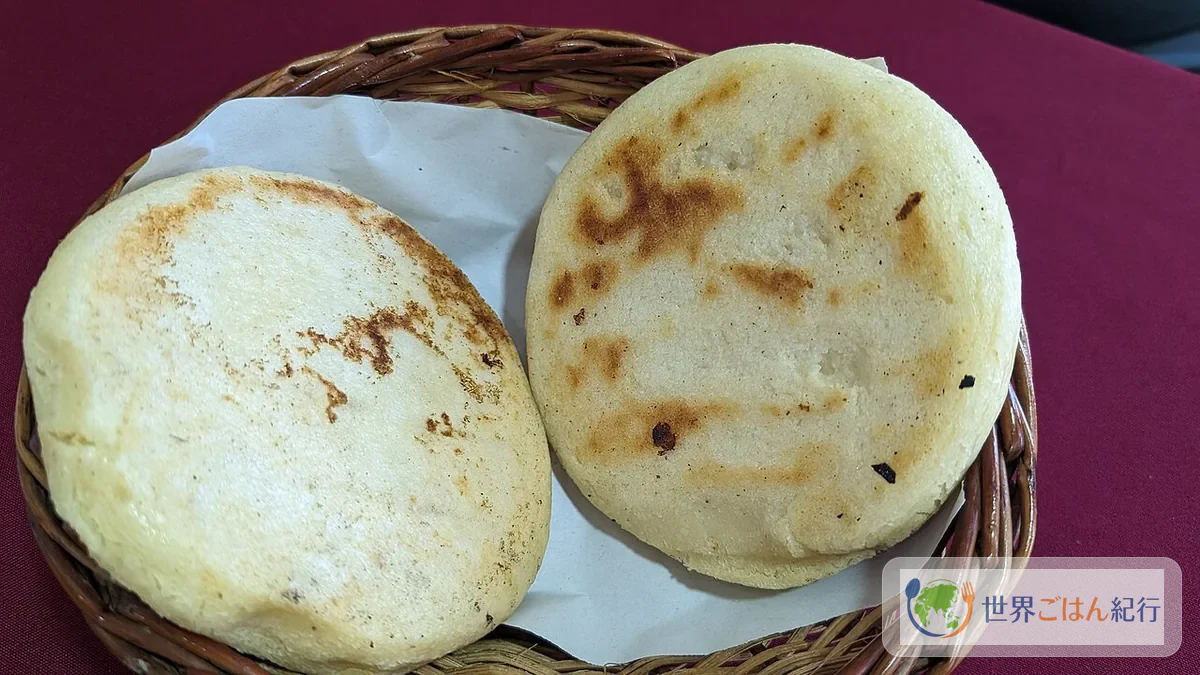
Colombian Arepas: Thin Griddled Corn Bread with Hogao
Ingredients
Arepa dough
| Ingredient | Amount | Role |
|---|---|---|
| White masarepa (precooked corn flour) | 9 oz (260 g) | The flour that absorbs water and becomes a dough that can be cooked |
| Lukewarm water | 2 cups (450 ml) | Use 1¾ cups (400 ml) first, the rest to adjust firmness |
| Salt | 1 tsp | Sets the flavor of the dough |
| Neutral oil | 1 tbsp | Makes the dough easier to handle and lightens the bite |
| Oil for cooking | 2 tsp | Brushed thinly on the pan |
Hogao
| Ingredient | Amount | Cutting and prep |
|---|---|---|
| Ripe tomatoes | 10.5 oz (300 g) (2 medium) | 0.5-inch (1 cm) dice |
| Scallion, white and green parts | 3.25 oz (90 g) (1 stalk) | Sliced thinly |
| Onion | 1.75 oz (50 g) (1/4) | Minced |
| Garlic | 1 clove | Minced |
| Neutral oil | 2 tbsp | For sautéing |
| Ground cumin | 1/2 tsp | For aroma |
| Salt | 1/2 tsp | Adjust to the moisture of the tomatoes |
| Black pepper | 1/4 tsp | To finish |
| Water | 2 tbsp | Prevents scorching at the start of the simmer |
To serve alongside
| Ingredient | Amount | How to use |
|---|---|---|
| White cheese | 4 oz (120 g) | Break by hand into pieces of about 15 g |
| Butter | 20 g | Spread thinly on the freshly cooked arepa |
| Eggs | 4 | Fried, for breakfast |
| Avocado | 1 | Sliced thinly to add richness |
Steps
1Add the masarepa to salted water
3 min
In a bowl, combine 1¾ cups (400 ml) lukewarm water and 1 tsp salt and stir until the salt dissolves. Add 9 oz (260 g) white masarepa in 3 portions, mixing with a rubber spatula or by hand, pressing. In about 1 minute the flour absorbs the water and becomes a dough close to soft mashed potato. If any dry spots remain, add the other 3.5 tbsp (50 ml) a teaspoon at a time.
2Add oil, rest and shape thin discs
10 min
Add 1 tbsp oil and knead for 2 minutes, cover with plastic wrap and rest for 5 minutes. When the surface of the dough is smooth and a light dampness remains on your palm, it is ready to shape. Divide into 8, roll each into a ball of about 3.25 oz (90 g), and press with your palm into a disc 3.5 inches (9 cm) across and 0.5-inch (1.0–1.2 cm) thick. If deep cracks run along the edge, add 1 tsp water; close fine cracks by smoothing them with a wet finger.
3Brown the first side over medium heat
7 min
Brush 2 tsp cooking oil thinly over a heavy skillet and preheat over medium heat for 2 minutes. Lay the dough discs in and cook 5 to 6 minutes on the first side. When the edges dry and light golden spots appear on the bottom, turn them. Moving them right after placing them in the pan makes them crack easily, so leave them alone until the surface sets.
4Cover and warm through to the center
8 min
After cooking the other side for about 5 minutes, lower the heat to medium-low. Cover the pan and warm each side for 4 minutes. They are done when the surface is dry and tapping lightly with a finger gives a dull sound. If you break one open and a floury white streak remains in the center, keep the lid on and cook another 3 minutes on low heat.
5Simmer the hogao
12 min
In a separate small pot or skillet, put 2 tbsp oil, the garlic, scallion and onion and sauté over medium heat for 3 minutes. When the scallion softens, add the 0.5-inch (1 cm) diced tomato, cumin, salt, black pepper and 2 tbsp water. Simmer 8 to 9 minutes over medium-low heat, keeping small bubbles going on the surface. Turn off the heat when tracing the spoon across the pan shows the bottom for a moment and the tomato corners have broken down into a sauce.
6Serve with hogao and cheese
5 min
Spread butter thinly on the freshly cooked arepas and top each with 1 to 2 tbsp hogao. If you add eggs, heat a separate skillet to medium-low and fry for 2 to 3 minutes, until the whites set, for a soft-yolk fried egg. Use about 15 g cheese per arepa. Rather than splitting it from the side and stuffing a large amount of filling inside, put a small amount on top or a shallow cut to hold it, which keeps the texture of the thin arepa.