Ingredients and steps on one page. Print it, or choose “Save as PDF” in the print dialog.
Sekai Gohan
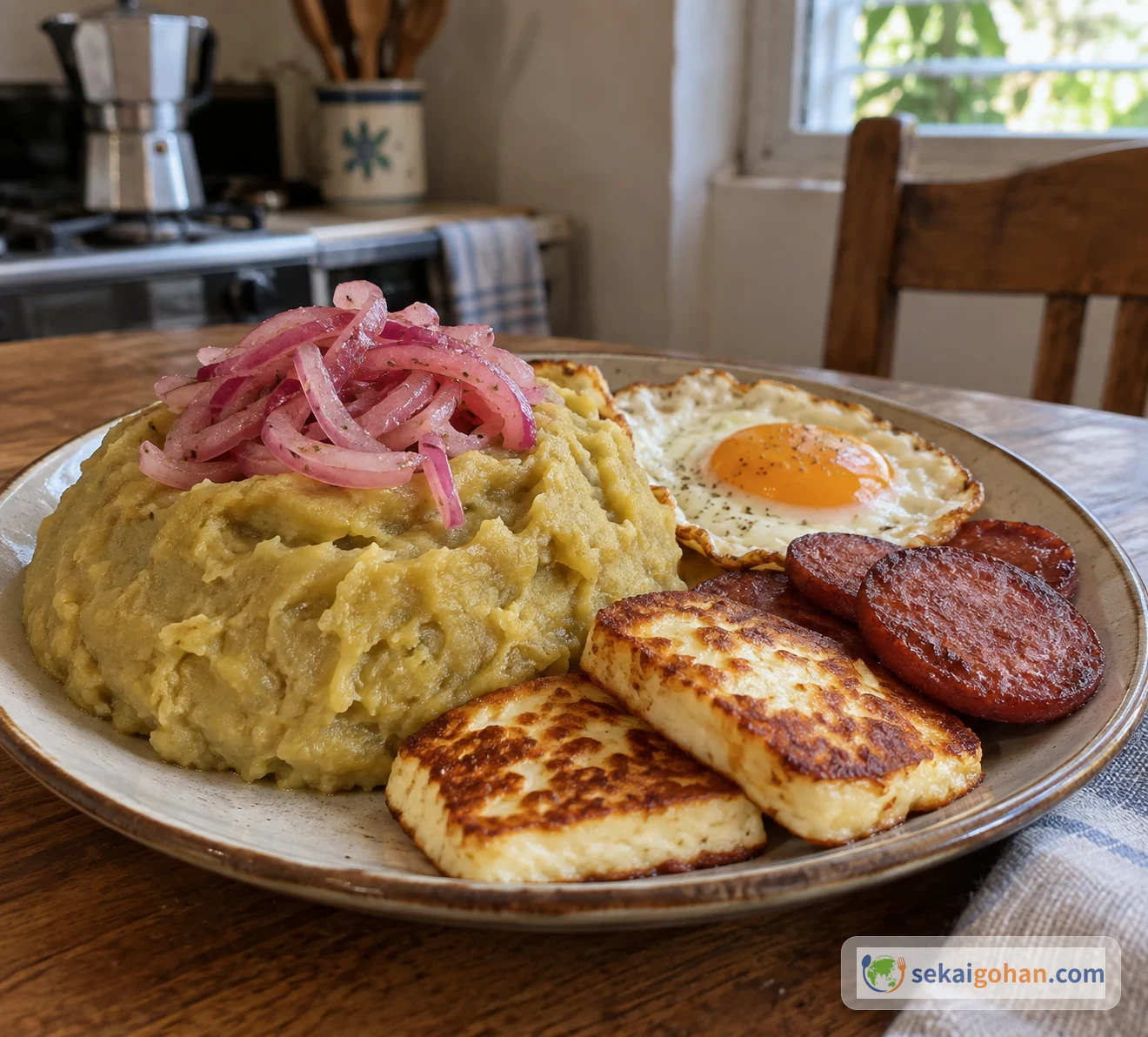
Mangú: Dominican Mashed Green Plantain with Red Onions and Los Tres Golpes
Ingredients
Mangú itself
| Ingredient | Amount | Substitutes & notes |
|---|---|---|
| Plantains (cooking bananas) | 2 (about 1 lb (500 g) net) | Skin completely green and hard. Yellow, ripe ones change the sweetness and moisture. |
| Water | 1.5 quarts (1.5 L) | For boiling. Set aside about 1 cup (240 ml) before they finish boiling. |
| Salt | 1 1/2 tsp | For the boiling water. Adjust for the saltiness of the sides. |
| Salted butter | 2.75 oz (80 g) | Olive oil works, but the aroma and mouthfeel change. |
| Cold water | 1–3 tbsp | For final thickness adjustment. Do not add it all at the start. |
Red onion topping
| Ingredient | Amount | Substitutes & notes |
|---|---|---|
| Red onions | 2 large (about 10.5 oz (300 g)) | Thinly sliced. Do not overcook; keep some bite. |
| Olive oil | 2 tbsp (30 ml) | To warm the red onions. |
| Fruit vinegar or white wine vinegar | 1 tbsp (15 ml) | Add after turning off the heat. Adjust to the sharpness of the acidity. |
| Salt | A pinch | Skip it if the halloumi and salami are already salty. |
The three sides
| Ingredient | Amount | Substitutes & notes |
|---|---|---|
| Eggs | 4 | Fried. Whether to set the yolks is a matter of household taste. |
| Halloumi (stand-in for frying cheese) | 7 oz (200 g) | Not the same as the local white fried cheese. Cut thick and cook. |
| Cooking salami or sausage | 5.5 oz (160 g) | A stand-in for Dominican salami. Cook raw sausage through to the center. |
| Oil for frying | 1 tsp | Reduce if the halloumi gives off fat. |
| Avocado | 1 (optional) | Some households serve it. Do not salt it separately. |
Steps
1Remove the skin from the green plantain
Cut off both ends and make 4 shallow lengthwise cuts along the ridges of the skin. Peeling takes a few minutes, depending on how firm the skin is. Don't cut deep into the flesh. Pull the skin off from the shallow lengthwise cuts rather than tearing it. The skin of green plantain is harder than that of an ordinary banana, so don't force it apart by hand. Cut the peeled flesh into 4 equal pieces and put them in the pot before they discolor. The sap can make hands and knives sticky, so keep the work surface washable.
2Soften in salted water
Bring 1.5 quarts (1.5 L) water and 1 1/2 tsp salt to a boil in a pot and add the plantain cut in 4. When it returns to a boil, lower to medium heat. Boil for about 25 minutes, until the cut face is pale yellow and starting to crumble and a fork slides into the center with no resistance. If it is still firm, keep boiling in 5-minute steps. Don't lift it out by time alone. Before you lift it out, set aside about 1 cup (240 ml) of the cooking water in a heatproof container. Discard the rest of the water and move the hot plantain to a bowl.
TipFreshness, quality and cut size change the time: it can finish in 15–25 minutes or take 25–35. Trust the fork over the clock. Add the reserved cooking water a little at a time, not all at once. It loosens the mash when it starts to cool and stiffen.
3Mash while warm
Add 2.75 oz (80 g) salted butter to the hot plantain in the bowl and mash with a fork or potato masher until no lumps remain. Next, add the reserved cooking water 2 tbsp at a time and mix. At the end, add cold water 1 tbsp at a time. Keep adding until a mound holds on the spoon and, when pressed, spreads slowly. Stop one notch softer than the thickness you want on the plate, because it thickens and stiffens as it cools. Don't add all the water at once, or it will turn runny. If lumps remain, check that the plantain is cooked through to the center, and mash again while it is warm. Don't mix in scorched pot bottom or bits of skin.
4Finish the red onions with acidity
Put 2 tbsp (30 ml) olive oil and the sliced red onions in a small pot or skillet and warm over low heat until slightly softened but still with some bite. This takes about 3 minutes; don't let them go fully translucent. Turn off the heat, then add the vinegar. Add 1 tbsp (15 ml) fruit vinegar or white wine vinegar and stir, watching for oil spatter, until the oil and vinegar blend into the onions. If the onions get too soft, cook them for less time next time. Don't simmer the vinegar to reduce it.
5Cook the three sides
Cut 7 oz (200 g) halloumi 0.5 inches (1 cm) thick and cook it in a lightly oiled skillet over medium heat. Cook both sides golden, about 1 1/2 to 2 minutes per side. Don't add salt. Cut 5.5 oz (160 g) cooking salami or sausage into easy pieces and brown the surface. For raw sausage, cook it through to the center. If you have a thermometer, confirm it reaches 167°F (75 °C) for at least 1 minute. Fry the 4 eggs in a separate skillet or an open spot so the whites set. Cook the yolks to the eater's taste, but cook any eggs that are not for raw eating thoroughly. Judge the halloumi by its browning, the salami by cooking through the center, and the eggs by the setting of the whites. Because halloumi and salami are salty, don't add salt to the sides. Set the cooked sides aside to keep warm until plating.
6Combine just before plating
Assemble the plate within a few minutes of the boil ending, while the mash still holds its heat and, pressed with a spoon, collapses slowly. Divide the mangú into 4 portions and top with the red onions, fried egg, grilled halloumi, and salami or sausage. Add avocado if you like. The longer mangú stands, the stiffer it gets, so before plating mix in a little cooking water or cold water to loosen it. If it turns watery, stop adding liquid and let it rest a little; add a little cooking water to the warm mash only if it lacks thickness. Eat it freshly made. Place each plate so the red onion's vinegar runs a little into the mash. Let the acidity of the red onions pass into the saltiness of the three sides, and the flavor changes as you eat.