Ingredients and steps on one page. Print it, or choose “Save as PDF” in the print dialog.
Sekai Gohan
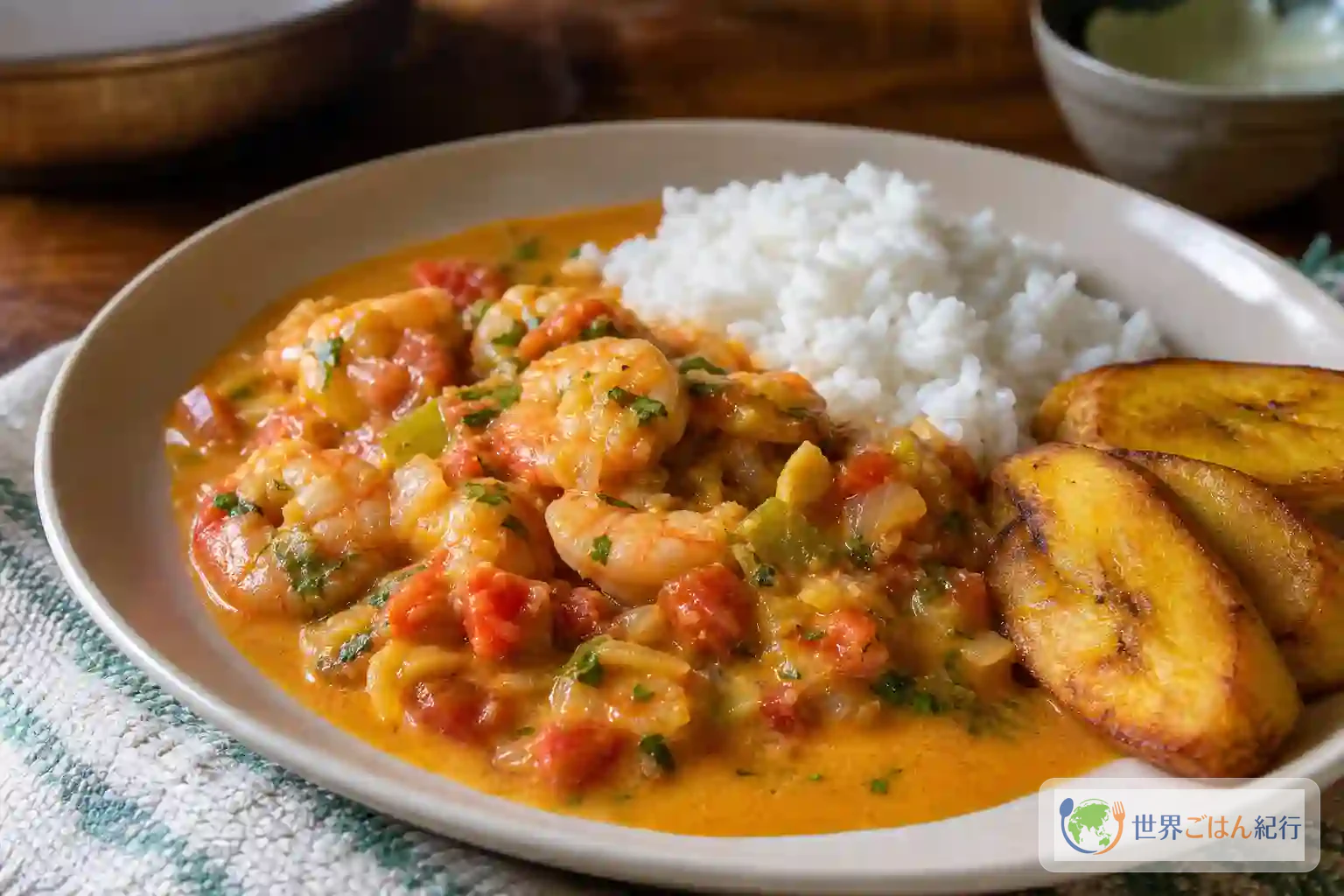
Encocado de Camarón: Ecuadorian Shrimp in Coconut Sauce
Ingredients
| Ingredient | Amount | Prep and judgment |
|---|---|---|
| Raw shrimp (shelled and deveined) | 500 g | Keep them an even size. Don't use pre-cooked shrimp (about 1 lb) |
| Red onion | 1/2, about 100 g | 5 mm (1/4 in) dice. White onion also works |
| Green bell pepper | 1, about 100 g | 8 mm (1/3 in) dice. Remove the seeds if bitterness bothers you |
| Tomatoes | 2, about 300 g | 1 cm (1/2 in) dice. Remove a few seeds from watery varieties |
| Garlic | 2 cloves | Finely minced |
| Cilantro | 50 g | Separate stems and leaves: stems go in the sauce, leaves go in at the end |
| Annatto seeds | 2 tsp | Infuse color and aroma into the oil, then remove the seeds |
| Mild-flavored oil | 2 tbsp | Rice bran, canola, etc. |
| Unsweetened coconut milk | 400 ml | Canned culinary type, not a sweetened drink (about 1 2/3 cups) |
| Orange juice | 2 tbsp | For marinating the shrimp. Don't marinate too long |
| Lime juice | 1 tbsp | For finishing. Lemon can substitute |
| Ground cumin | 1/2 tsp | Optional, but it adds depth of aroma |
| Salt | A scant 1 tsp | Divided between the marinade and the sauce |
| Black pepper | A little | For the shrimp marinade |
| Potato starch (katakuriko) | 1 tsp | Only if you want a slightly thicker sauce; dissolve in 1 tbsp water |
Steps
1Marinate the shrimp briefly and make the annatto oil
10 min
Even out the shrimp sizes; meat 1 inch (2 to 3 cm) long can be used whole. Only for large shrimp, make a shallow cut along the thicker side, toss with 1/2 tsp salt, black pepper and the orange juice, and leave in the refrigerator for 10 minutes. Beyond 15 minutes the acid firms the surface and the shrimp tend to toughen in the final cooking, so keep it within the time it takes to cut the vegetables. It is a seasoning marinade for aroma.
At the same time, put 2 tbsp oil and 2 tsp annatto seeds in a small skillet and warm over low heat for 2 to 3 minutes. When the oil turns red-orange and the seeds smell toasty, turn off the heat and remove the seeds with a tea strainer. Stop before the seeds turn black. Scorched annatto turns bitter, so don't rush the color with high heat.
2Make the refrito, starting with the onion
8–10 min
Move the annatto oil to a large, deep skillet and set over medium heat. Add the onion and bell pepper and cook 4 to 5 minutes, until the edges of the onion turn translucent. Cutting the onion to 0.25 inch (5 mm) and the pepper to 0.375 inch (8 mm) makes it less likely that one will scorch before the other.
Add the garlic for 30 seconds, then the tomato, cumin, chopped cilantro stems and the rest of the salt. Cook another 4 to 5 minutes, stirring occasionally with a wooden spoon. The refrito is done when the tomato has lost some of its water, a line drawn across the bottom of the pan stays open for about 2 seconds, and oil seeps out at the edges. Don't turn the vegetables into a paste; leaving fine pieces gives texture when it's spooned over rice.
3Simmer the coconut sauce gently
5 min
Add the 1¾ cups (400 ml) unsweetened coconut milk and scrape up the refrito from the bottom of the pan. Warm over medium heat and, once small bubbles rise steadily around the edge, lower the heat. Don't let it boil hard; simmer for about 5 minutes. It's edible even if the oil and coconut milk fully separate, but continued hard boiling makes the mouthfeel coarse.
Scoop some with a wooden spoon: if the sauce leaves a thin film, move on. If it looks like it will run too thin over rice, dissolve 1 tsp potato starch in 1 tbsp water, lower the heat and add it little by little. Adding it all at once suddenly makes it heavy, so add half, watch for 30 seconds, then add more. The shrimp release a little liquid when they go in, so don't thicken too much at this stage.
4Add the shrimp last and finish with lime
5–7 min
Cut the lime into 4 to 6 wedges. Drain the shrimp lightly and add them to the sauce. Lower the heat, cover, and after 2 minutes turn them over once. Turn off the heat when the shrimp flesh has gone from gray to white and opaque, the back is gently curved in a C, and the center no longer looks raw and translucent. Allow 5 to 7 minutes for large shrimp, 3 to 4 minutes for small.
Cook seafood to an internal temperature of 145°F (about 62.8°C). Shrimp should be white, opaque and firm. If you have a thermometer, check the center of one shrimp; if not, cut open the largest one. If you keep the shrimp waiting in the sauce, residual heat toughens them after you've turned off the heat, so plate as soon as it's done.
Turn off the heat and stir in the lime juice and cilantro leaves. Taste, add a very little salt if needed, and spoon it, sauce and all, over white rice. For people who want heat, serve Ecuadorian ají in a separate dish. Because there is no chile in the pot, children and people who dislike heat can eat the same pot.