Ingredients and steps on one page. Print it, or choose “Save as PDF” in the print dialog.
Sekai Gohan
Ambur Biryani: Tamil Nadu Mutton Biryani with Seeraga Samba Rice
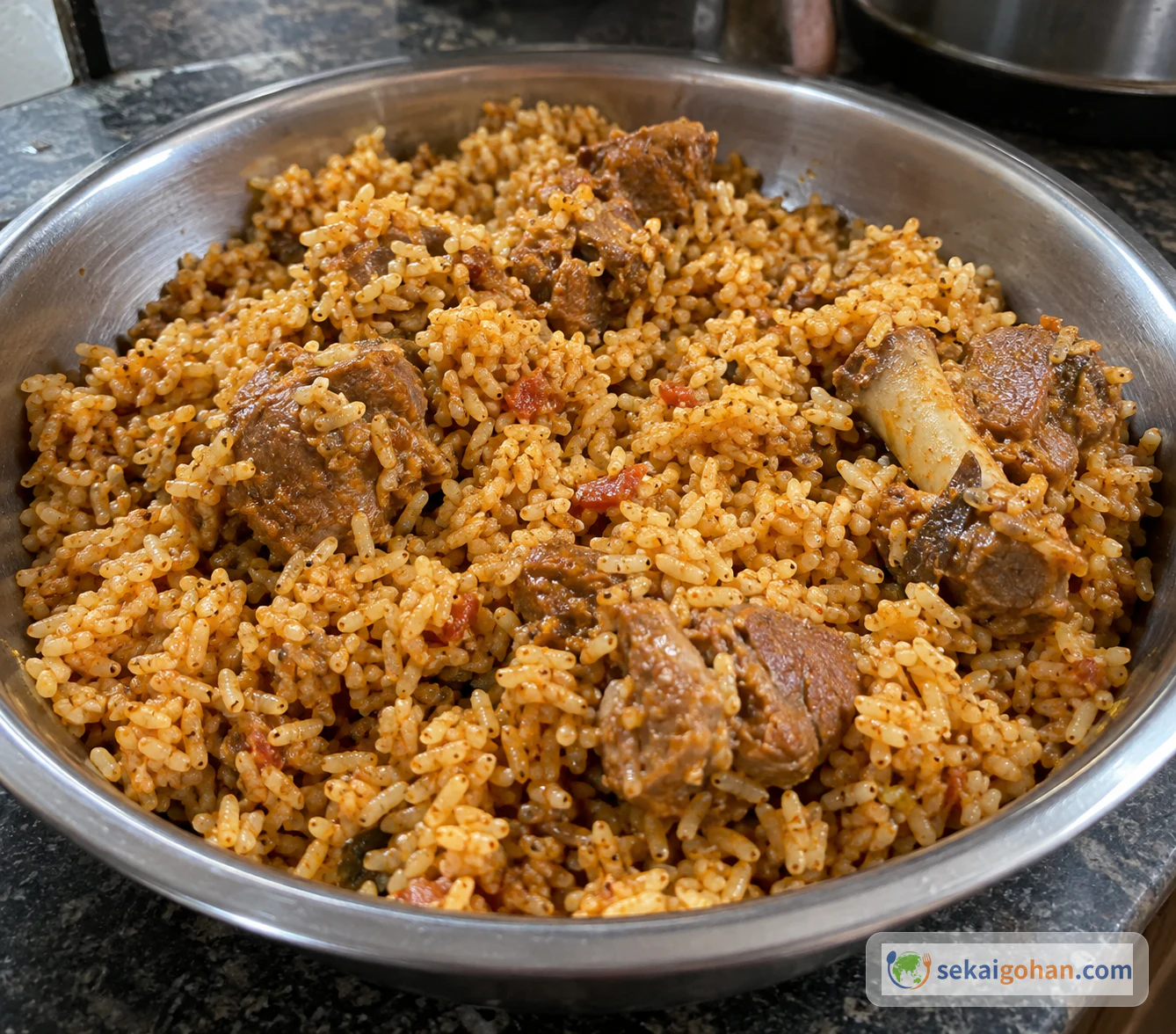
Ingredients
For the rice
| Ingredient | Amount | Role |
|---|---|---|
| Seeraga samba rice (சீரக சம்பா) | 12.5 oz (350g) | The small-grain rice at the heart of the dish |
| Water for washing and soaking | As needed | Working water only; drained before parboiling |
| Water for parboiling | 2 quarts (2L) | Parboils the rice |
| Sea salt | 1 tbsp | Seasons the parboiling water; separate from the meat salt |
For the mutton masala
| Ingredient | Amount | Role |
|---|---|---|
| Oil | 100ml | Blooms the whole spices and cooks the masala |
| Cinnamon | 3 pieces, 1 inch each | Whole spice |
| Cloves | 3 | Whole spice |
| Green cardamom | 3 pods | Whole spice |
| Onion, sliced | 150g (about 1½ onions) | About ½ tbsp goes in first; the rest after the chili paste |
| Garlic paste | 40g | Cooked until it loses its raw edge |
| Ginger paste | 40g | Added after the garlic |
| Mint, chopped | 1½ tbsp | ½ tbsp early; the remaining 1 tbsp before pressure cooking |
| Coriander leaves, chopped | 1½ tbsp | ½ tbsp early; the remaining 1 tbsp before pressure cooking |
| Large fresh red chilies | 6 | Seeded and ground to about 3½ tbsp of paste; color and heat |
| Tomato, chopped | 150g | Cooked with the masala until the oil separates |
| Bone-in mutton, about 2-inch pieces | 350g | The meat; bone-in mature sheep meat is the cut used here |
| Salt | 1½ tsp, or to taste | Seasons the meat |
| Yogurt | 60ml | Added to the meat; contains milk |
| Hot water | 240ml | Becomes the pressure-cooking sauce |
| Lime juice | 2 tsp | Brightens the meat sauce |
To serve alongside (optional)
| Ingredient | Amount | Role |
|---|---|---|
| Raita, ready-made | As needed | A cooling side; not part of the main pot |
| Eggplant pachadi (kathirikai pachadi), ready-made | As needed | A tangy side; not part of the main pot |
Steps
1Soak the rice, then parboil it in salted water
Wash the seeraga samba gently 2–3 times, cover it with water and leave it to soak for 30 minutes.
Bring 2 quarts (2L) water to a boil and dissolve 1 tbsp sea salt in it. Drain the soaked rice, add it to the boiling water and cook for 4–5 minutes, then tip it into a colander. The rice should not yet be fully cooked: it will keep cooking with the meat later, and rice that is already soft has no room left to take up the masala.
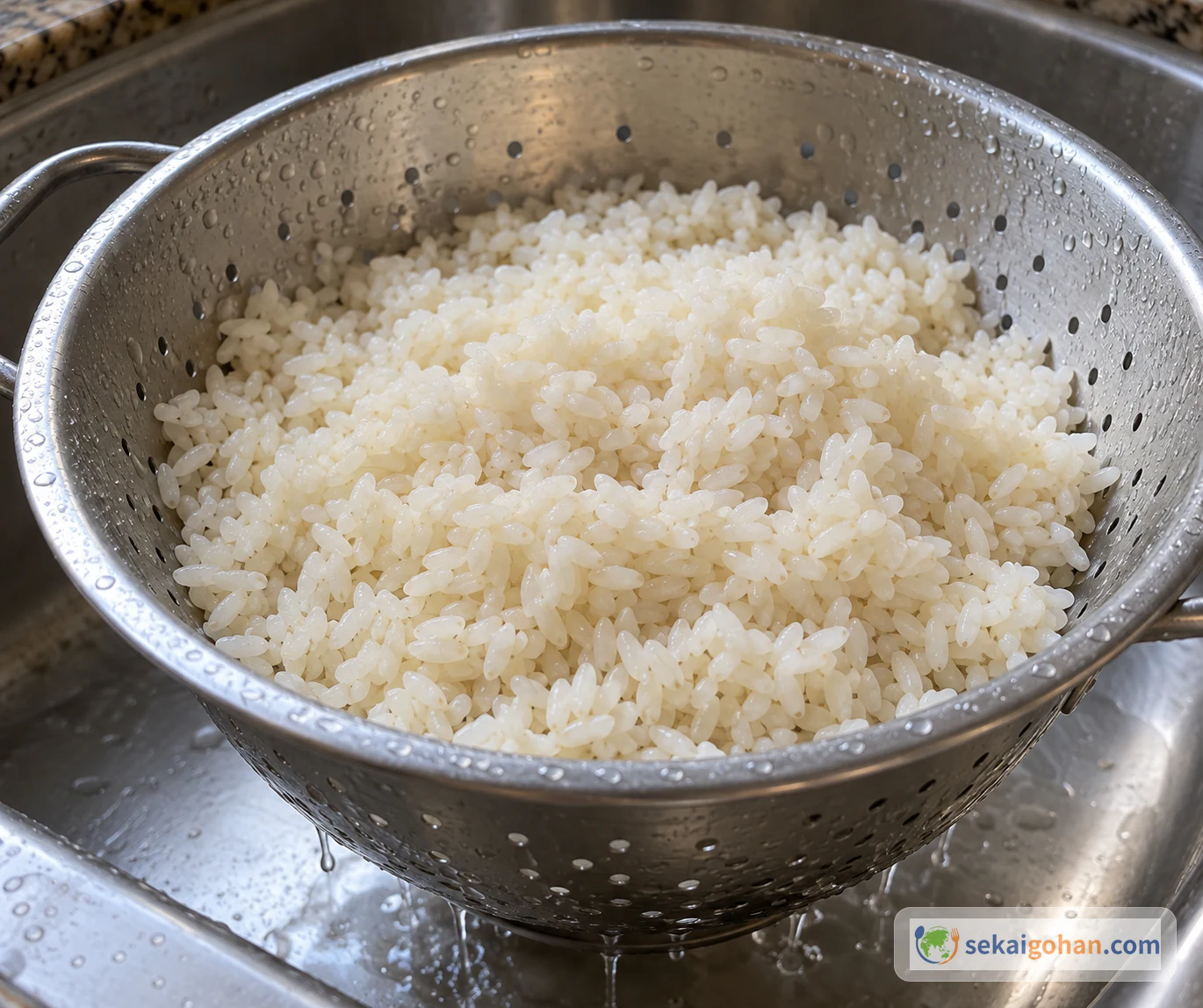
Drain the rice while it is still partly cooked, not fluffy 2Bloom the whole spices and build the aromatic oil
Heat ½ cup (100ml) oil in a heavy kadhai or deep pot. Add the cinnamon, cloves and cardamom. When the cardamom puffs up, add about ½ tbsp of the sliced onion and cook for 30 seconds. Lower the heat, add the garlic paste and cook for about 2 minutes, then add the ginger paste. Keep the heat gentle enough that the spices don't burn.
3Make the red chili and tomato masala
Add ½ tbsp mint and ½ tbsp coriander leaves and cook until the garlic and ginger begin to turn golden. Add the red chili paste and cook for about 1 minute. Add the rest of the onion and cook for about 2 minutes, until translucent. Add the 5.5 oz (150g) tomato and cook for 6–7 minutes, until the oil separates from the masala. That separation is your signal to move on to the meat.
4Sear the mutton and add the yogurt
Add the 12.5 oz (350g) mutton and 1½ tsp salt and cook over high heat for 6–7 minutes, stirring so nothing sticks and burns. Lower the heat, add the ¼ cup (60ml) yogurt, and stir while bringing it to a boil.
5Pressure-cook the mutton
Add the 1 cup (240ml) hot water, 2 tsp lime juice and the remaining 1 tbsp each of mint and coriander, and scrape the bottom of the pot clean. Once it boils, transfer everything to the pressure cooker. Cook over high heat until the first whistle, then turn the heat to low and cook for about 20 minutes. Turn off the heat and open the cooker only after the pressure has dropped.
Pressure cooker safetyThe "first whistle" is a cooker's sign that it has reached full pressure; not every cooker has a whistle. Before you start, check your manual for how it shows full pressure, its minimum liquid amount, its maximum fill level, and how and when it may be depressurized and opened. If your cooker isn't suited to this quantity, don't use it for this recipe as written. Don't make up a whistle count for a cooker without one, don't cut the water on your own, and never force the lid open while there is pressure inside.
Checking the meatThe 20 minutes under pressure and 15 minutes of dum are not a substitute for checking. Heat the food until the center reaches 167°F (75°C) for at least 1 minute. Measure in the center of a piece of meat, not touching the bone. Go by the state of the meat and your appliance's instructions.
6Add the parboiled rice to the meat and mix gently
Return the meat to the kadhai or heavy pot and warm it. Spoon the parboiled rice over the meat, then mix carefully so the grains don't break but every part is combined with the meat and masala. This is a mixed biryani; don't build layers.
7Seal the lid, finish on dum and serve
Cover the pot tightly and cook on low heat for 15 minutes. Then serve it hot, with no extra resting time after the heat is turned off.
If you like, serve raita and a tangy eggplant pachadi in separate bowls on the side.
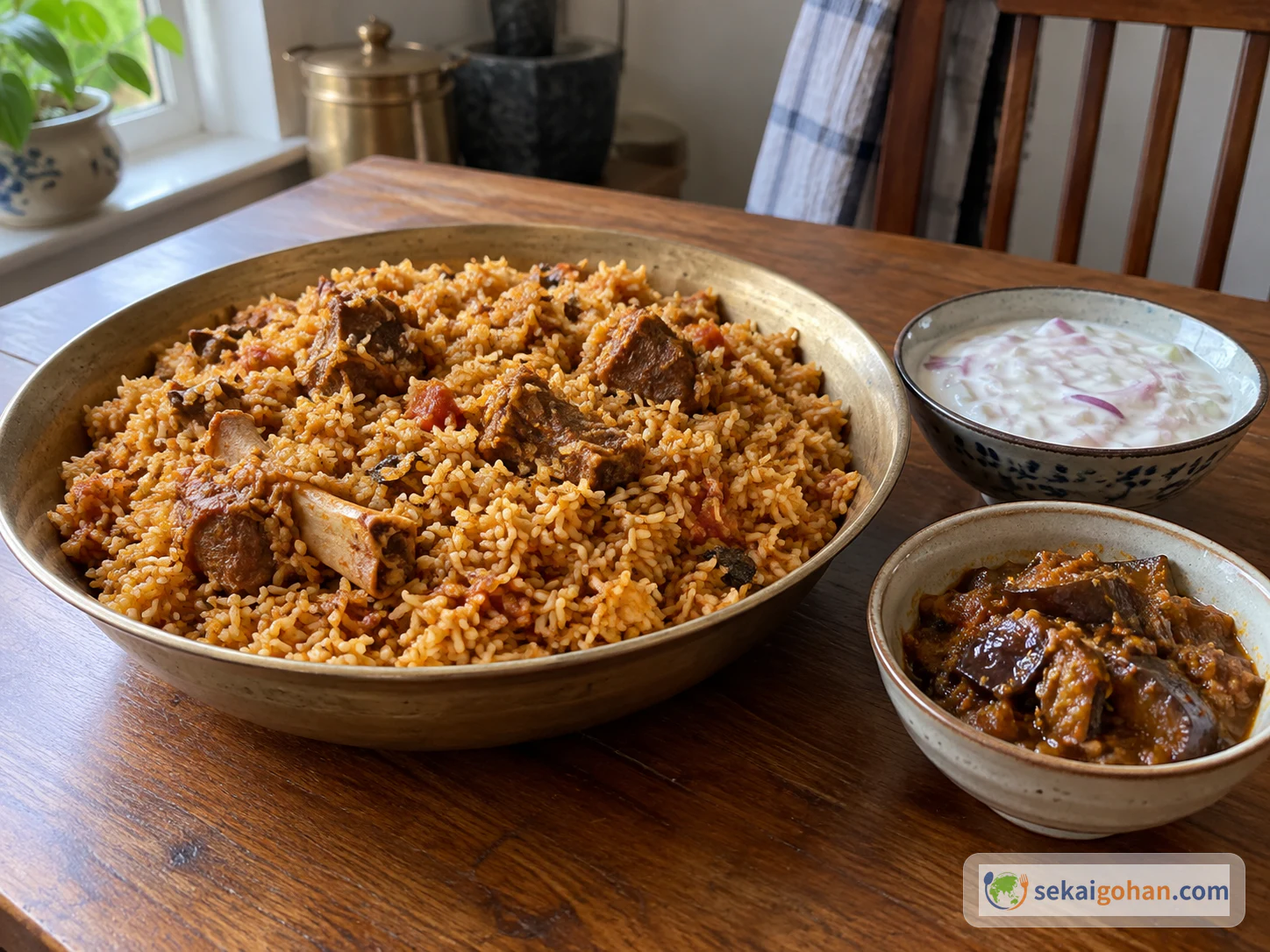
The sides are optional and stay in their own bowls