Ingredients and steps on one page. Print it, or choose “Save as PDF” in the print dialog.
Sekai Gohan
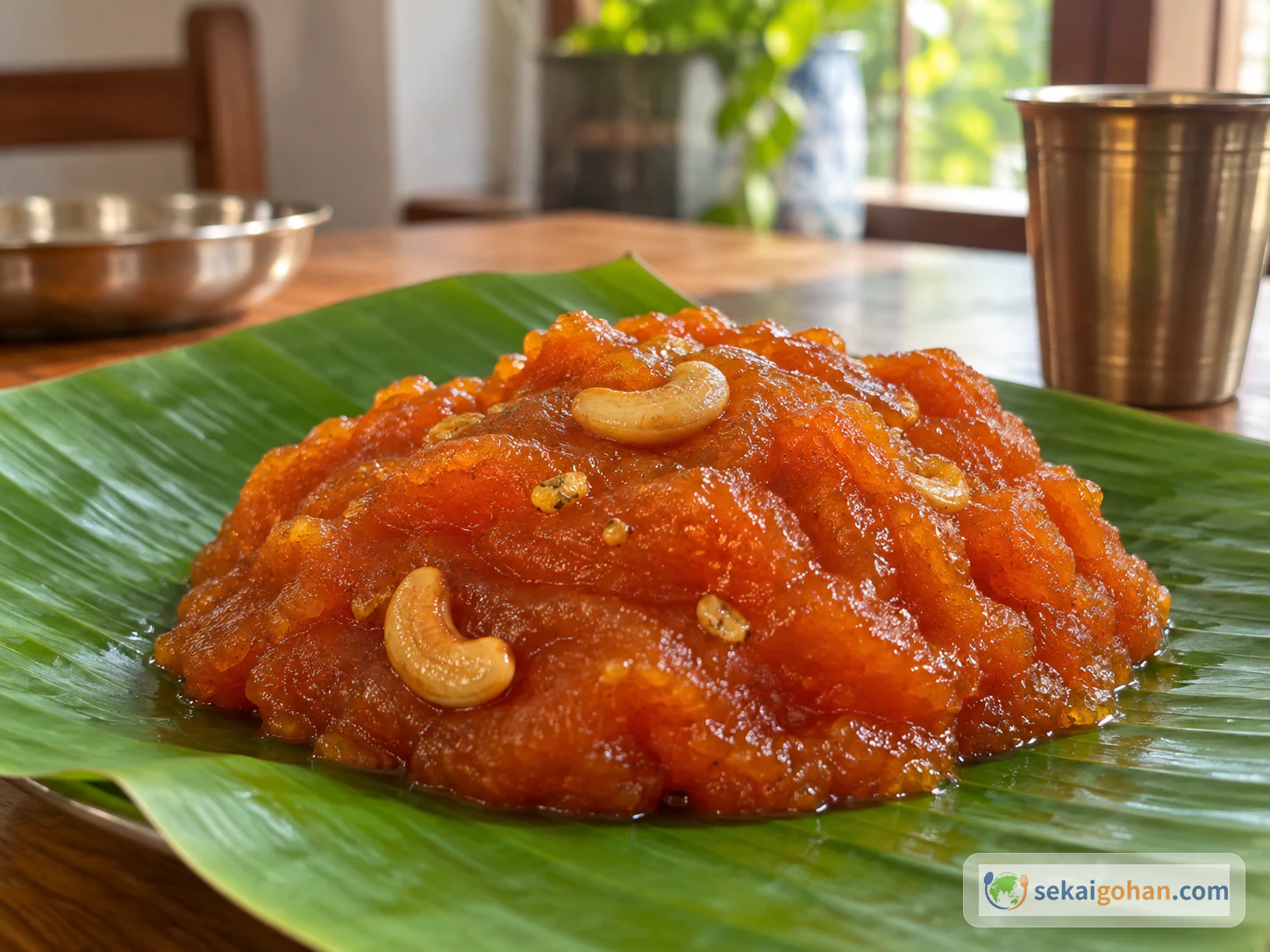
Ashoka Halwa: A Glossy South Indian Sweet of Mung Beans and Ghee (Asoka Halwa)
Ingredients
| Ingredient | Amount | Role |
|---|---|---|
| Yellow split mung beans (yellow moong dal / pasi paruppu) | 1/2 cup | The body of the halwa. Dry-roasted briefly without browning, then cooked soft |
| Water for cooking the dal | 3 cups | For cooking the dal until soft. Not all of it goes into the paste |
| Wheat flour | 1/4 cup | Roasted in oil; supports the dal paste and builds thickness |
| Maida (all-purpose flour) | 1 tbsp | Used together with the wheat flour |
| Cooking oil, refined and odorless | 1/2 cup total | 1/4 cup for frying the cashews and flour; the remaining 1/4 cup added gradually later with the ghee. Maximum; stop once the halwa turns glossy |
| Ghee, melted, at room temperature | 1/2 cup | Added a little at a time, alternating with the oil. The main source of aroma. Maximum; stop once the halwa turns glossy |
| Sugar | 1 cup | Added after the dal and flour are combined; it melts and loosens the mixture |
| Cardamom powder | 1/2 tsp | Aroma |
| Cashew nuts | 5 | Fried in the first portion of oil |
| Red food color | 2 pinches | Optional. Dissolve in the water below. Use a product labeled for food |
| Water for the color | 1 tbsp | Only for dissolving the color; separate from the 3 cups above |
Steps
1Dry-roast the dal, then cook it until very soft
Put 1/2 cup yellow moong dal in a pressure cooker or pot and dry-roast it over high heat for 1 minute, stirring, without letting it change color. Add 3 cups water and cook until the dal is completely soft and crushes easily against the side of a spoon.
In a pressure cooker, cook for 3 whistles on a low flame. Then check the dal itself: if any grains still feel firm, cook longer.
2Mash the dal into a smooth paste
Mash the cooked dal with a masher, or blend it, into a smooth paste without adding water. Don't pour in all of the cooking water or add extra liquid here. Aim for no visible grains: any coarseness in the paste carries through to the finished texture.
3Fry the cashews and roast the two flours in oil
In a heavy pan, heat 1/4 cup of the oil and fry the 5 cashews until golden. Lower the heat, add 1/4 cup wheat flour and 1 tbsp maida, and stir constantly over low heat so the flour doesn't clump or catch, until it smells toasty and no longer smells of raw flour. Keep the remaining 1/4 cup oil aside for step 6.
4Combine the dal paste with the roasted flour
Add the dal paste to the pan and mix over medium heat until the two are completely combined, with no streaks of flour left. At this stage the mixture is thick, pale and matte.
5Add the sugar, cardamom and dissolved color
Dissolve the 2 pinches of red food color in 1 tbsp water. Add 1 cup sugar, 1/2 tsp cardamom powder and the color mixture to the pan. As the sugar melts, the mixture will loosen noticeably. This is a normal stage of the process, so keep stirring and don't stop cooking here.
6Add the oil and ghee a little at a time, alternating
Adjust the heat between medium and medium-high. Add the remaining 1/4 cup oil and the 1/2 cup melted ghee in small amounts, alternating between them. Stir continuously, and wait until each addition has been absorbed and the mixture comes back together before adding the next. Adding the fat all at once makes it hard to mix in.
7Finish when it turns glossy and leaves the pan
The halwa is done when it has turned a deep color, looks glossy, pulls away from the sides of the pan, and turns with the spatula as one soft mass. To check stickiness, put a little on a plate and touch it once it has cooled enough to handle; it should feel much less sticky. Never touch the hot halwa or the pan with bare hands.
The amounts of oil and ghee are a maximum, not a requirement. Adjust the quantity by watching the halwa, so if it has reached this state before all the fat is used, stop adding it.
8Serve warm
The recipe makes about 2 cups. Serve the halwa hot on a banana leaf or a small plate. If you like, put a little savory mixture on the side, kept separate from the halwa.