Ingredients and steps on one page. Print it, or choose “Save as PDF” in the print dialog.
Sekai Gohan
Doodhpak: Gujarati Saffron-Cardamom Milk and Rice Pudding
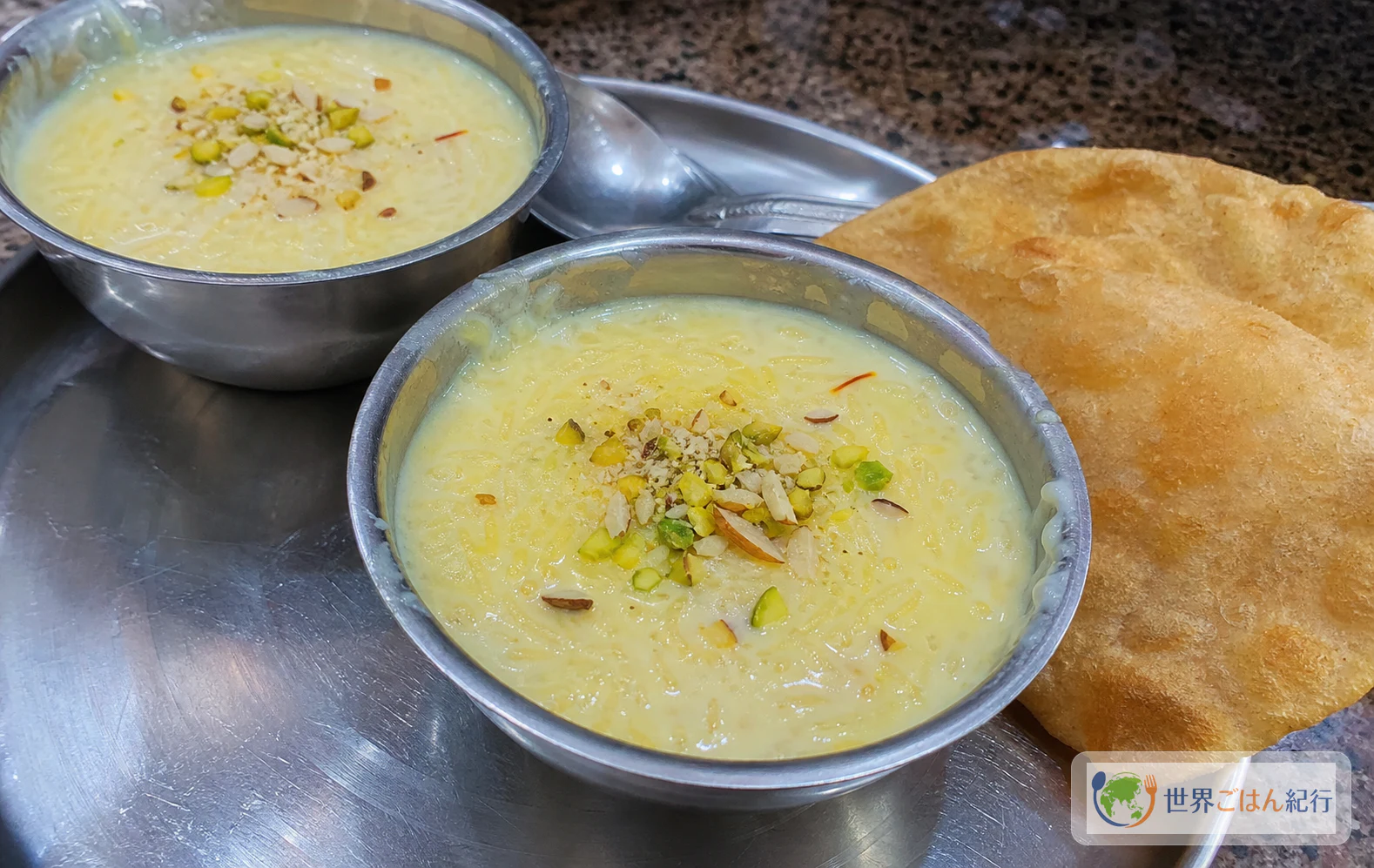
Ingredients
| Ingredient | Amount | Shopping and substitutes |
|---|---|---|
| Whole milk | 6¼ cups (1500 ml) | Low-fat milk lacks richness. Use plain, unadjusted milk |
| Basmati rice | 1.5 oz (45 g) | With short-grain rice, reduce to 1.25 oz (35 g). It tends to turn sticky |
| Sugar | 4 oz (110 g) | 3.25 oz (90 g) for less sweetness. 4 oz (110 g) holds up better if you plan to chill it |
| Ghee | 2 tsp | To reduce sticking at the bottom of the pot and for aroma. Unsalted butter also works |
| Saffron | A pinch, 0.05–0.1 g | Soften in 3.5 tbsp (50 ml) hot milk. Too much tastes medicinal |
| Cardamom | 4 pods | Crack the pods and lightly crush the seeds. Slightly under 1/2 tsp if ground |
| Nutmeg | A pinch | Optional. Do not overdo it |
| Almonds | 15 g | Slivered or coarsely chopped |
| Pistachios | 15 g | Unsalted. Adds color and texture |
| Charoli (chironji) | 10 g | If available. If not, add 5 g more almonds |
| Salt | A pinch | Tightens the sweetness. Do not overdo it |
Steps
1Wash the rice and soften the saffron
5 min + 20 min soaking
Put 45 g basmati in a small bowl and rinse lightly, changing the water 3 times. Rubbing the grains together breaks them, so just swirl the water with your fingertips. Drain and soak in fresh water for 20 minutes. Spread the rice flat in the bowl so the slender grains keep an even shape. In a separate heatproof cup take 50 ml milk, warm it in a microwave at 600 W for 30 seconds to about 60°C and steep a pinch of saffron in it. It is enough when faint steam rises, the saffron threads slowly open and the milk turns pale yellow.
2Bring the milk up and prepare the bottom of the pot
10 min
Brush 2 tsp ghee thinly over the bottom of a heavy pot and add the remaining 6 cups (1450 ml) milk. Warm over medium heat for 8–10 minutes. Just before a row of small bubbles forms at the edge of the pot and the surface lifts softly, lower to medium-low. Aim for 194–203°F (90–95°C). If you bring it to a boil on high heat here, it boils over and the milk proteins scorch on the bottom. Stroke the bottom with a wooden spoon, and when a thin skin forms, free it from the side of the pot and return it to the milk.
3Add the rice and simmer it thin
18–22 min
Drain the soaked rice and add it to the warm milk. Keep the heat between medium-low and low so that small bubbles keep coming up on the surface without a break. Keep it at 85–90°C. Every 2–3 minutes scrape the bottom with a wooden spoon so the rice does not stick in clumps. The grains should keep their slender 7–8 mm shape while swelling slightly plump. After 18 minutes, take out one grain and press it with a finger to check whether it crushes through the center. When the grains are soft and the milk has reduced to about 80% of its original volume, move on.
4Add the sweetness and aroma
5 min
Lower the heat to low and add 4 oz (110 g) sugar, a pinch of salt, the saffron milk, the cracked and lightly crushed cardamom seeds and a pinch of nutmeg. Once the sugar goes in it loosens for a moment, but stirring over low heat for 3–5 minutes brings it together again. Keep the surface from boiling hard, with only fine bubbles. It is enough when the cardamom aroma rises behind the sweetness of the milk and the color is a pale cream.
5Add the nuts and stop the thickening
4 min
Add the almonds, the pistachios and, if you have it, the charoli, and stir over low heat for only 3–4 minutes. Turn off the heat when, lifting the wooden spoon, the liquid does not fall in thick clumps but flows in a thin ribbon and the trail disappears quickly when it returns to the pot. The rice and nuts should be smoothly coated, with no watery milk left at the bottom. If you reduce too far here, the rice absorbs the milk as it cools and becomes a hard milk rice in the bowl. Stop at the point where it feels "a little loose" while warm.
6Rest and transfer to bowls
15 min
Turn off the heat and leave it in the pot for 5 minutes so the sweet milk settles into the rice. If poured into bowls hot, a skin forms easily on the surface, so stir once from the bottom with a wooden spoon and let it fall to about 50–60°C before transferring. Transfer it when it flows smoothly from a ladle and the rice grains scatter evenly rather than gathering in one place. To eat it warm, leave it as it is; to chill it, let the heat go and refrigerate. If it has firmed up when cold, stir in 2–4 tbsp milk and it returns to a consistency that flows from the spoon.