Ingredients and steps on one page. Print it, or choose “Save as PDF” in the print dialog.
Sekai Gohan
How to Make Idli: South India's Steamed Rice-and-Lentil Breakfast Cakes
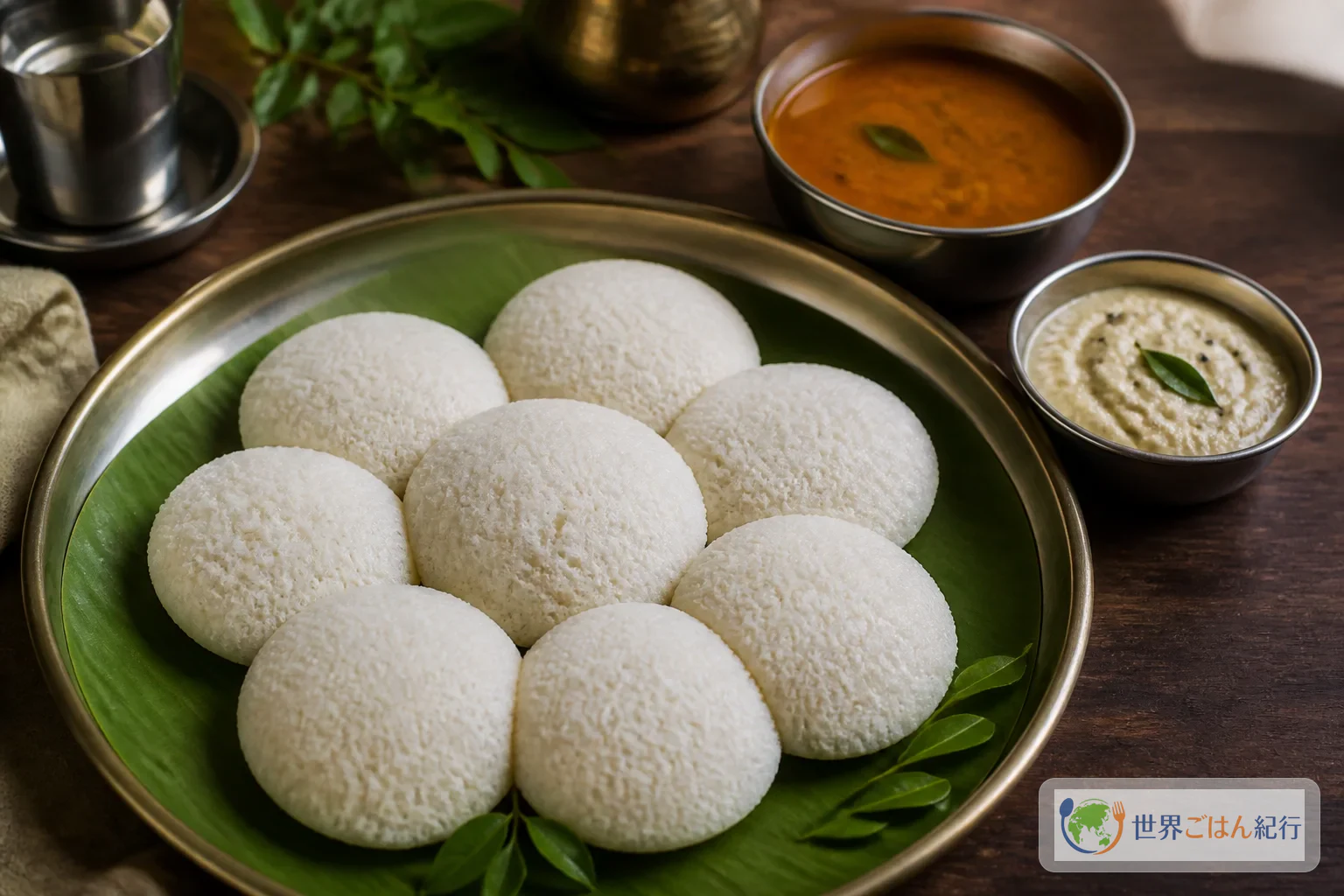
Ingredients
Fermented batter
| Ingredient | Amount | Role and substitutes |
|---|---|---|
| Idli rice or parboiled rice | 8.5 oz (240 g) | Ordinary short-grain rice also works. Soak longer if the grains are large |
| Urad dal (skinned) | 2.75 oz (80 g) | Choose skinned black urad, which gives stickiness, not the white split lentil |
| Fenugreek seeds | 2 g (1/2 tsp) | Helps aroma and binds the batter. You can omit them, but the flavor changes |
| Poha (flattened rice) | 20 g | Optional, for a softer batter. 20 g cooked rice also works |
| Water | 300–380 ml | Add in portions while grinding. Adjust at the end so the batter does not run |
| Salt | 6 g | Mix into the ground batter. On a hot day fermentation runs faster, so don't overdo it |
| Rice bran oil or light sesame oil | 1 tsp | For greasing the molds. A little ghee also works for aroma |
Accompaniments
| Ingredient | Amount | How it is used |
|---|---|---|
| Toor dal | 2.75 oz (80 g) | Wash and cook until soft. Lentils also work but the thickness changes |
| Carrot, onion, eggplant, etc. | 9 oz (250 g) total | 0.5 inches (1.5 cm) cubes. Add the ones that fall apart easily later |
| Tamarind paste | 15 g | Dilute in ¾ cup (200 ml) water and add at the very end of the stew |
| Sambar powder | 1–1.5 tbsp | A ready-made blend is fine. Check the salt before adding more |
| Desiccated coconut | 2 oz (60 g) | For the chutney. Blend with 50–80 ml water, ginger, green chili and salt |
| Mustard seeds, curry leaves | a little of each | Bloomed in oil to finish the sambar |
Steps
1Soak the rice and lentils separately
4–6 hours
Rinse the rice lightly and put it in a large bowl. Wash the urad dal and fenugreek in a separate bowl. Add water to about twice the height of the ingredients and leave for about 5 hours at 20–25°C. On a hot day, once 4 hours have passed, crush a lentil between your fingertips and move on if no hard core remains. If using poha, soak it in fresh water 15 minutes before grinding.
2Grind the rice and urad dal separately
15 min
Drain the soaking water. First add ½ cup (120 ml) water to the urad dal and fenugreek. Pulse the blender in short bursts until you have a white, smooth paste that is still slightly sticky between your fingertips. Next add ½ cup (150 ml) water to the rice and grind until the grit is like fine sand. Add the remaining water 1 tablespoon at a time and stop when the combined batter is slightly thicker than pancake batter.
Finally add the poha or cooked rice, blend briefly, and mix in 6 g salt. If the batter flows slowly when you tilt the bowl and a line drawn through it stays for a few seconds, it is thick enough to hold bubbles after fermenting.
3Ferment the batter
8–14 hours
Transfer the batter to a clean container at least twice its volume, and cover loosely without sealing it. Leave at 77–86°F (25–30°C) for 8 to 14 hours. It is done when the volume has grown 1.3 to 1.5 times, fine bubbles cover the surface and there is a mild sourness. Stand a spoon in it: it should topple slowly while keeping its thickness, and the mark left when you lift it should not fill in right away. Don't stir vigorously after fermentation, which knocks out the bubbles. Turn it over once, gently, from the bottom, just enough to check the salt.
4Fill the molds and steam
8–12 min
Put 2 to 3 cm of water in a steamer or deep pot and bring it to a boil over high heat. Lightly oil the idli molds and pour in batter to about 70 to 80 percent. When the steam is steady, put the molds in, cover, and steam for 8 to 10 minutes over high heat just short of the maximum. Stop when a bamboo skewer pushed into the center comes out without sticky batter.
If the molds are large and nearly 1 inch (3 cm) thick, you need 12 to 15 minutes. Steaming a thick form such as Karnataka's thatte idli for the same time sets only the surface and leaves the center raw, so when you change the shape, change the time too.
5Cool slightly and unmold
5 min
Turn off the heat, slide the lid slightly open and leave for 2 minutes. Run a wet spoon or a thin spatula all around the edge of each idli and lift from the bottom. Forcing them out right after steaming leaves the surface stuck to the mold; cooling too long makes them sticky with condensation. Serve the unmolded idli immediately with warm sambar and coconut chutney.
If the center is damp and clings to the spoon, return it to the mold and steam 2 to 3 minutes more. If the surface is dry and hard, next time don't overfill the molds and keep the steam steady.