Ingredients and steps on one page. Print it, or choose “Save as PDF” in the print dialog.
Sekai Gohan
Kodubale: Karnataka's Hand-Rolled Rings of Rice Flour, Coconut and Chilli
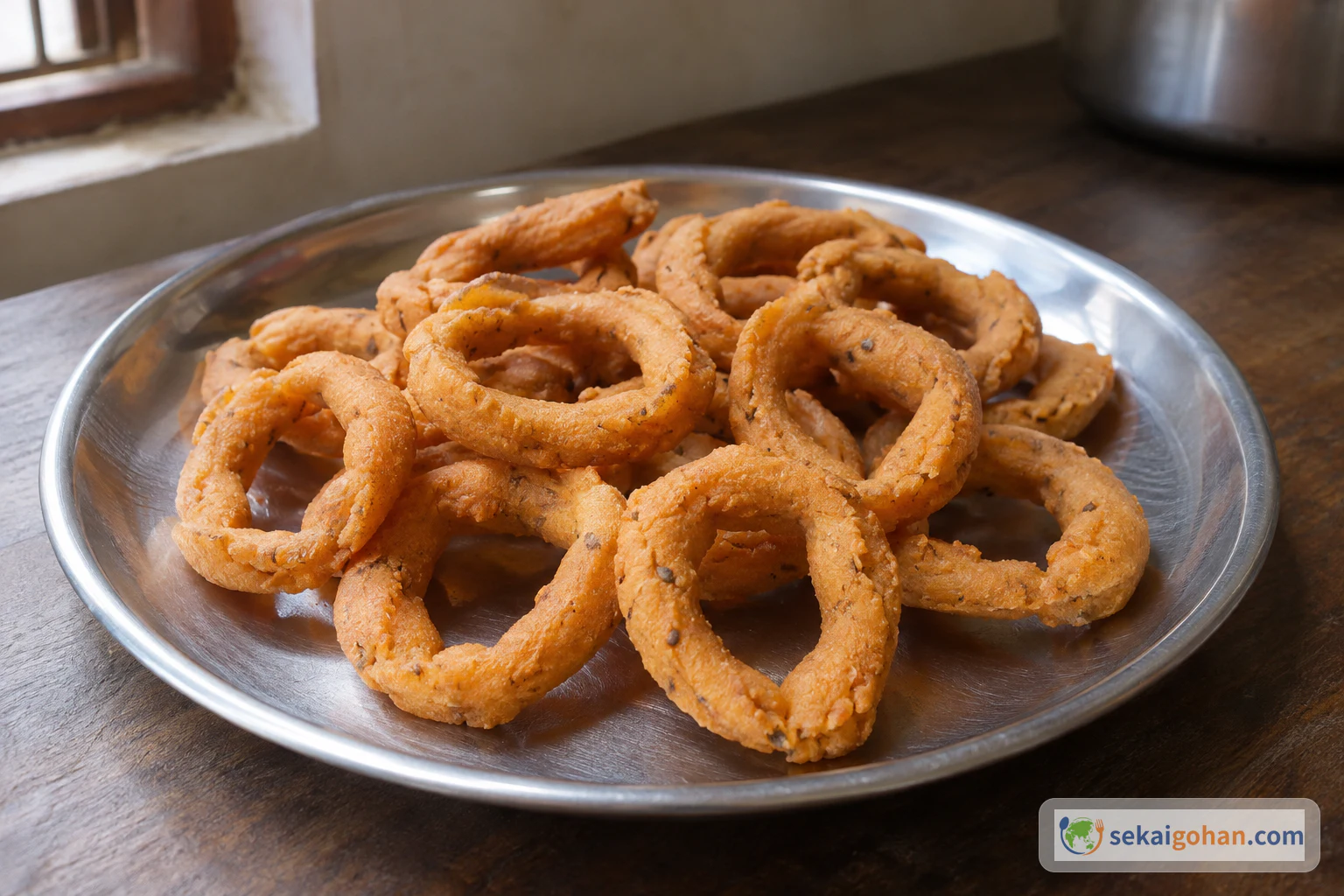
Ingredients
| Ingredient | Amount | Role |
|---|---|---|
| Plain flour (maida) | 500 g | The main flour of the dough |
| Rice flour | 250 g | Part of the flour base |
| Fine semolina (chiroti rava) | 125 g | Part of the flour base |
| Sesame seeds | 25 g | Mixed into the dry flours |
| Cumin seeds | 15 g | Whole seeds, mixed into the dry flours |
| Oil for the dough | 1 ladle (approximately 1/4 cup), hot | Mixed into the flour before the paste goes in. Add a little more only if a fistful crumbles |
| Water for the dough | a little, only if needed | To bring the dough to soft and smooth |
| Fresh coconut | 1 small, or 1/2 a large | Ground into the paste |
| Chilli powder | 2 tsp | Heat and colour |
| Asafoetida powder (hing) | 1/4 tsp | Ground into the paste |
| Salt | 15–20 g | Ground into the paste. This is all the salt the dough needs |
| Water for the paste | as little as needed | Just enough to grind everything fine |
| Oil for deep-frying | 1/2 kg | Heated in a heavy wok to fry the rings |
Steps
1Mix the flours and seeds
Put the maida, rice flour and chiroti rava in a large bowl. Scatter the sesame seeds and cumin seeds over the flour. Mix well while dry until the seeds are evenly spread through the flour.
2Pour the hot oil into the flour
Put 1 ladle of dough oil in a small pan and heat it until hot. Pour the hot oil over the flour and seed mixture. Mix the oil through the flour with a sturdy spoon or spatula, keeping your fingers out of the hot mixture, until the flour is evenly coated with oil.
3Cool the mixture and check the oil
Leave the bowl until the mixture is cool enough to touch comfortably, without pressing or squeezing it yet. Take a fistful and press it in your hand. If it holds together and does not crumble straight away, the oil is enough. If it falls apart at once, add a little more oil, mix it in, and test again.
4Grind the coconut paste
Put the coconut, chilli powder, asafoetida and salt in a grinder jar. Add only as much water as you need to grind them. Grind until the paste is fine and smooth.
5Knead the dough
Scrape the paste into the bowl of oiled flour. Work it into the flour with your hands and knead. If the dough is still too dry to come together, add a little water. Keep kneading until the dough is soft and smooth.
6Cover the dough and heat the frying oil
Cover the dough with a damp cloth and keep it covered while you work. Pour the frying oil into a large, heavy-bottomed wok. Set the wok over the heat and stay close by while it heats.
7Shape the rings
Pinch off a piece of dough about the size of a large marble. Roll it into a cylinder about 1/4 inch thick and 2 1/2 inches long. Bring the two ends together and pinch them firmly to close the ring. Place each ring on a plate as you finish it, and shape about a dozen before you start frying.
8Fry the first batch
Look at the oil before any rings go in. It should be hot, but not smoking. Slide the rings into the oil one by one, 12–15 per batch; they rise to the surface right away. Once the batch is in, turn the flame down to medium.
9Fry until golden brown
Let the batch fry over medium heat, turning the rings a few times so they colour evenly. Fry until they are golden brown on both sides, around 5–6 minutes per batch.
10Drain and finish the remaining dough
Lift the rings out of the oil onto a plate lined with absorbent paper. Shape, fry and drain the rest of the dough in batches in the same way until it is all cooked. Don't walk away from the hot oil to shape more rings while a batch is frying.
11Cool and serve
Leave the fried rings on the paper-lined plate until they reach room temperature. Serve the kodubale as they are, fresh, in the same meal.