Ingredients and steps on one page. Print it, or choose “Save as PDF” in the print dialog.
Sekai Gohan
Boondi Laddu (Halwai Style): Gram-Flour Pearls Bound in Sugar Syrup
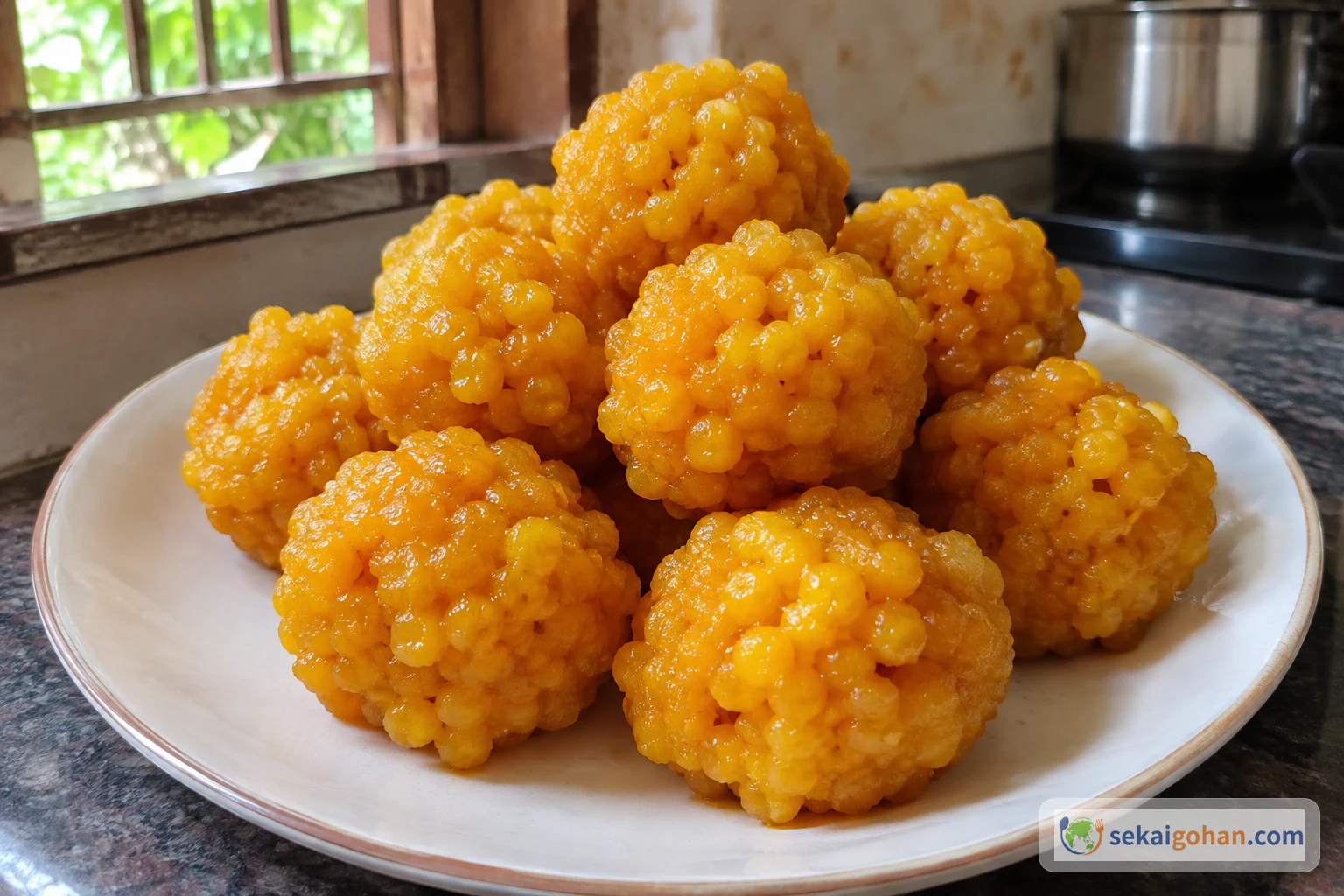
Ingredients
| Ingredient | Amount | Role |
|---|---|---|
| Gram flour (besan) | 1.5 cups | The base of the boondi pearls |
| Saffron, crushed or powdered | 2 pinches | Color and aroma in the batter |
| Water, for the batter | 1 cup + 1 tbsp | Loosens the batter; adjust after the test fry |
| Oil | as needed | For deep-frying the boondi |
| Sugar | 1.5 cups | Sweetens and binds the laddu |
| Water, for the syrup | 3/4 cup | Dissolves the sugar into syrup |
| Melon seeds (magaz) | 1 tbsp | Mixed into the soaked boondi |
| Green cardamom powder | 1/2 tsp | Aroma |
| Black cardamom (badi elaichi) | seeds from 2 pods | Aroma; discard the husks |
| Ghee | 1 tbsp | Mixed in to help the laddu hold together |
| Ghee | a little | For coating your palms while shaping |
| Ghee (only if the mixture will not hold) | 1–2 tbsp | Extra binding, added only when needed |
Steps
1Make the batter
Put 1.5 cups gram flour and 2 pinches saffron in a bowl. Add 1 cup + 1 tbsp water and whisk until the batter is smooth.
2Test-fry a little batter and adjust
Heat oil for deep-frying. Drop a small amount of batter into the hot oil from a spoon. If the drops form round boondi, the batter is ready.
If the drops come out flat, the batter is too thin: stir in a little gram flour and test again.
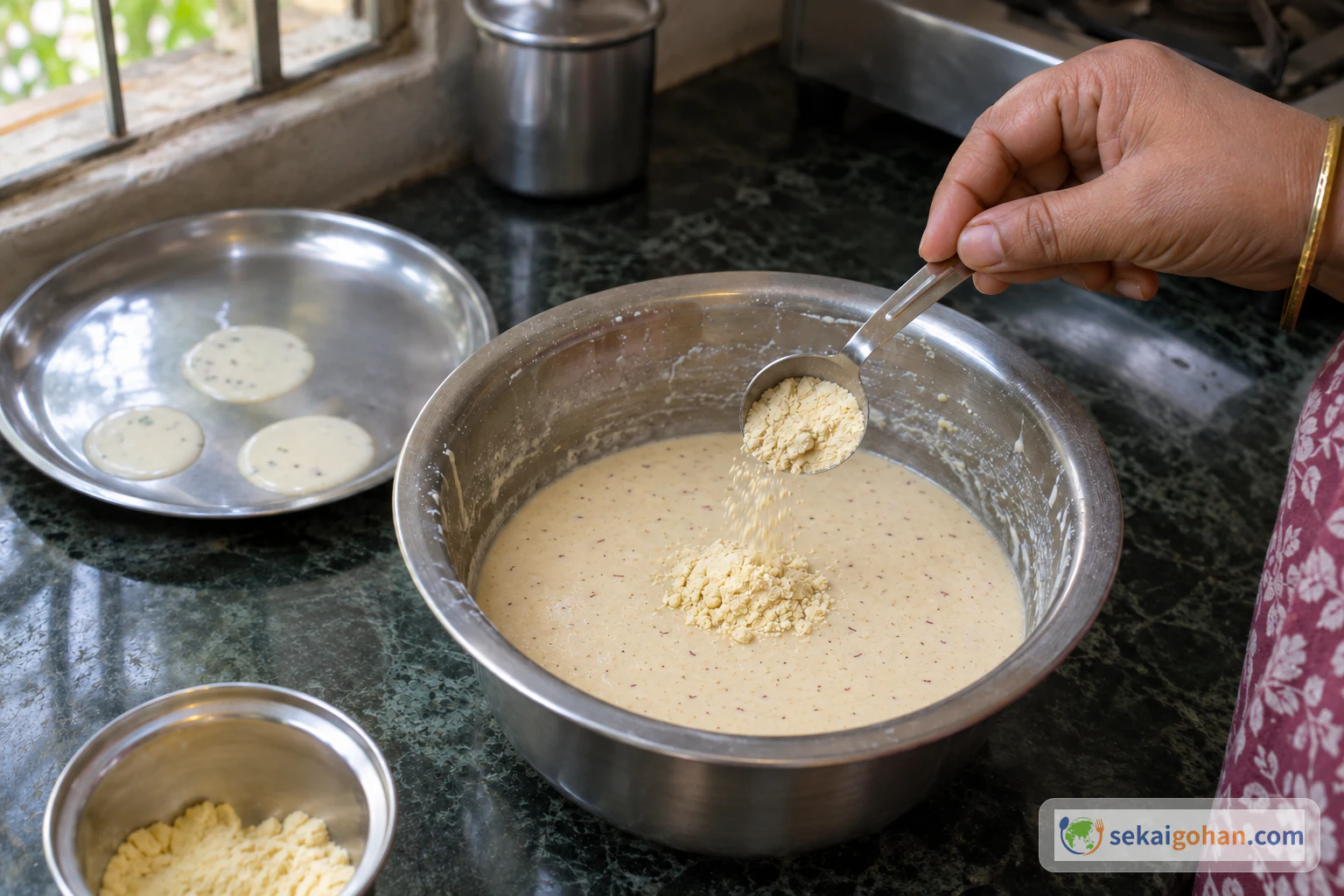
Flat drops mean thin batter; add a little gram flour If the drops have tails, the batter is too thick: stir in a little water and test again. These are two separate fixes; use only the one your batter needs.
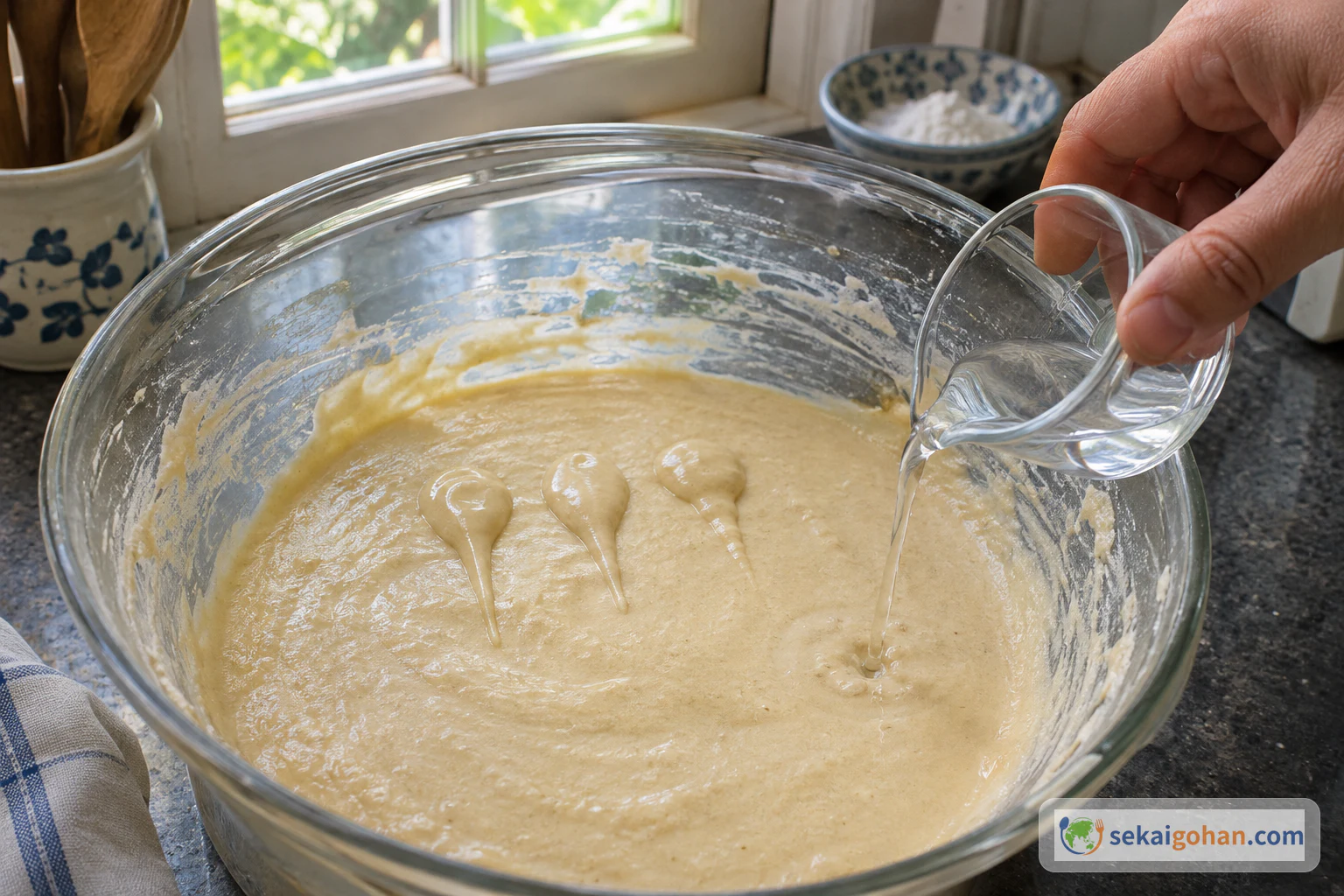
Drops with tails mean thick batter; add a little water 3Cook the sugar syrup
Combine 1.5 cups sugar and 3/4 cup water in a saucepan. Simmer gently over low heat until the syrup reaches one-thread consistency, then turn off the heat.
4Check for one thread safely
Never put your fingers into the hot pan. Take a few drops of syrup onto a small spoon or plate, away from the pan, and let it cool until it is safe to touch. Press it between your fingertips and pull them apart: one fine thread means the syrup is ready. To keep the syrup warm while you fry, set the saucepan over a larger container of hot water instead of on the heat.
5Hold the jhara over the oil
Take a dry, flat ladle with round holes and hold it a few inches above the hot oil. An ordinary slotted spoon will not give you round drops.
6Spread the batter through the ladle
Pour some batter onto the ladle and spread it lightly with a spoon in one motion, so the drops fall through the holes into the oil.
7Fry the boondi until golden
Fry until the boondi is cooked and golden, and take it out when the sizzling stops. Do not fry until crisp or dark; boondi that has turned hard will not absorb the syrup well. Lift the boondi out with a slotted spoon.
8Wipe the ladle after every batch
Away from the hot oil, wipe both sides of the jhara with a clean, dry, thin cotton cloth before the next batch. This keeps the holes clear so the next drops fall round.
9Add each batch to the hot syrup
Let the oil drain from the boondi, then add the batch directly to the hot sugar syrup. Repeat steps 5 to 9 until all the batter is fried.
10Mix in the seeds, spices and ghee
Add 1 tbsp melon seeds, 1/2 tsp green cardamom powder, the seeds from 2 black cardamom pods and 1 tbsp ghee. Mix well until the boondi absorbs the syrup.
11Shape the laddu
When the mixture is warm or at room temperature, coat your clean palms with a little ghee and press portions of the mixture into balls. If the mixture will not hold together, mix in 1–2 tbsp more ghee and shape again.