Ingredients and steps on one page. Print it, or choose “Save as PDF” in the print dialog.
Sekai Gohan
Butter Chicken (Murgh Makhani): Delhi-Style, Made Without a Tandoor
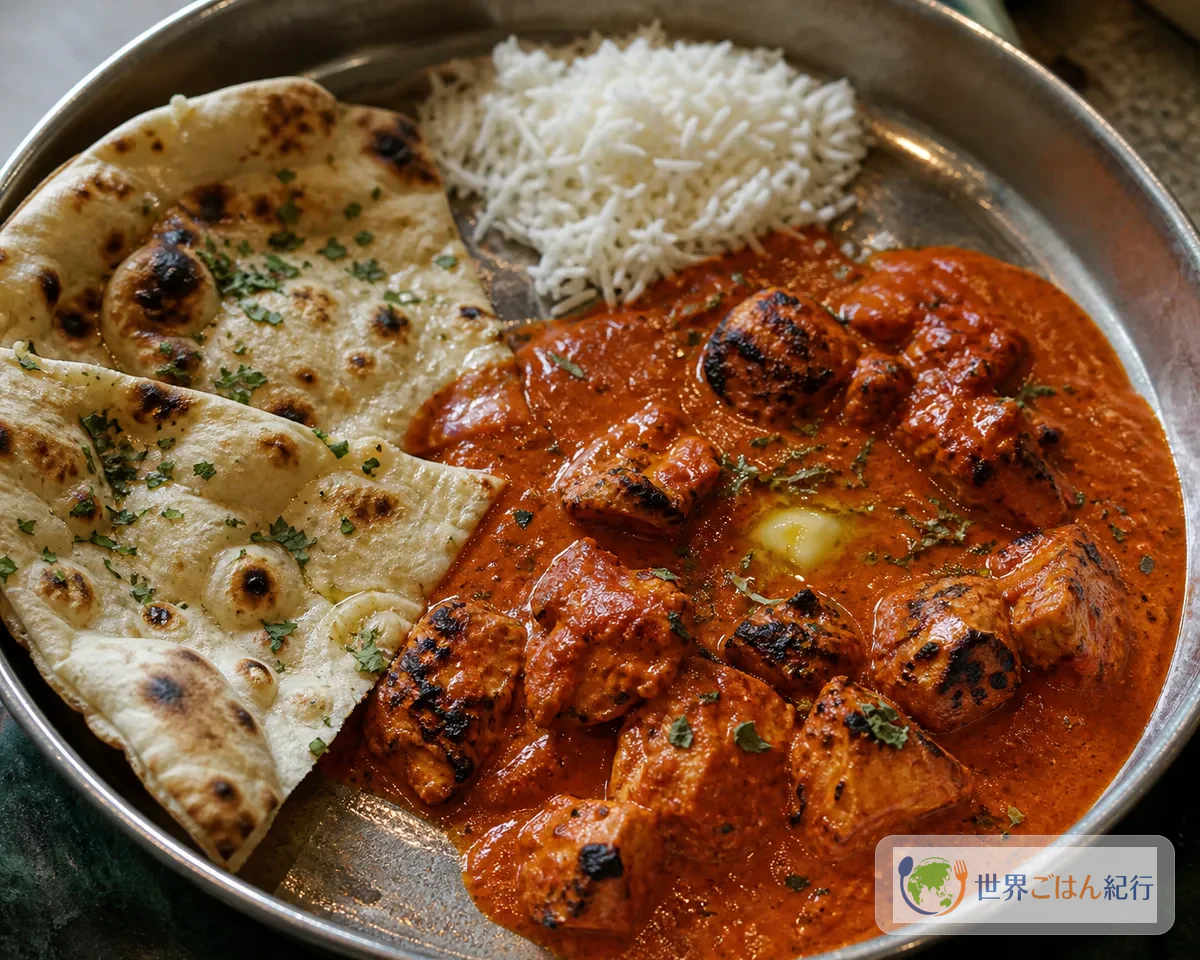
Ingredients
Ingredients
| Ingredient | Amount | Role and substitutes |
|---|---|---|
| Skinless chicken thighs | 1.5 lb (700 g) | Cut into 4–2 inches (5 cm) bite-size pieces. Breast works, but do not overcook |
| Plain yogurt | 5.5 oz (150 g) | Unsweetened. Use 4 oz (120 g) if it is strained yogurt |
| Lemon juice | 1 tbsp | Acidity and aroma. Up to 2 tsp rice vinegar instead |
| Grated ginger | 2 tsp | 2 tsp if from a tube. Use a little less of watery products |
| Grated garlic | 2 tsp | The base of the aroma |
| Garam masala | 2 tsp | For the marinade. If the blend contains salt, reduce the salt |
| Kashmiri chili powder | 1 tbsp | Color and mild heat. Can be replaced by 2 tsp paprika and a little cayenne |
| Salt | 7 g | About 1% of the chicken weight. Divided between the marinade and the sauce |
| Neutral oil | 1 tbsp | Mixed into the marinade to help browning |
Kashmiri chili is a powder with a vivid red color and mild heat. For a substitute, paprika alone makes the aroma flat, and cayenne alone lacks color. Use 2 tsp paprika with a little cayenne to balance color and heat. If you don't like hot food, skip the cayenne and the finishing black pepper.
Makhani sauce
| Ingredient | Amount | Role and substitutes |
|---|---|---|
| Unsalted tomato passata | 14 oz (400 g) | If using whole tomatoes, strain them |
| Water | ½ cup (100 ml) | To loosen before reducing |
| Grated ginger | 1 tsp | Aroma of the sauce |
| Grated garlic | 1 tsp | Supports the tomato's green edge |
| Unsalted butter | 1.5 oz (45 g) | Simmer 1 oz (30 g), use 15 g at the end |
| Heavy cream (35–40% milkfat) | ½ cup (100 ml) | Milk alone lacks thickness |
| Cashews | 1 oz (30 g) | Richness and thickness. Omit for a nut allergy |
| Honey | 1 tsp | Rounds out tomato acidity. Sugar also works |
| Kasuri methi | 1 tsp | Rub lightly between your fingers. Omit if you have none |
| Garam masala | 1 tsp | Finishing aroma |
| Salt | about 3 g | Adjust to the salt in the tomato |
Steps
1Cut the chicken to 4–2 inches (5 cm) and marinate in two stages
Cut 1.5 lb (700 g) chicken thighs into 4–2 inches (5 cm) bite-size pieces so that they are 2–1 inches (2.5 cm) thick. Opening only the thick parts with the knife to even the thickness keeps the edges from drying while the center stays raw. Press the surface dry with paper towels, rub in 4 g salt, the yogurt, lemon juice, ginger and garlic, and leave in the refrigerator for 30 minutes.
After 30 minutes, add 2 tsp garam masala, the Kashmiri chili, the remaining 3 g salt and the oil and mix everything. The yogurt should cover the surface of the chicken evenly with no powdery spice left. Press plastic wrap onto the surface of the chicken and refrigerate for 6–8 hours, overnight at most. Left for a long time in yogurt alone, the surface tends to go soft, so the spices and oil go in later, in two stages. If you are short of time you can make it with 30 minutes at minimum, but the aroma will go in only shallowly.
2Roast only the surface first in a 450°F (230 °C) oven
Preheat the oven to 450°F (230 °C) and set a rack on a baking sheet or line it with parchment. Take the chicken out of the bowl, leave a thin layer of marinade on the surface, and arrange the pieces 4–2 inches (5 cm) apart. If liquid stays thick on the chicken, it steams, so squeeze out the excess once in the bowl.
Roast at 450°F (230 °C) for 18–22 minutes, turning once at the 10-minute mark. Look for a few reddish-brown spots on the surface and edges that look firm. Rather than cutting into the thickest part to check, use a probe thermometer: hold the center of the thickest part at 167°F (75 °C) for at least 1 minute. This loses fewer juices.
If the color is weak, strengthen the top heat for only the last 2 minutes. If the surface is about to blacken, lay aluminum foil loosely over it and cook through. Rest the roasted chicken on the tray for 5 minutes until the sauce is ready. Do not throw away the juices that come out; adding a little to the sauce connects the aromas.
3Reduce the tomato and add the butter in two parts
While the chicken roasts, put 1 tbsp neutral oil, 1 tsp ginger and 1 tsp garlic in a deep pot and fry over medium heat for 1 minute. When the aroma rises, add 14 oz (400 g) tomato passata, ½ cup (100 ml) water, 1 oz (30 g) cashews, 1 tsp honey and 2 g salt. Bring to a boil over medium heat and when it bubbles, lower to medium-low and simmer for 12–15 minutes.
When you drag a wooden spoon across the bottom of the pot, the line should stay for about 2 seconds and a few red rings of oil should show on the surface; that is the signal for reduction. If a raw tomato smell remains, simmer another 3–5 minutes. If you go on while it is still watery, it turns pale orange when you add the cream and the sauce will not cling to the chicken.
Now add 1 oz (30 g) unsalted butter and melt it over low heat. Do not heat it so much that large bubbles rise; swirl the pot slowly to mix. If you put all the butter in at the start, the fat tends to separate while you reduce, so leave 15 g for the finish.
4Cool slightly and make a smooth red sauce
Take the pot off the heat and let it cool for 5 minutes. With a hand blender, sink the blade fully into the sauce and blend on low speed for 1–2 minutes. With a food processor, work in two batches, each less than half the container. Do not blend hot liquid in a sealed container all at once.
If the grains of cashew or tomato skin bother you, strain once through a fine sieve. The guide is a sauce that leaves a trail when you lift it with a spoon and slowly returns. If it is too stiff to blend, add hot water 1 tbsp at a time. If it is watery, return it to the pot after straining and reduce it on low heat for 3–5 minutes. Smoothness is not just for looks; it is needed so the sauce coats the surface of the roasted chicken thinly and evenly.
5Return the chicken over low heat and seal in the cream's aroma
Return the smoothed sauce to the pot and set it over low heat. Add ½ cup (100 ml) heavy cream, the remaining 15 g butter, 1 tsp kasuri methi rubbed between your fingers and 1 tsp garam masala. Add the chicken and warm for 6–8 minutes, spooning the sauce over from above. Do not let it boil hard; keep it to small bubbles at the edge of the pot.
It is done when the chicken is reheated to the center and the sauce lightly coats the back of a spoon. Taste: if the acidity stands out, add honey 1/2 tsp at a time; if the sweetness is heavy, turn off the heat and add lemon juice 1 tsp at a time. To soften the heat, add a little cream, but adding water blurs flavor and thickness at once. Adjust the salt last, and when you plate it, scatter a pinch of kasuri methi on top.