Ingredients and steps on one page. Print it, or choose “Save as PDF” in the print dialog.
Sekai Gohan
Rasam Recipe: South India's Thin Soup of Tamarind Tang and Black Pepper
Ingredients
Rasam itself
| Ingredient | Amount | Role |
|---|---|---|
| Tamarind paste | 20 g | A tang like sour dried fruit, and fruitiness |
| Tomatoes | 2, about 9 oz (250 g) | Base and color of the soup |
| Water | 3 cups (700 ml) | A free-flowing thickness |
| Cilantro | 15 g | Green aroma to finish |
| Raw cane sugar or jaggery | 5 g | Rounds the edge of the sourness |
| Salt | about 6 g | Ties everything together |
| Turmeric powder | 1/4 tsp | Color and base aroma |
Coarsely crushed spices
| Ingredient | Amount |
|---|---|
| Black peppercorns | 1 tsp, about 2.5 g |
| Cumin seeds | 1 tsp, about 2 g |
| Coriander seeds | 1 tsp, about 2 g |
| Dried red chili | 1 |
| Garlic | 2 cloves, about 10 g |
Tempering
| Ingredient | Amount |
|---|---|
| Sesame oil or ghee | 1 tbsp (15 ml) |
| Mustard seeds | 1/2 tsp |
| Cumin seeds | 1/2 tsp |
| Curry leaves | 8–10 leaves |
| Asafoetida (hing) | 1/4 tsp |
Steps
1Make the sour broth
Put the tomatoes chopped to 0.5 inches (1.5 cm) dice, the tamarind liquid, sugar, half the salt and the turmeric in a pot and warm over medium heat for 6–8 minutes.
Stop when the edges of the tomato have broken down and thin foam appears on the surface but it is not yet boiling hard.
Go on when the raw smell of tamarind no longer stings the nose and the tomato pulp is soft enough to press with a spoon.
2Coarsely crush the spices
Put the black pepper, cumin, coriander seeds, dried red chili and garlic in a mortar and crush coarsely for about 5 minutes.
It is enough when grains of 1–2 mm remain and the garlic is between a damp paste and grains.
With a food processor, run it only 5–6 times for 1 second each.
If it becomes uniform like powder snow it is too fine, so reduce the number of pulses next time.
3Make the tempering
Put the sesame oil or ghee in a small frying pan and warm over medium heat for 1 minute.
Add the mustard seeds and, when they begin to pop, add the cumin, curry leaves and asafoetida in that order.
The curry leaves' moisture makes it spit, so keep your face away and turn off the heat in 30–60 seconds.
The time to stop is when the mustard pops continuously and, before the cumin turns dark brown, the oil gives off a green leafy, earthy aroma.
4Simmer the sour broth gently
Pour the sour broth into the tempering pan a little at a time to blend the oil, then return everything to the pot.
Add 2 cups (500 ml) water, or 1¾ cups (400 ml) water and ½ cup (100 ml) dal cooking liquid, and bring it to the first boil over medium heat in 3–4 minutes.
When large bubbles rise once on the surface, lower to low heat and simmer gently for only 4–5 minutes.
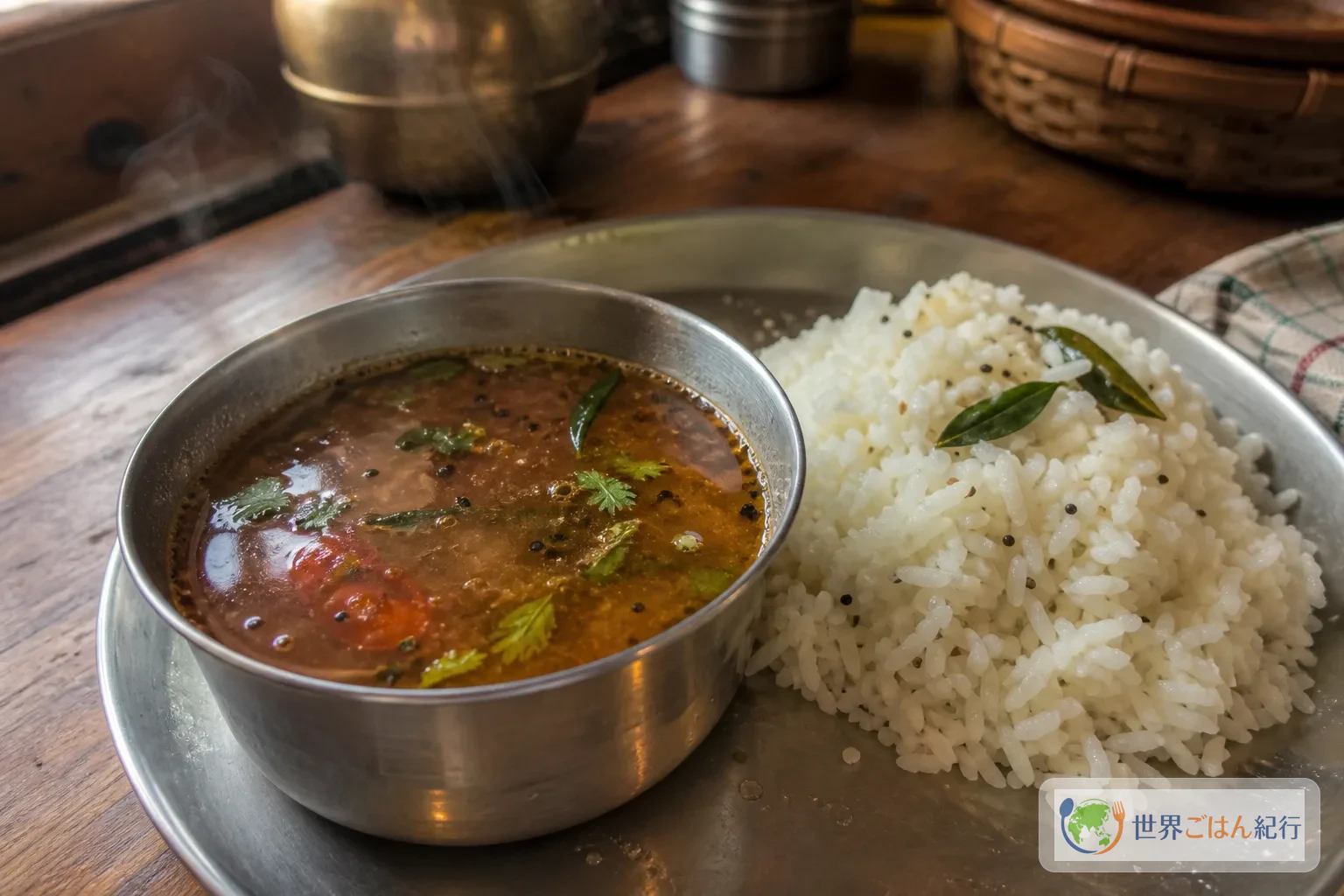
It is a success when small bubbles rise at intervals from the edge of the pot and the liquid is reddish brown and flows freely.
If you keep it boiling hard, the aroma of tamarind and the green aroma of the tempering fly off and bitterness comes forward.
5Adjust just before pouring over rice
Turn off the heat, add the cilantro stems and leaves and rest for 5 minutes.
Taste: if the sourness is sharp, add water 1 tbsp at a time; if flat, a pinch of salt; if the aroma is heavy, add a little water.
If you want more sourness, add the tamarind liquid 1 tsp at a time and do not try to suppress it with sugar alone.
Pour one ladleful over warm rice and serve where the curry leaves and cilantro are visible.
It is at its best when the broth has entered between the grains of rice and a faint aroma of oil remains on the surface.