Ingredients and steps on one page. Print it, or choose “Save as PDF” in the print dialog.
Sekai Gohan
Sabudana Khichadi: Maharashtrian Tapioca Pearls Stir-Fried with Peanuts
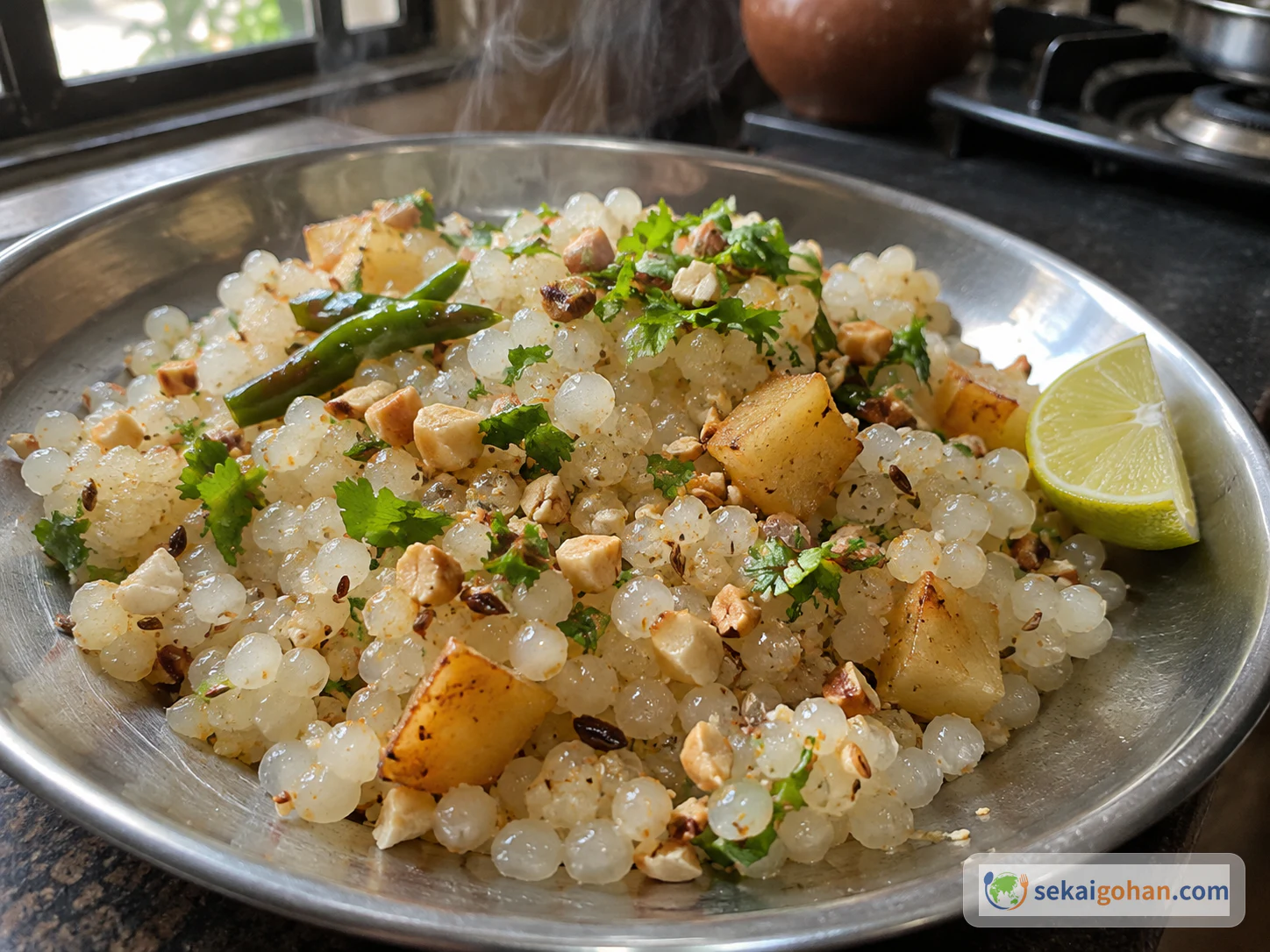
Ingredients
| Ingredient | Amount | Role |
|---|---|---|
| Sabudana (tapioca pearls, large) | 1 cup | The body of the dish; soaks soft and turns translucent in the pan |
| Water | to cover for soaking, then about 2 tsp, then 2–3 tsp | Softens the pearls without making them sticky |
| Boiled potato, cubed | ½ cup | Sweetness and a soft bite between the pearls |
| Oil | 2 tsp | For tempering the cumin and frying |
| Cumin seeds | ½ tsp | Toasty aroma |
| Green chillies (hari mirch) | 2–3 | Heat |
| Roasted peanut powder, coarse | 4 tbsp | Crunch, richness and binding |
| Lime juice | 1 tsp, or to taste | Sourness to lift the peanut |
| Coriander leaves, chopped | 3 tbsp | Fresh green aroma |
| Sugar | ¼ tsp | Rounds out the salt and chilli |
| Salt (or sendha namak for fasting days) | to taste | Seasoning |
Steps
1Rinse and soak the pearls
Put the sabudana in a bowl, rinse it in water and drain. Cover the pearls with fresh water and leave them for 30 minutes. The pearls swell as they soak, so keep them covered with water.
2Drain, dampen and refrigerate
Drain the pearls completely, tipping the bowl until no water pools at the bottom. Sprinkle about 2 tsp water over them and toss gently with your fingertips. Cover the bowl and refrigerate overnight or for at least 8 hours; keep the soaked pearls in the fridge, not on the counter. Before the lid goes on, the pearls should look damp and loose, each one separate.
The water is measured in teaspoonsToo much water makes the pearls sticky; too little leaves them hard and rubbery. Drain fully and add only the small sprinkles. If the pearls feel dry later, sprinkle a little water rather than pouring.
3Wake them up and test
Take the bowl out of the fridge and sprinkle 2–3 tsp more water over the pearls. Mix with your fingertips and leave them for about 30 minutes. Then pinch one pearl between thumb and finger. It is ready when it squashes easily under light pressure.
4Prepare the peanuts and potato
While the pearls rest, dry-roast the peanuts in a pan until fragrant, let them cool, then grind them coarsely; peanuts that are already roasted go straight into the grinder. Boil the potato and cut it into small cubes. Measure out the peanut powder and potato so both are ready at the stove. Stop grinding while the powder still has small visible bits.
5Temper the cumin and fry the potato
Heat the oil in a wide pan and add the cumin seeds. Let them crackle until they turn light brown. Add the potato cubes and green chillies and fry, turning now and then. Move on when the potato edges are light golden.
6Add the pearls over low heat
Add the soaked sabudana to the pan and turn the heat down to low. Stir well for about 2 minutes, lifting from the bottom so the pearls do not settle into a mass. Spread them through the potato and chilli as you go. At this stage the pearls are still mostly opaque white.
7Stir in the peanut powder until translucent
Sprinkle in the peanut powder and keep stirring, about 5–7 minutes in all, longer for larger pearls. Use the edge of the spatula to break apart any clumps. The pearls are done when they turn translucent. Crush one or taste it to check that it is soft all the way through.
No water in the panOnce the pearls are in the pan, add no more water. Water at this stage turns them into one gluey lump. If they look dry, keep the heat low and keep stirring; the peanut powder coats them and keeps them apart.
8Season and finish
Add salt, sugar and lime juice, tasting as you go. Turn off the heat and scatter the coriander over the top. Serve while it is warm. When a spoonful tastes salty and sour with a little sweetness behind the chilli and peanut, it is ready.