Ingredients and steps on one page. Print it, or choose “Save as PDF” in the print dialog.
Sekai Gohan
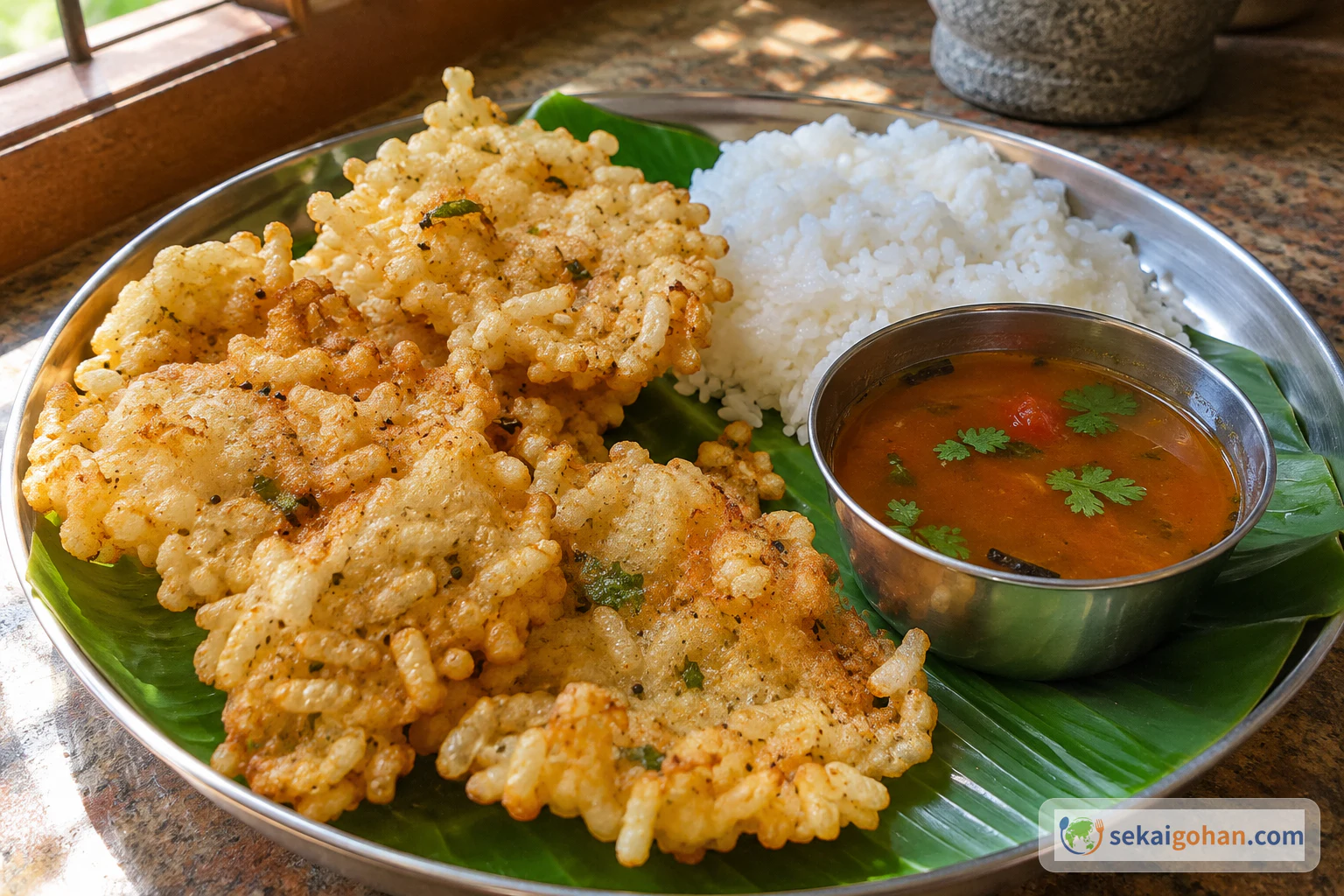
Sandige: Karnataka Sun-Dried Puffed Rice and Ash Gourd Fryums
Ingredients
| Ingredient | Amount | Role |
|---|---|---|
| Puffed rice (aralu), plain and unsweetened | 10 cups | The body of the sandige; light and porous |
| Tapioca pearls (sabudana) | ½ cup | Cooked first; the glue that binds the mounds |
| Ash gourd, peeled, seeds and pith removed, finely chopped | 1 cup | Moisture and binding |
| Green chilli paste | from 4 green chillies | Heat |
| Coriander leaves, finely chopped | 1 bunch | Fresh green aroma and colour |
| Cumin seeds | ½ tsp | Warm aroma |
| Asafoetida (hing) | a little (optional) | Savoury depth |
| Salt | to taste | Seasoning |
| Oil | a little, for greasing the tray | Keeps the mounds from sticking while they dry |
| Oil | as needed, for deep-frying | Frying the dried sandige |
Steps
1Prepare the ash gourd
Peel the ash gourd and scoop out the seeds and the soft pith in the centre. Keep only the firm white flesh. Chop it finely, into small, even bits that will spread through the puffed rice instead of sitting in lumps. You are done when you have a neat pile of pale, firm crumbs with no spongy pith left in it.
2Cook the tapioca pearls
Cook the sabudana in water in a pressure cooker for one to two whistles, or simmer it in an ordinary saucepan. In a saucepan, keep going until the pearls turn translucent all the way through. Tip them into a strainer and let the excess water drain away. They are ready when they look glassy, feel soft and sticky, and no longer drip.
3Oil the tray and combine the seasonings
Lightly oil a large tray or sheet and set it beside your work space. In a large bowl, put the cooked sabudana, chopped ash gourd, green chilli paste, coriander, cumin seeds, asafoetida if using, and salt. Stir them together until the pearls are evenly mixed with the gourd. The bowl should look like a sticky, green-flecked paste with the gourd spread right through it.
4Dampen the puffed rice a handful at a time
Take one handful of puffed rice and dip it in a bowl of water. Lift it out and squeeze lightly, just enough to stop it dripping, then drop it into the bowl with the seasonings. Repeat until all of the puffed rice is in. Each handful should feel damp and soft but still in separate grains, never mushy.
Small handfuls, light squeezeWetting the puffed rice a handful at a time is the move that decides the texture. A big batch dunked at once soaks unevenly and goes soggy in the middle, and a mix that is too wet slumps on the tray and dries dense.
5Fold gently with your fingertips
Once all the puffed rice is in the bowl, fold it into the seasonings with your fingertips, lifting from the bottom and turning it over. Do not add any more water, and do not press or knead. The sticky pearls and gourd will coat the grains as you turn them. Stop when every grain is flecked with green and the mix gathers loosely when you cup it, with the puffed rice still whole.
6Shape small pyramids on the tray
Wet your hands lightly. Pick up a little of the mix, press it gently into a small pyramid and set it on the oiled tray. Leave space between the mounds so air and sun reach every side. They shrink as they dry, so do not make them too small. Each pyramid should hold its point and its shape when you take your hand away.
Shape for the final sizeJudge the size by what you want after drying. Mounds that look generous on the tray come out right; dainty ones dry into crumbs.
7Dry in full sun until bone dry
Set the tray or sheet out in bright, direct sun and cover it with a net or cloth against birds, insects and dust. Turn the mounds over partway through so the undersides dry too. Drying takes one to three days, depending on the weather. They are done when they are pale, light and hard, and a piece broken open is dry right to the centre.
8Check every piece and pack them away
Go through the batch before storing it. Any mound that still feels soft, cool or heavy for its size goes back into the sun until it dries through. Pack the fully dried sandige into a clean, dry airtight container and close it tightly. What goes in the jar should be hard, light and completely dry, with no damp centres.
9Fry a few at a time
Heat oil in a deep pan or kadai and drop in a few dried sandige. They sink, then rise to the surface, puff up and take on colour quickly. Lift them out with a slotted spoon onto a paper-lined plate. They are ready when they have swollen, turned golden.