Ingredients and steps on one page. Print it, or choose “Save as PDF” in the print dialog.
Sekai Gohan
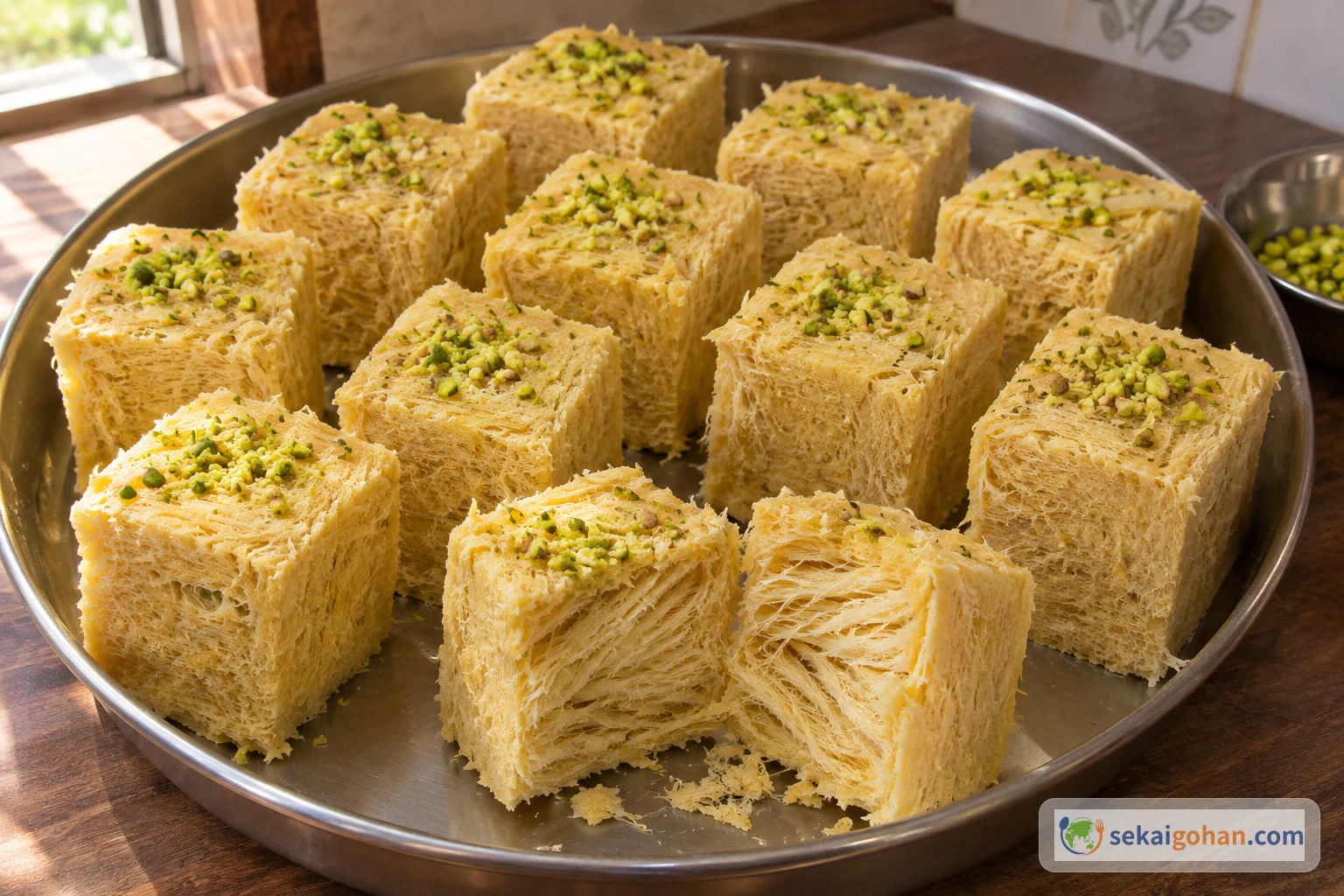
Sohan Papdi: Flaky Indian Gram Flour and Sugar-Thread Sweet
Ingredients
| Ingredient | Amount | Role |
|---|---|---|
| Gram flour (besan) | 4½ oz (125 g) | The main flour; roasting it gives the nutty, rich flavour |
| Plain flour (maida) | 4½ oz (125 g) | Gives the threads a frame and lightens the besan |
| Ghee | 5¼ oz (150 g) | Roasting fat and the main flavour; coats the flour so the threads separate |
| Ground cardamom | 1 tsp | The main aroma; balances the sweetness |
| Saffron threads | a pinch | Colour and a floral note |
| White sugar | 9¼ oz (260 g) | The syrup that becomes the threads |
| Water | scant ½ cup (100 ml) | Dissolves the sugar for the syrup |
| Pistachios, finely chopped | as needed | Topping and crunch |
| Neutral oil | a little | For greasing the tray |
Steps
1Grease the tray and aerate the flours
Wipe a thin film of oil across the shallow tray, all the way into the corners. Put the besan and plain flour in a bowl. Lift and rub them through clean fingers until the two are evenly blended and full of air. Lumps left here will roast unevenly in the pan. Move on when the mix is one even pale colour with no clumps.
2Roast the flour in ghee
Melt the ghee in the heavy pan over medium heat. Add the flour mix a little at a time, stirring as it goes in. Then lower the heat slightly and keep stirring for about 20 minutes. The raw smell of chickpea flour fades into a nutty one. The roast is done when the mixture is a deeper yellow and crumbly, with no brown patches.
The roast decides the flavourStir right across the bottom of the pan the whole time, with the heat just below medium. A burnt taste can't be fixed later, so if the flour scorches and turns bitter, start again.
3Spice, break up and sieve the flour
Stir in the cardamom and saffron, then take the pan off the heat. Break up the large lumps with the spatula and let the mixture cool for a few minutes. Push it through the fine sieve into a large bowl, crush any lumps left behind and sieve them again. Keep the bowl somewhere warm. It should end up as a fine, fragrant, warm powder.
Keep the flour warmCold flour chills the syrup the moment they meet, and the sugar sets into hard lumps before any threads form. Sieve the flour, then go straight on to the syrup.
4Cook the syrup
Pour the water into the saucepan and sprinkle the sugar over it. Bring it to a boil over medium-low heat, then turn the heat down and simmer for about 25 minutes. Check the colour and thickness every minute or so towards the end. The syrup is ready when it is thick and deep yellow. A drop let fall into the saucer of cold water firms up and pulls into threads when you pinch it.
Hot sugarThis syrup is far hotter than boiling water and sticks to skin. Test it only in cold water, and touch it only once it has cooled. Keep your face back when you pour, and never leave children alone with it.
5Stir the syrup into the flour
Pour the hot syrup into the warm flour in a thin stream, a little at a time. Stir without stopping with the wooden spatula, folding up from the bottom of the bowl. If you pour it all in at once, it seizes into one hard lump. Keep pouring and stirring until fine sugar threads start stretching between the crumbs.
6Spread and press in the tray
While it is warm, tip the mixture into the oiled tray. Spread it level to about 1½ inches (3.8 cm) thick. Scatter the pistachios over the top. Once the surface is cool enough to touch but still warm, press the nuts in lightly with your palm, just enough to hold them without crushing the layers. The slab should be flat, even in depth and fibrous at the edges.
7Cut while warm and cool
Push the edges in with the spatula to square the slab into a neat rectangle. While it is still warm, cut it with a sharp knife into about 1¼-inch (3 cm) squares. Leave the pieces in the tray to cool at room temperature. They are ready when they are dry and firm enough to lift. They should hold together but crumble easily when you bite.