Ingredients and steps on one page. Print it, or choose “Save as PDF” in the print dialog.
Sekai Gohan
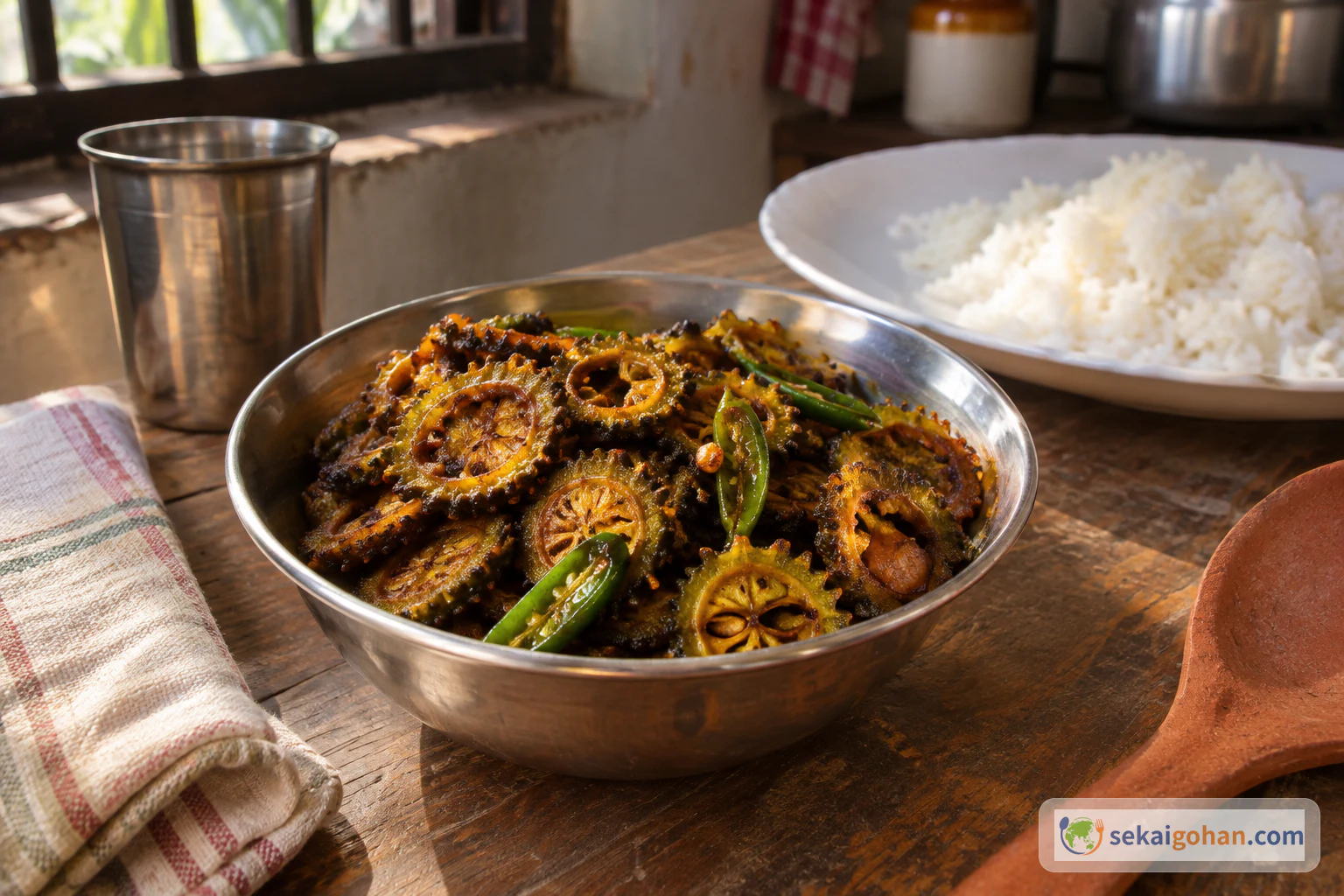
Pavakka Kondattam: Kerala Sun-Dried Bitter Gourd Rounds Fried Crisp
Ingredients
| Ingredient | Amount | Role |
|---|---|---|
| Bitter gourd (pavakka) | 4–5 | The whole dish: the bitterness, and the crisp body once it is dried and fried |
| Fresh green chillies | 4–5, halved lengthwise | Flavour the boiling water, then dry and fry alongside the gourd |
| Salt | to taste | Seasons the boiling water and stays in the rounds through drying |
| Water | enough to cover | For boiling; drained and discarded |
| Oil | for deep-frying, as needed | Puffs and crisps the dried rounds |
Steps
1Slice the gourds thick and even
Rinse the bitter gourds and trim off both ends. Cut them crosswise into slightly thick rounds, about ¼ inch (5–6 mm), and keep every slice the same thickness. Leave the seeds in. The rounds shrink a great deal as they dry, so thin slices fry up papery and hard. You are done when you have a pile of matching discs, each with a pale ring of flesh around the seeds.
2Boil with the chillies and salt
Put the rounds, the halved chillies, salt and enough water to cover into a saucepan. Bring it to a boil, then lower to medium and cook until the gourd is tender, about 5 to 8 minutes. Taste the water early on. It should be pleasantly salty, because that salt stays in the rounds all the way to the fryer. Take the pan off the heat when a skewer slides through a slice easily and the rounds still hold their shape.
Season the water and nothing elseAll the seasoning happens here. The dried rounds keep their salt, so fried kondattam needs no salt afterwards, and salting at the end is the easiest way to make it too salty. If the water tastes too salty, add a little more plain water before the gourd softens.
3Drain and spread in one layer
Tip everything into a colander and let the steam rise off. Line a tray with parchment paper or a clean cotton cloth. Spread the rounds and chillies over it in a single layer with no overlap, and dab off any water pooled on top. Move on when no beads of water are left on the surfaces.
4Dry in the sun or in a dehydrator
In Kerala the tray goes into the sun for 3–4 days, until the rounds are completely dry. Sun drying works on hot, clear days, with temperatures in the 90s °F (32°C and up) and humidity below 60%. Cover the tray with mesh against insects, birds and dust, and bring it indoors every evening, because cool night air settles dew on the slices. With a dehydrator, dry at 130–140°F (55–60°C), which takes anywhere from 3 to 16 hours for vegetables, and resist turning the heat up. As they dry, the rounds shrink, curl at the edges and turn from green to dull olive.
Drying safelyVegetables are low in sugar and acid, which makes them poorly suited to outdoor drying. Rain, humidity or cloud slows drying and lets mould and microbes grow. Where the air is humid, use the dehydrator. Too much heat seals the surface while water stays trapped inside (case hardening), and that hidden moisture turns mouldy in the jar. Keep the temperature moderate and the slices even.
5Test, treat and cool
Bend a round from the middle of the tray. It should snap cleanly, the broken edge should look dry, and the surface should not feel tacky. Any round that bends like leather goes back to dry longer. If you dried in the sun, kill any insects or eggs before storing: either seal the rounds and freeze them at 0°F (−18°C) for 48 hours, or heat them in a 150°F (65°C) oven for 30 minutes. Then leave them out until they hold no warmth at all.
6Store the dried rounds airtight
Make sure the jar is completely dry and at room temperature. Tip the cooled rounds and chillies in, add a moisture-absorbing sachet, and close the lid tightly. Rounds packed while still warm sweat inside the jar and go mouldy. Keep the jar somewhere cool and dark. Before you close the lid, the inside of the glass should be clear, with no mist.
Make more than seems sensibleBitter gourd shrinks dramatically as it dries, and four or five gourds fill far less of the jar than the raw pile suggests. If you have the tray space, dry a bigger batch in one go.
7Fry until they puff
Pour oil into a kadai or deep pan and heat it. Once it is hot, turn the heat to medium-high and hold it at 340–355°F (170–180°C). Drop in a small handful of dried rounds and chillies, only as many as fit without overlapping. Within 1 to 2 minutes they puff and swell, fine bubbles ring each one, and the colour deepens to brown-green. Lift them out as soon as they have puffed and darkened.
Hot oilEven fully dried rounds can make the oil splatter, and any leftover moisture makes it worse. Lower them in with a skimmer, never by hand, and fry in small batches so the oil temperature stays steady. Keep children and water away from the stove, and let the oil cool completely before you move the pan.
8Drain and serve hot
Spread the fried rounds and chillies in one layer on a plate lined with paper towels. Leave the salt alone, since the seasoning is already inside. Fry the next batch while the first one drains. They are ready when the paper stops showing fresh oil spots and the rounds crackle when you lift them.