Ingredients and steps on one page. Print it, or choose “Save as PDF” in the print dialog.
Sekai Gohan
Kadala Mittai: South Indian Peanut and Jaggery Brittle
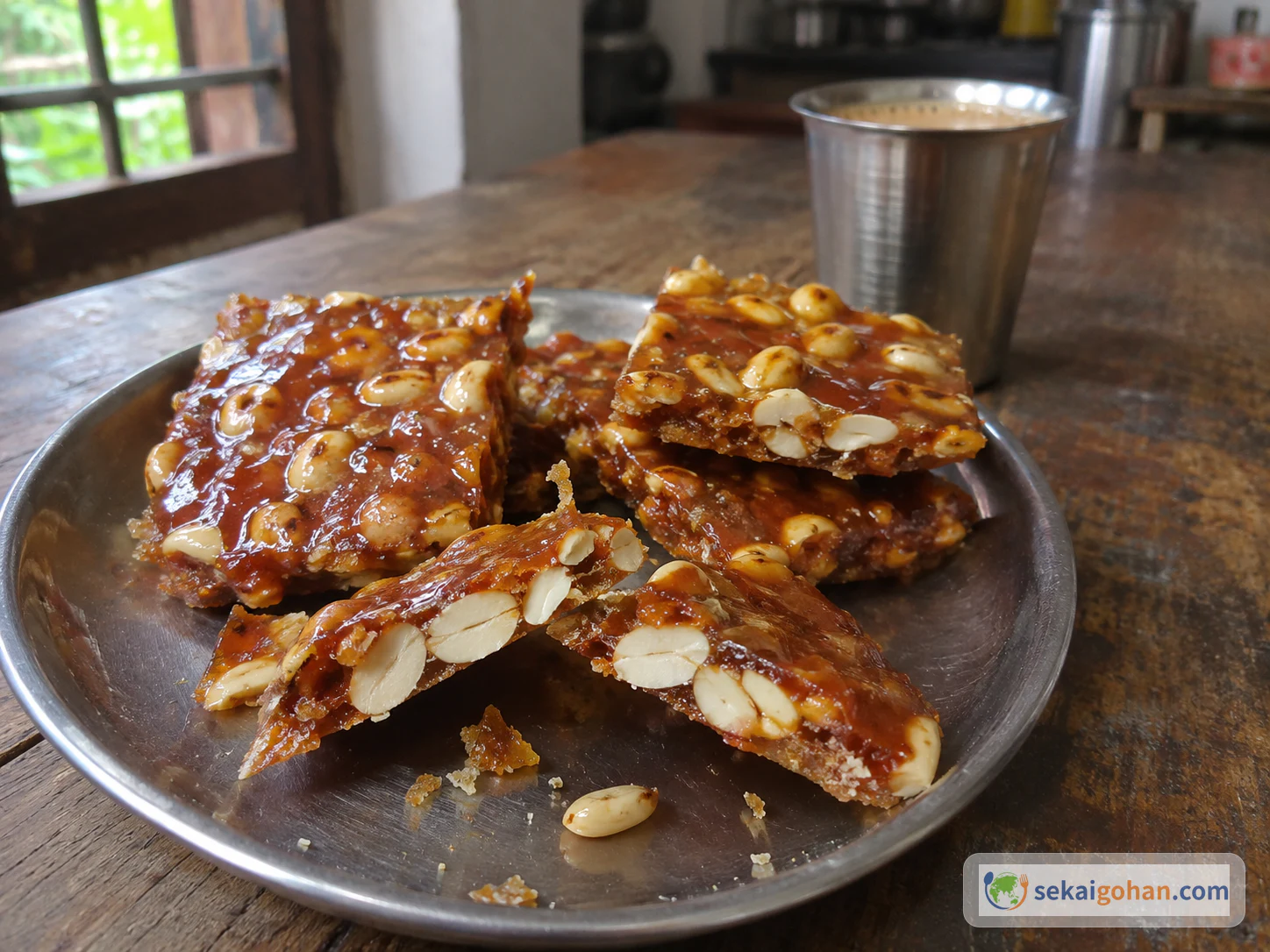
Ingredients
| Ingredient | Amount | Role |
|---|---|---|
| Roasted peanuts, shelled and skinless (kappalandi) | 1½ cups (250 g) | The body of the sweet: crunch and roasted aroma |
| Jaggery (sharkkara, vellam) | 7 oz (200 g) | Binds the peanuts, gives sweetness and the amber colour |
| Water | ¼ cup (60 ml) | Melts the jaggery |
| Ghee (neyy) | 2 tsp | Greases the tray so the slab releases |
| Vanilla essence | ¼ tsp | Aroma; optional |
Steps
1Ready the peanuts, tray and cold water
Measure out the roasted, skinless peanuts. If you start from raw peanuts, dry-roast them in a pan until the skins loosen, let them cool enough to handle, and rub them between your palms over a plate so the papery red skins flake away. Brush the tray with the ghee in a thin coat that reaches every corner and edge, and set a small bowl of cold water beside the stove. You are ready when the kernels are pale and free of skins and everything sits within reach of the pan.
2Melt the jaggery in the water
Break the jaggery into chunks and put it in the saucepan with the water. Set it over low heat and stir now and then as the blocks soften and dissolve. Keep the flame gentle, because jaggery scorches easily and a burnt patch turns the whole batch bitter. It is done when no solid pieces remain and the liquid is smooth and deep brown.
3Strain the syrup into the heavy pan
Pour the melted jaggery through the fine strainer into the clean, completely dry heavy-bottomed pan. Straining removes the impurities that jaggery carries, and with them gone the syrup has less to catch on the base of the pan while it boils. Hold the hot saucepan with the dry cloth and pour in a steady stream. The syrup in the new pan runs clear amber, with the debris left behind in the mesh.
4Boil the syrup to the brittle stage
Set the heavy pan over medium to medium-high heat and clip on the thermometer. Let the syrup boil as the bubbles grow larger and slower and the colour deepens toward glossy amber. As it thickens, drop a little into the cold water and pinch it. It is ready at 275°F (135°C), or when the drop sets instantly and snaps cleanly instead of bending or pulling into threads.
Hot sugar burnsAt this temperature, jaggery syrup clings to skin and causes serious burns. Keep children away from the stove from now until the slab is in the tray, and do the stirring and pouring yourself. Keep water and wet cloths away from the pan, as they make the hot syrup spit.
Test early and oftenStart dropping syrup into the water before you think it is ready. A soft or chewy drop means keep boiling; a drop that snaps means move to the next step at once.
5Fold in the peanuts
If you are using vanilla, stir it in while the pan is still on the heat. Tip in all the peanuts just before you take the pan off the heat and fold quickly with the wooden spatula, lifting from the bottom so every kernel is coated. Hold the handle with the dry cloth and work fast, since the syrup starts setting as it cools. Stop when the mass is glossy and the peanuts are evenly coated.
6Pour into the tray and level it
Scrape the mixture into the greased tray straight away. Spread it with the flat spatula into an even layer, pressing down so the peanuts sit snugly in the candy. An even thickness gives clean pieces when you cut. You are done when the slab lies level to the edges and the surface is still glossy and soft.
7Cool completely, then cut
Leave the slab until it is cold all the way through. Run a knife around the edges, tip the slab out onto the board, and cut it into pieces by pressing straight down with the heavy knife. Cutting while warm makes it bend and crumble. It is ready when the knife cracks through with a clean snap and the broken faces look glassy.